Best GEO Tools for Digital Marketing Agencies: 8 Platforms Compared (2026)
A practical comparison of 8 GEO tools for digital marketing agencies, covering first-pass client diagnosis, AI visibility monitoring, competitor research, multi-client management, reporting and cost control, to help agencies pick the platform that fits how they deliver.
For digital marketing agencies, choosing a GEO tool isn't just about brand mention counts or entry-level pricing. The real question is whether it supports two core agency workflows: identifying client opportunities and building compelling proposals during pre-sales, and continuously monitoring AI visibility, tracking competitors, and demonstrating results after onboarding.
Dageno addresses both needs. During pre-sales, its AI market intelligence, brand visibility insights, and competitor analysis help agencies uncover client pain points, identify growth opportunities, and build data-backed pitches. For ongoing client management, Dageno supports continuous AI visibility and competitor monitoring, helping agencies track performance changes, identify optimization opportunities, and demonstrate value through client reporting. Peec AI, Otterly.AI, and SE Visible also offer AI visibility monitoring with different focuses. Profound and Scrunch are worth considering for deeper analytics and technical optimization, while Ahrefs and Semrush suit teams looking to integrate GEO into their existing SEO workflows.
Why Do Digital Marketing Agencies Need GEO Tools?
For digital marketing agencies, the challenge GEO brings is not just one more optimization task. It is how to build the service into the existing business and deliver it at scale.
Once clients start caring about how they perform in AI search, agencies tend to hit a few practical problems:
Pre-sales research takes time: for a new prospect, you need to understand the brand, its competitors and how they perform in AI search quickly. Testing each platform by hand and collating the answers makes a first diagnosis slow.
Client management gets complicated: with several brands at once, each client has different competitors, target markets and monitoring needs. How do you manage projects in one place without mixing up clients' data and workflows?
Strategy lacks evidence: telling a client how often their brand appears in AI answers does not explain much. Agencies also need to find why competitors are recommended, which sources are cited, and which content gaps are worth fixing first.
Service costs are hard to control: each client needs a different mix of prompts, AI models and regions. If a tool's billing rules are complex, the more clients you add, the harder it gets to manage operating costs and margins.
Service value is hard to prove: clients want to know what the agency did, what problems it found and what changed after optimization. Without ongoing data and evidence, a GEO service struggles to show clear value.
So when an agency chooses a GEO tool, monitoring features are only part of it. Client research efficiency, multi-project management, competitive analysis, cost control and the ability to turn data into a service clients will pay for matter just as much.
What Should Agencies Evaluate When Choosing a GEO Tool?
2.1 AI platform coverage and monitoring scope
First confirm which AI platforms, models and search experiences a tool covers, then check its rules on regions, frequency, prompt counts and history. The number of platforms does not mean monitoring capability is the same: running the same prompt across several models and regions every day sharply increases usage.
2.2 Multi-client project management
For agencies, projects, brands, workspaces, team seats and client access are different things. Check, plan by plan, how many projects are included, whether client data can be kept separate, whether clients can get read-only access, and whether adding a client forces an upgrade. Do not mistake unlimited team seats for unlimited client projects.
2.3 Competitor analysis and citation evidence
Knowing that a competitor is mentioned more often is not enough. Agencies need to dig into which questions the competitor is recommended for, how AI describes it, which pages or third-party sources are cited, and whether the brand is named explicitly. In particular, separate "a page is cited" from "the brand is mentioned": a page can be a source for the answer without the brand name appearing in it.
2.4 Can it support a concrete strategy?
What you observe
What the agency can research next
A competitor appears often in commercial questions
Analyze its positioning, comparison content and third-party mentions
The client is weak in a market segment
Research the questions, competitors and content coverage in that segment
AI repeatedly ties a competitor to a selling point
Check whether the client has matching product evidence and clear messaging
Third-party sources are cited often
Look at digital PR, industry media and partnership opportunities
The client's page is cited but the brand does not appear
Check the brand entity, product relationships and context on the page
2.5 Reporting and client communication
Agencies should check dashboards, share links, PDF/HTML exports, white-label, scheduled delivery, client access and automation separately. They are not the same feature, and a platform having a report page does not mean every plan supports white-label or automatic delivery. A report should state the monitoring scope, key findings, evidence, actions taken and next-cycle priorities.
2.6 Real cost, not just entry price
Tool cost can depend on the number of projects and prompts, platforms, regions, refresh frequency, team seats, API and reporting add-ons. Agencies should estimate the cost per client from their actual service scope, and compare the budget needed to complete the same job.
8 GEO Tools for Digital Marketing Agencies: Quick Comparison
Tool
Best-fit task
Main strengths
What to confirm
Dageno
AI market research, first-pass client diagnosis
Market segments, search intents, brand value propositions, citation evidence
Dageno is a GEO/AEO platform for brand, SEO, growth and content teams. For agencies, its core value is not just counting how often a brand appears in AI answers. It helps teams research where a client's brand and its competitors stand in AI search, and turn answers and citation evidence into strategic decisions.
Research prospects before configuring any prompts
In pre-sales, agencies often need a quick read on a prospect: Which markets does the brand show up in? Who are its main competitors? How does AI describe its products? Which sources back up competitor recommendations? The traditional approach means testing several AI platforms by hand, collating answers and sources, and then writing a report.
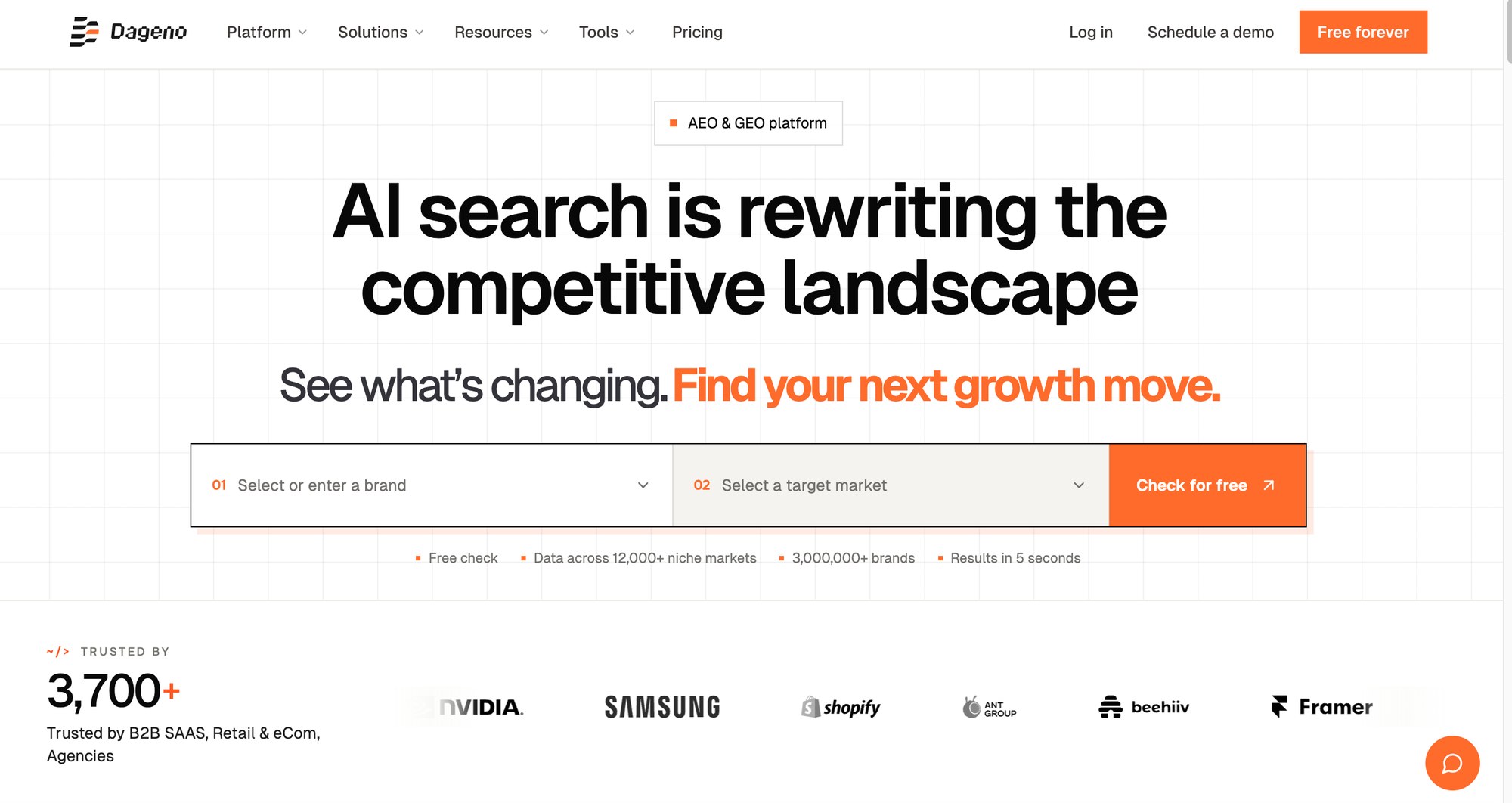
For brands already covered by Dageno's existing dataset of AI answers and citations, a team can enter a brand and get an initial lookup and report in about 5 seconds, without first configuring custom prompts and waiting for a new monitoring cycle. This lowers the setup cost of early research, but it does not mean any brand or any new question will return complete results in real time.
Understand a client's market from three angles
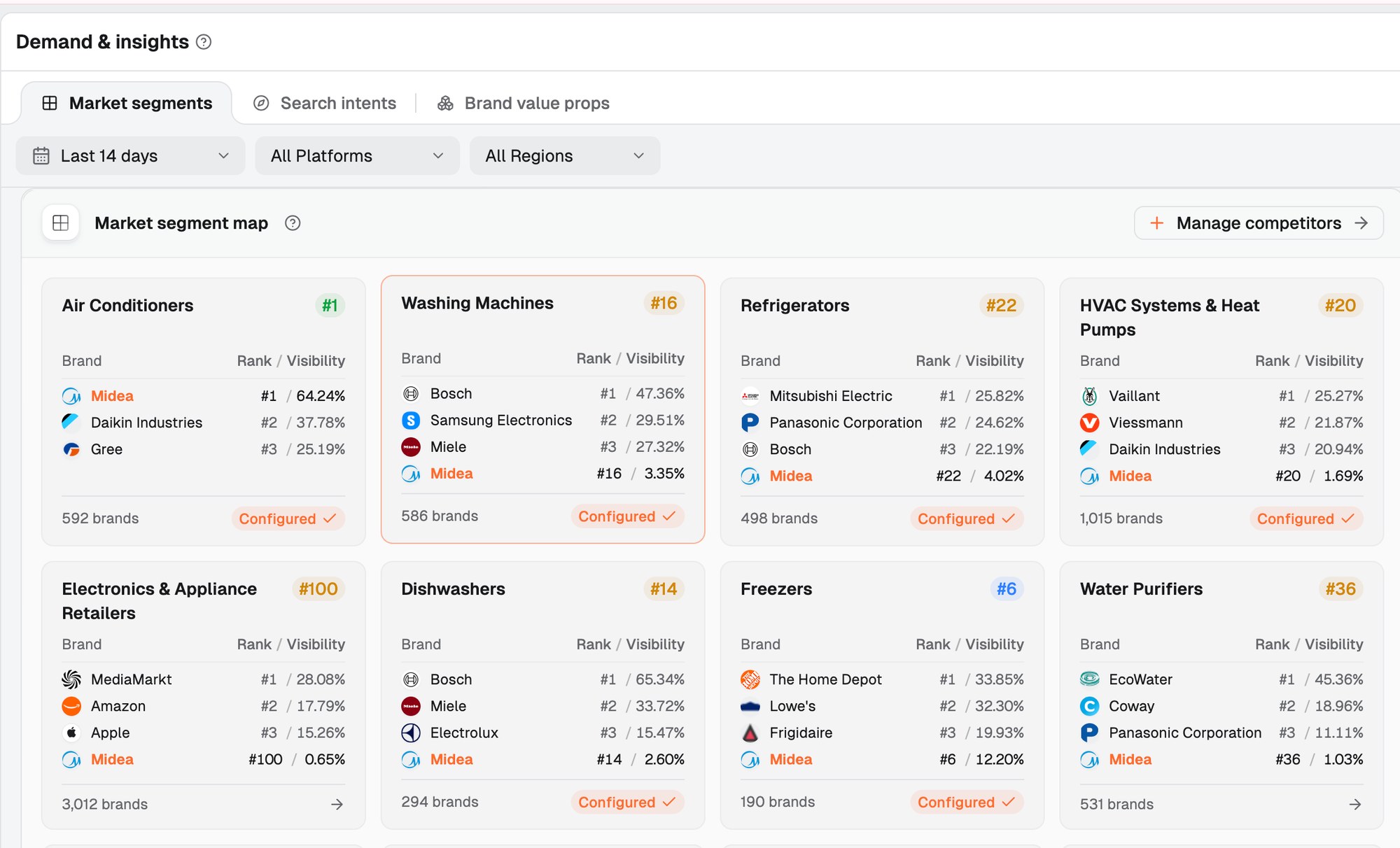
Market Segments: show which categories or segments a brand is strong in, where it is relatively weak, and which competitors appear in those markets.
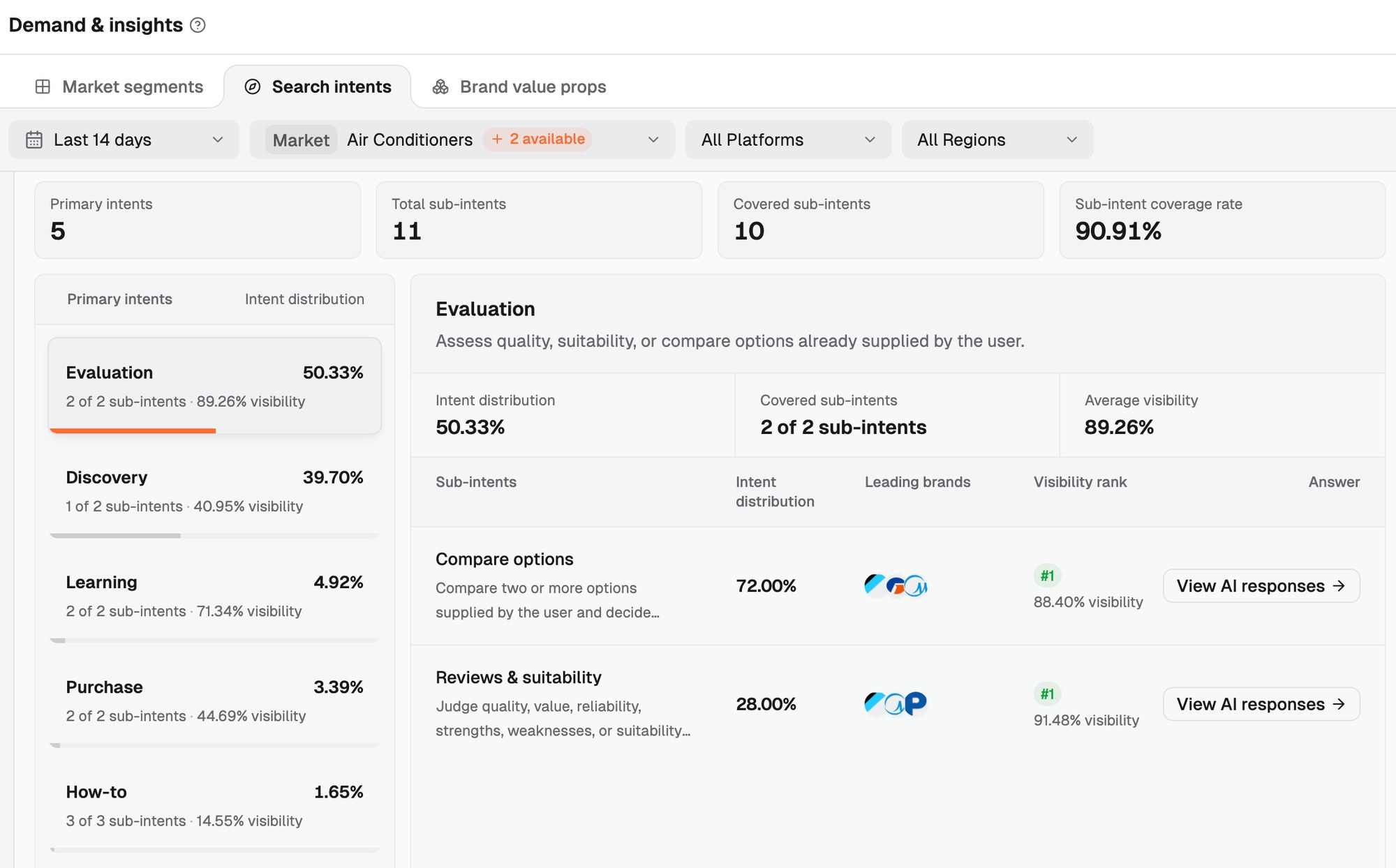
Search Intents: help agencies understand the user questions, needs and decision scenarios reflected in AI answers, and find which questions deserve more content and in which buying scenarios competitors appear more often. This reflects needs and tasks in observed data; do not treat it as official search volume.
Brand Value Propositions: help teams study how AI describes a brand and its products, which strengths come up repeatedly, and which attributes are tied more to competitors. This reflects how AI answers describe the brand; it is not a product performance certification.
Back up every judgment with original answers and cited sources
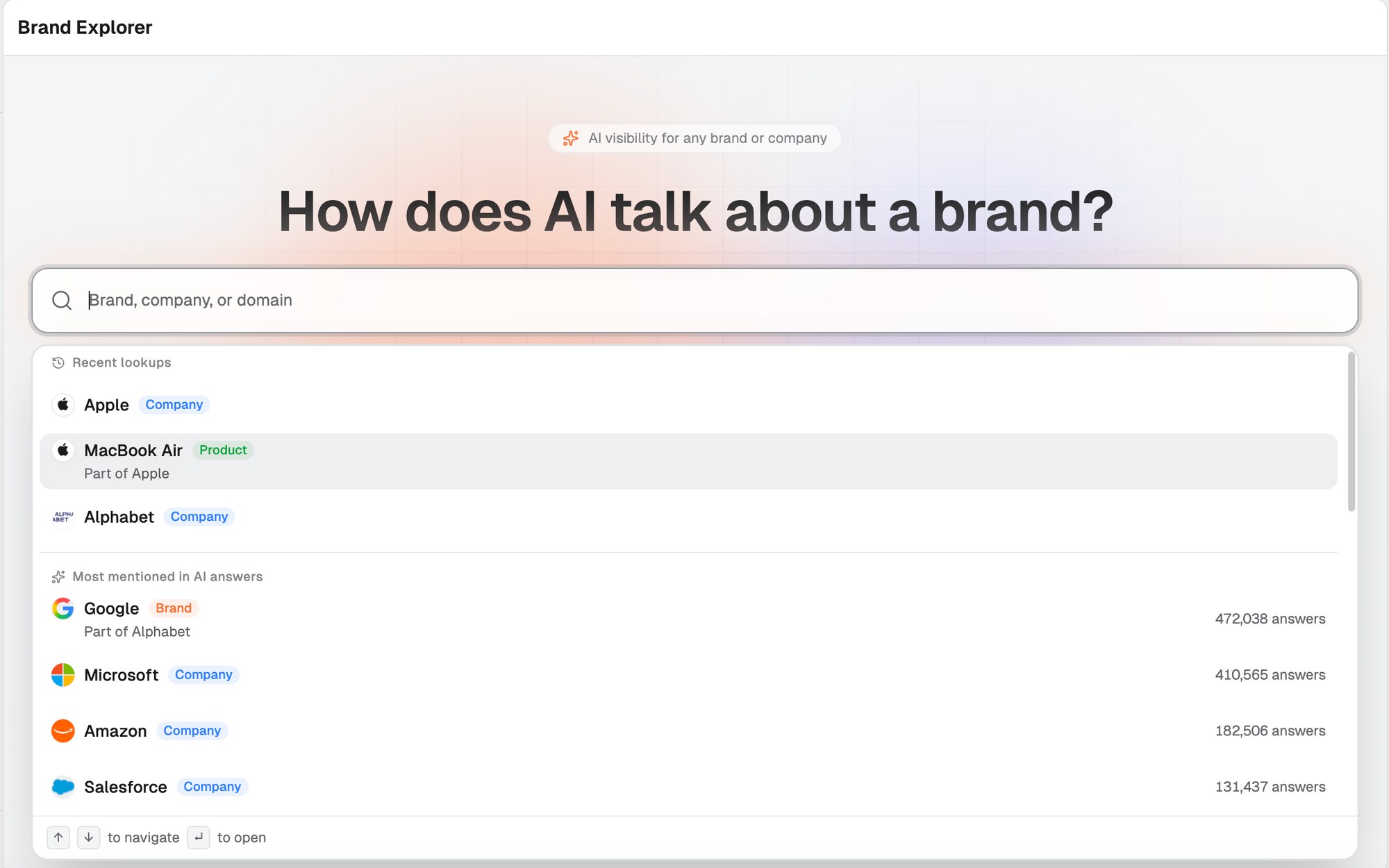
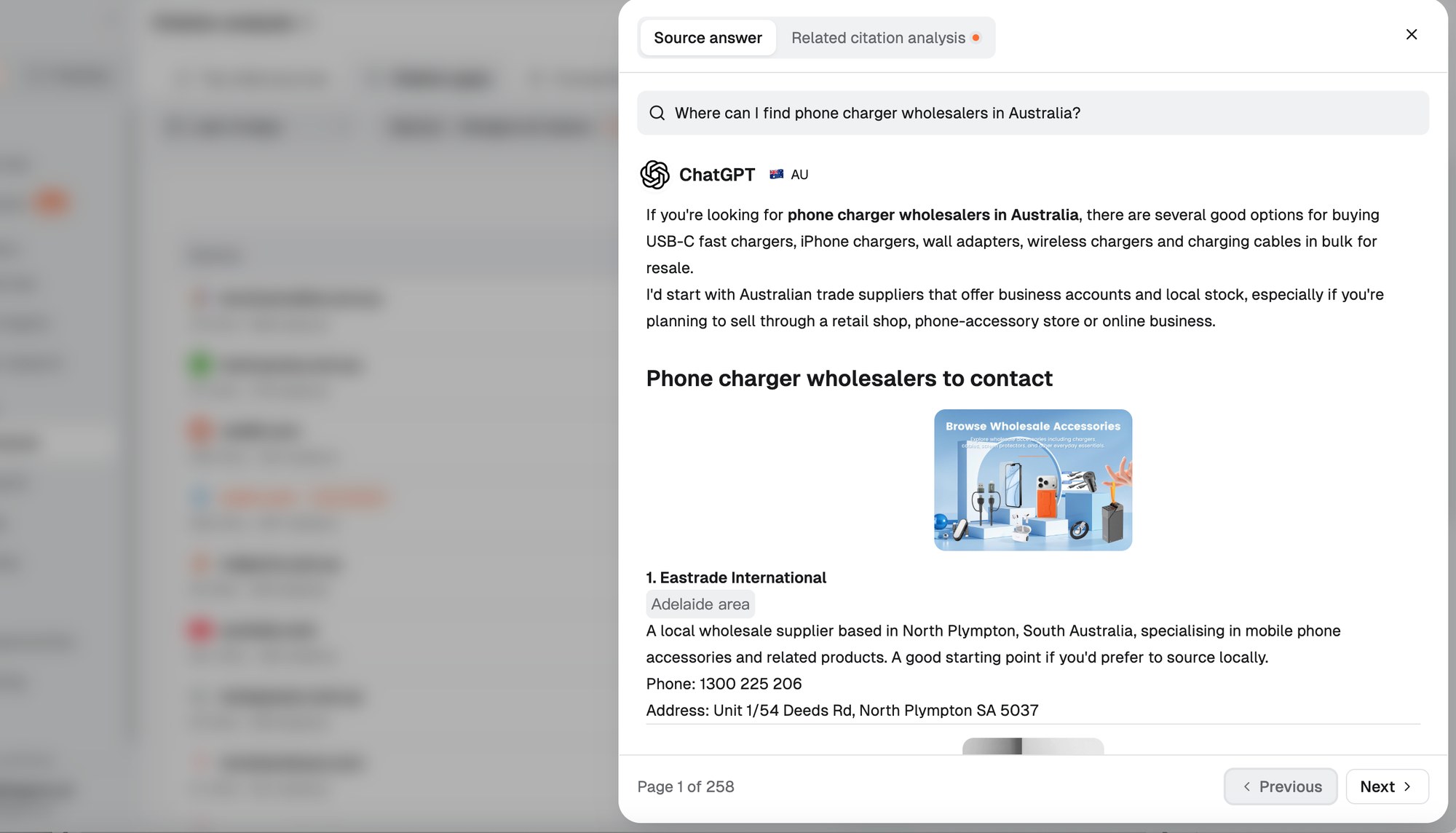
Dageno's research results trace back to the original AI answers and cited pages. Agencies can check what a judgment is based on and tell apart a page being cited from a brand being named explicitly. This matters most in pre-sales proposals: the recommendation should not just say "visibility is low", but show which answers, competitors and sources the problem appears in.
Move from first research to ongoing monitoring
Early market research and ongoing monitoring are two different ways of using the platform. After the first diagnosis, an agency can add key topics and prompts to ongoing monitoring and track changes in brand and competitor mentions, positions, answers and citations. The first diagnosis uses existing data; ongoing monitoring depends on the configuration, plan quota and monitoring cycle.
Plans and access rules
Dageno Starter, Growth and Scale have public monthly prices of $49, $199 and $410, with 1, 2 and 5 projects and 50, 250 and 600 monitoring units. Standard coverage is 9 AI platforms and 86+ countries and regions. Standard models and regions have no separate unlock fees, but actual monitoring usage is still limited by the combination of prompts, platforms and regions and by the plan quota. Growth includes MCP; Scale adds API, batch operations and data exports.
Flexible model and region choices make service costs easier to control
For an agency serving several clients at once, the purchase price is only part of the tool's cost. As client projects grow, the team also has to account for extra costs from different AI models, target markets and monitoring needs.
Dageno wants more teams to understand the market first and then decide whether to keep using the platform. Teams can use the public market lookup for free to research brands, competitors and the AI search market, and then choose a paid plan based on actual business needs.
Paid plans do not gate standard models, countries or regions either. From the Starter plan on, users can choose all 9 standard AI platforms and 86+ countries and regions, without upgrading plan by plan to access different models or markets.
For agencies running AI visibility research for different clients, this means more flexibility in planning monitoring scope and project budgets, so more of the spend goes to the research and services that actually need doing.
Best for: SEO agencies and content marketing agencies expanding into GEO, international marketing teams, and service providers that need to run prospect research and competitor analysis quickly.
Check a prospect's AI visibility for free before you pitch
Peec AI offers AI search analytics and dedicated agency plans, suited to teams that manage several client projects in one agency workflow. Its capabilities cover brand visibility, competitor comparison, AI answer and citation analysis, and project and credit management.
Its public monthly agency tiers are Essential at $245 (10,000 credits, 3 client projects), Growth at $495 (25,000 credits, 10 projects) and Scale at $795 (65,000 credits, 25 projects). Actual credit consumption depends on models, monitoring frequency and project setup, so credits cannot simply be equated with prompt counts.
Best for: agencies with strong needs for centralized multi-client monitoring, team collaboration and recurring AI visibility reports. When choosing, confirm how credits are allocated, the minimum per project and how clients get access.
4.3 Otterly.AI: Best for Getting Started with AI Visibility Monitoring
Otterly.AI centers on prompt monitoring, brand mentions, cited sources and AI search visibility. For agencies just starting to offer GEO and wanting a basic monitoring process first, its product path is fairly direct.
Public pricing is Lite at $29/month (15 prompts), Standard at $189/month (100 prompts) and Premium at $489/month (400 prompts). Some models and capabilities such as Google AI Mode may cost extra; the extended benefits of the Agency Partner program require meeting partnership conditions and should not be treated as included in a regular subscription.
Best for: small agencies whose main need is basic prompt monitoring and regular visibility tracking. If you need deep market segment, search intent or brand value proposition research, consider whether you will need another research tool alongside it.
4.4 SE Ranking / SE Visible: Best for Agencies Combining SEO and GEO
SE Ranking is familiar to SEO teams, and SE Visible adds AI search visibility monitoring. According to the pricing page (checked November 4, 2026), SE Visible Basic is $89/month, Core $189/month and Agency $399/month, with 5, 10 and 30 projects respectively; the Agency tier lists 1,000 prompts. Check platform coverage and regional capabilities against the current pricing page.
Best for: agencies that want to combine traditional SEO project management with AI visibility tracking. Do not confuse SE Visible's entitlements with other SE Ranking plans or reporting add-ons.
4.5 Profound: Best for Enterprise AI Search Intelligence
Profound targets more complex AI search research and marketing scenarios, with a product ecosystem spanning Answer Engine Insights, prompt research, Shopping Intelligence, Agent Analytics and AI marketing workflows. For large agencies or enterprise client projects, it may suit deeper research and custom requirements.
According to its pricing page, Agency Growth uses a base fee plus fees for full Client Workspaces, and includes Pitch Workspaces. The exact number of projects, prompts, platforms and agent credits should follow the relevant agency quote and contract. Brand plans cannot stand in for the cost of agency workspaces.
Best for: agencies with a high share of enterprise clients that need complex research and customized workflows.
4.6 Scrunch AI: Best for Agencies Running Monitoring and Technical Site Optimization Together
Scrunch combines AI search monitoring with optimizing websites for AI agents. Its AXP (Agent Experience Platform) is a different product direction from regular visibility monitoring, concerned with how AI agents access and understand site content.
Agencies should check the monitoring plan, AXP implementation scope, client workspaces, guest access and partner benefits separately. Do not describe AXP as included in every agency subscription, and do not equate technical implementation work with buying a monitoring tool.
Best for: agencies with technical SEO or development resources that want to extend AI visibility research into technical site optimization.
4.7 Ahrefs Brand Radar: Best for SEO Agencies Already Using Ahrefs
Ahrefs Brand Radar appeals to agencies already on Ahrefs because it combines with keyword, backlink, competitor and content research. Keep the pre-collected AI Visibility Index separate from Custom Prompt Tracking: the former suits broad discovery and brand research, the latter tracks questions the agency defines itself.
According to Ahrefs' page, custom prompts start at $50/month and the AI Visibility Index starts at $199/month; platform scope and check rules differ. Teams with an existing Ahrefs subscription should work out the incremental cost rather than looking only at the standalone price.
Best for: agencies with an Ahrefs subscription that want AI brand research inside their existing SEO competitive analysis.
4.8 Semrush AI Visibility Toolkit: Best for Semrush Ecosystem Users
Semrush builds AI Visibility into its marketing toolkit, which suits agencies already using Semrush for keyword research, competitor analysis, site audits and content planning. According to Semrush, AI Visibility is billed per domain, with extra fees for seats and reports.
Multi-client agencies should calculate total cost from the number of domains, existing subscriptions, seats and reporting needs, rather than treating the single-domain entry price as the monthly budget for the whole client portfolio.
Best for: digital marketing agencies that want to add AI visibility analysis to an existing Semrush workflow.
How Should Different Types of Agencies Choose?
Agency type
Tools to evaluate first
Key question
SEO agency expanding into GEO
SE Visible, Ahrefs, Semrush, Dageno
Can it connect to existing SEO research and find AI search content opportunities?
Content marketing agency
Dageno, Peec AI, Ahrefs
Can it surface search intents, competitor content and cited sources?
Multi-client monitoring agency
Peec AI, SE Visible, Scrunch
Do project counts, credits, client separation and reporting fit?
Enterprise consultancies and agencies
Profound, Scrunch, enterprise custom plans
API, governance, workspaces, technical implementation and service support
Can it run first diagnoses cheaply and validate demand for the service?
There is no need to buy several platforms just to have more tools. First be clear about what you are selling: a first diagnosis, ongoing monitoring, content strategy, technical optimization or enterprise research. Then choose the tool that covers those key workflows.
How to Calculate the Real Cost of GEO Tools Across Multiple Clients
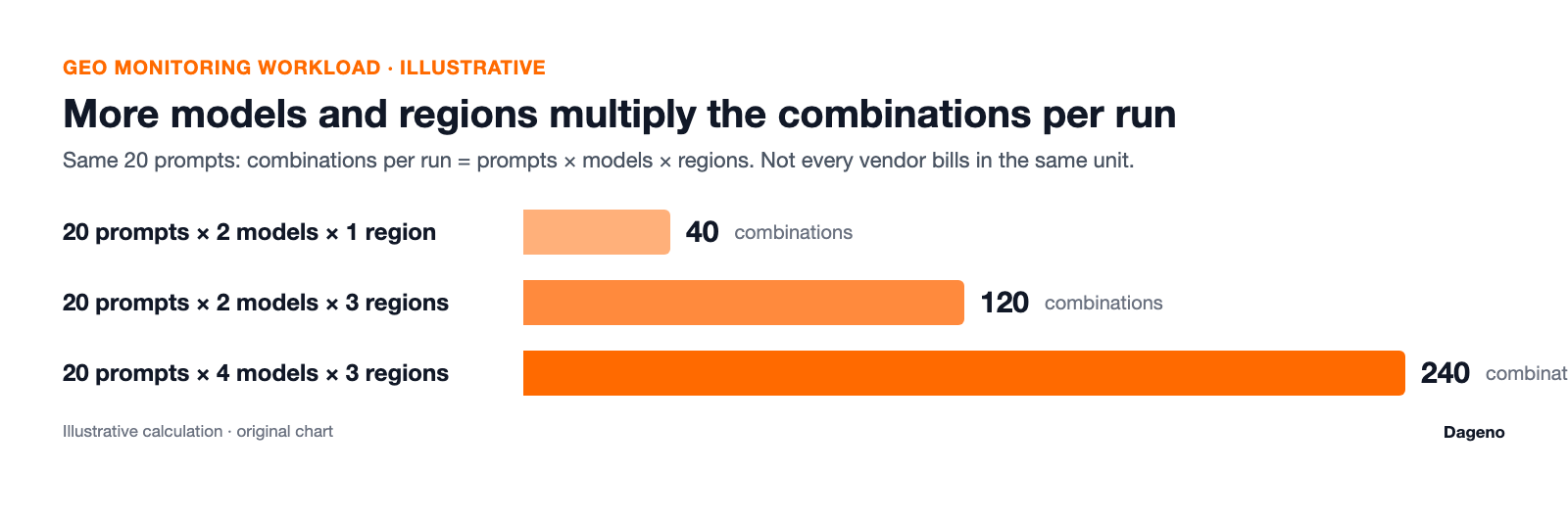
Platforms use different billing units: prompts, checks, responses, credits and projects. Before comparing plans, an agency must write down the number of clients and questions, the models, regions and update frequency.
Figure: Models and regions multiply the combinations per monitoring run (illustrative calculation).
For example, 20 prompts monitored on 2 models in 1 region make 40 prompt–model–region combinations per run. Expanding to 2 models and 3 regions makes 120 per run; 4 models and 3 regions makes 240. This illustrates how workload changes; it does not mean every vendor bills in the same unit.
GEO Tools for Digital Marketing Agencies: FAQ
What is a GEO tool for digital marketing agencies?
A GEO tool helps agencies research a brand's visibility, mentions, citations, competitor recommendations and related questions in AI-generated answers. Platforms differ in focus: some lean toward monitoring, others toward market research, enterprise analysis or technical optimization.
Why do digital marketing agencies need GEO tools?
They fill in AI answer information that traditional SEO reports cannot fully show, helping agencies research whether a brand is recommended, why competitors appear, which sources are cited, and where the content and market opportunities are.
How are GEO tools different from SEO tools?
Traditional SEO tools mainly analyze search rankings, keywords, backlinks and site performance; GEO tools focus on brand mentions, citations, prompts, competitors and visibility in AI answers. Some products are starting to combine the two.
Can GEO tools manage multiple clients?
Some platforms offer agency plans, multiple projects or client workspaces, but project counts, seats, client access and monitoring quotas need to be confirmed separately.
How much do GEO tools cost?
Anything from basic subscriptions at a few dozen dollars to agency plans at several hundred dollars or custom enterprise pricing. Calculate the total from projects, prompts, models, regions, frequency, seats and API.
Will buying a GEO tool improve a client's AI visibility?
No. Tools are for observing, researching and finding opportunities; the real improvement takes content updates, technical fixes, better product information, building external sources and sustained execution.
Conclusion: Choose a GEO Tool That Supports Your Agency's Client Work
Digital marketing agencies should not choose a GEO tool by comparing model counts, brand mention counts or entry prices alone. What matters more is whether the tool supports the work from pre-sales research and competitor diagnosis to content strategy, ongoing monitoring and client reviews.
Peec AI, Otterly.AI, SE Visible, Profound, Scrunch, Ahrefs and Semrush each cover different monitoring, research, enterprise and SEO ecosystem needs. Dageno fits agencies that want to start from AI market intelligence: research the client's brand and market first, then understand search intents, competitor selling points and citation evidence, and finally add the key questions to ongoing monitoring.
For a service provider, the most valuable GEO platform is not necessarily the one with the most metrics. It is the one that helps the team make better client judgments, back recommendations with evidence, and deliver the service at a sustainable cost.
From pre-sales diagnosis to ongoing delivery, one data set for every client
Dageno is the research and insights team at Dageno AI, publishing industry reports and expert analysis on AI Search Visibility, Generative Engine Optimization (GEO), and AI-powered search discovery.
 Alexa for Shopping