AI search monitoring tools for agencies in 2026 include Dageno AI, Nightwatch, Otterly AI, Profound and Peec AI, helping teams compare brand mentions, cited sources and the workflow from monitoring to action.
AI Search Monitoring Tools at a Glance
These ten tools serve different reporting and execution needs; compare the same prompts, engines, markets and collection schedule before selecting a plan.
Tool
Best-fit workflow
Check before choosing
Dageno AI
Monitoring, source gaps and GEO content work
Confirm selected platforms, prompts and execution allowance
Nightwatch
Traditional rankings alongside AI tracking
Confirm the AI tracking package and reporting scope
Otterly AI
Daily mentions, citations and competitor monitoring
Check included engines and paid engine add-ons
Knowatoa AI
Brand descriptions, positioning and sentiment
Review answer evidence and citation detail in a trial
Prompt visibility, sources and competitor share of voice
Confirm model selection and downstream execution process
Scrunch AI
AI answers, citations and site readiness
Compare brand or agency plans and technical scope
SE Ranking
AI visibility alongside an existing SEO workflow
Distinguish suite tools from the separate SE Visible offering
AthenaHQ
Multi-engine visibility and source analysis
Confirm analysis depth, usage limits and action workflow
Radarkit AI
Agency prompt and competitor reporting
Validate engine coverage, source evidence and client reporting
What Are AI Search Monitoring Tools?
AI search monitoring tools measure how a brand appears inside AI-generated answers from systems such as ChatGPT, Perplexity, Gemini, Claude, Copilot, DeepSeek, Grok, and Google AI Overviews.
Traditional SEO tools answer questions like:
Where do we rank?
Which keywords drive traffic?
Which pages get clicks?
Which backlinks point to the site?
AI search monitoring tools answer different questions:
Does AI mention the brand?
Does AI cite the website?
Does AI describe the brand accurately?
Which competitors appear more often?
Which prompts trigger recommendations?
Which sources influence AI-generated answers?
Is the sentiment positive, neutral, or negative?
Google has stated that AI features such as AI Overviews and AI Mode still rely on foundational SEO best practices, indexed content, and helpful, people-first content. Google Search Central But AI answers create a new measurement challenge because the user may receive a synthesized answer before clicking any traditional result.
That is why AI search monitoring is now a core part of SEO, GEO, AEO, brand marketing, PR, and competitive intelligence.
1. Dageno AI — Best Overall AI Search Visibility Platform
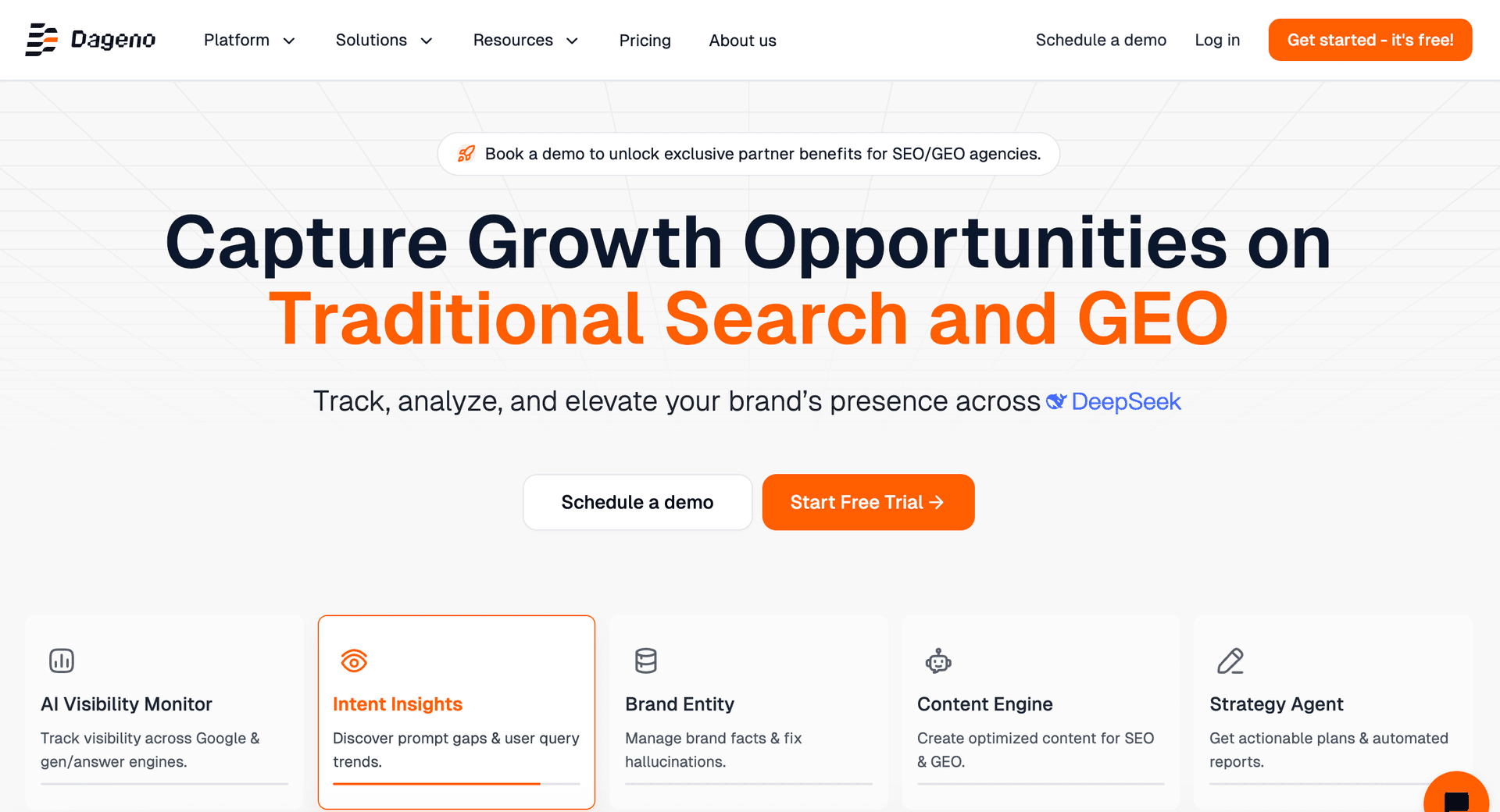
Dageno AI connects AI answer monitoring with source-gap analysis, prompt strategy, content creation and result measurement. Teams can review citation frequency, mention rate, share of voice, sentiment and competitor visibility across the platforms included in their plan.
Use prompt-level results to find a commercially relevant query where competitors are cited and your brand is absent. Inspect the sources, assign a content or technical action, and compare later visibility and referral results against the same prompt set.
Dageno AI is also valuable because Dageno AI is designed for execution, not only reporting. A brand can use Dageno AI to discover missing prompts, identify citation gaps, improve AI-readable content, strengthen entity signals, monitor reputation risks, and connect AI visibility insights with SEO and GEO workflows. Dageno AI is especially useful for SaaS companies, agencies, ecommerce brands, local businesses, PR teams, B2B companies, and enterprise marketing teams that need to know how AI systems describe and recommend their products.
Best for: Brands that want a complete AI visibility, citation, sentiment, and optimization workflow.
Why Dageno AI stands out:
Multi-platform AI search monitoring
Prompt-level visibility tracking
Citation and source analysis
Share of voice benchmarking
Sentiment and reputation monitoring
GEO and AI SEO optimization workflows
Useful for agencies and in-house teams
2. Nightwatch — Best for Combining Traditional SEO and AI Tracking
Nightwatch is a strong option for SEO teams that want to connect traditional rank tracking with AI visibility monitoring. Nightwatch is useful for teams that already care about Google rankings, local rankings, site audits, keyword research, and reporting but now need AI search visibility in the same workflow.
Compare a priority topic in traditional rankings and AI answers, then inspect the cited sources where the results diverge. Use that evidence to decide which SEO or content change belongs in the next client report.
Nightwatch focuses on tracking LLM responses, AI search visibility, prompt research, and citation-level analysis while still supporting traditional SEO rank tracking.
Best for: SEO teams that want AI monitoring and classic rank tracking together.
Strengths:
Combines SEO rank tracking and AI tracking
Supports prompt research
Useful for agencies
Includes reporting and SEO workflow features
Limitations: Teams looking for a dedicated AI search execution platform may still want Dageno AI as the central GEO workflow layer.
3. Otterly AI — Best for Simple AI Brand Monitoring
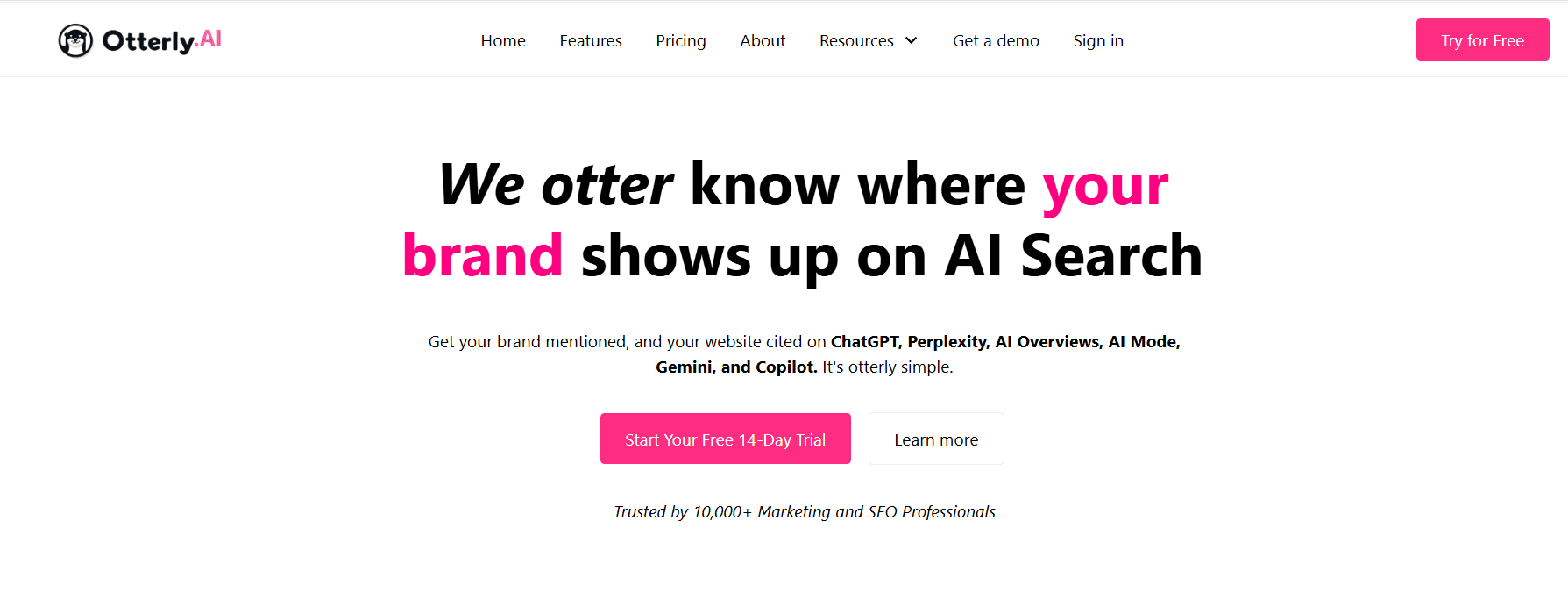
Otterly AI is built for marketers who want a simple way to monitor brand presence across AI search platforms. Otterly AI tracks brand mentions, AI citations and competitor visibility. Lite includes ChatGPT, Perplexity, Google AI Overviews and Microsoft Copilot; Gemini, Google AI Mode and Claude are paid add-ons.
Track a focused set of buyer questions and inspect the links cited in their answers. Compare changes over several collection days before deciding whether a missing mention calls for new content or a source update.
Otterly AI is attractive because the interface is easy to understand. Teams that are new to AI search monitoring can use Otterly AI to get started without building a complex measurement framework.
Best for: Marketing teams that want simple AI visibility tracking.
Strengths:
Easy onboarding
Broad AI platform coverage
Citation and competitor tracking
Good for brand monitoring
Limitations: More advanced teams may need deeper execution, source intelligence, or GEO workflow capabilities.
4. Knowatoa AI — Best for Brand Sentiment and Positioning
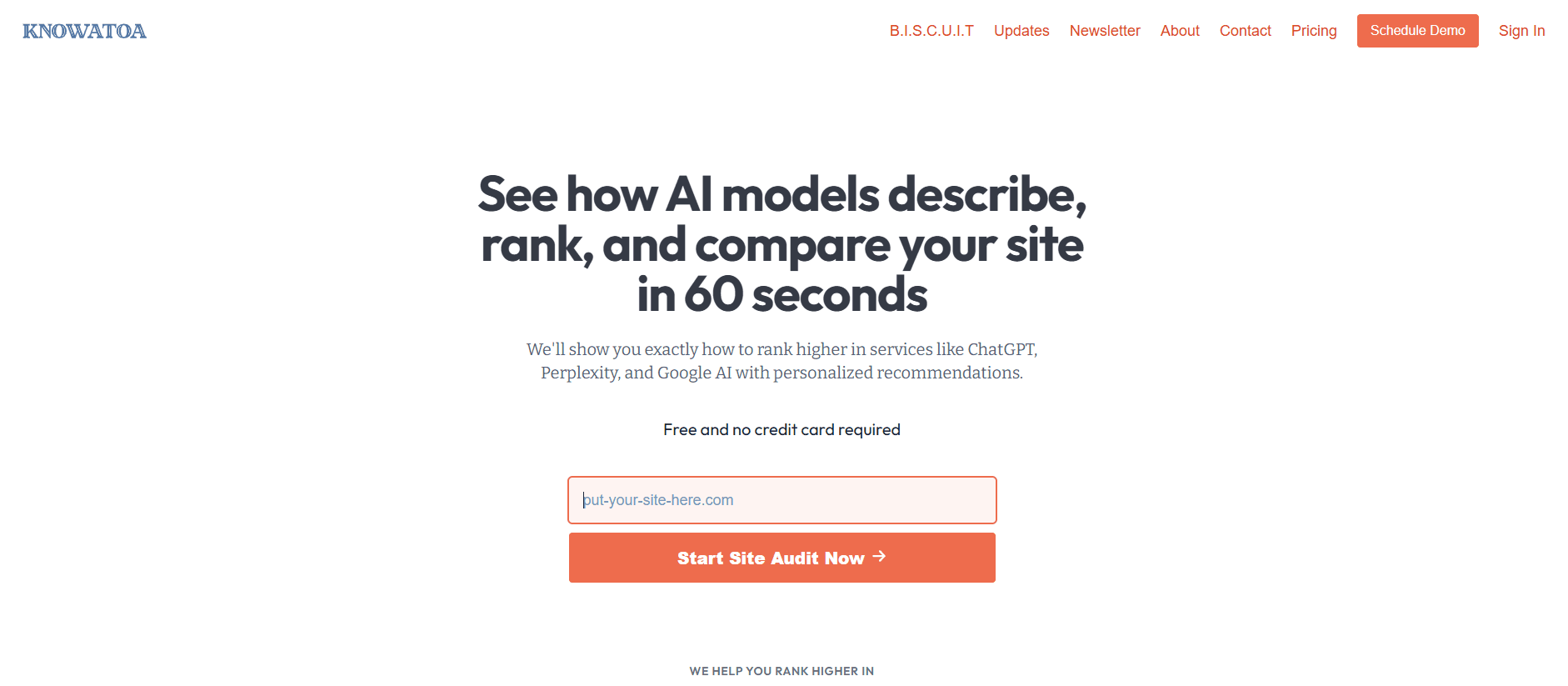
Knowatoa AI focuses on how AI systems describe, rank, and compare a brand. Knowatoa AI is useful when the main concern is not only whether AI mentions a brand, but whether the AI-generated description is accurate, favorable, and aligned with positioning.
Review the actual language used to describe your brand alongside competitor descriptions. Record inaccurate product facts or recurring positioning gaps so the relevant owner can update the supporting public information.
This matters because a brand can appear frequently in AI answers but still lose demand if AI frames the brand as outdated, expensive, risky, or secondary to competitors.
Best for: Brand teams that care about AI sentiment and perception.
Strengths:
Sentiment-focused analysis
Useful for positioning reviews
Competitor comparisons
Good for reputation monitoring
Limitations: Knowatoa AI may be less complete for technical SEO, citation engineering, or full AI search optimization workflows.
5. Profound — Best for Enterprise AI Market Intelligence
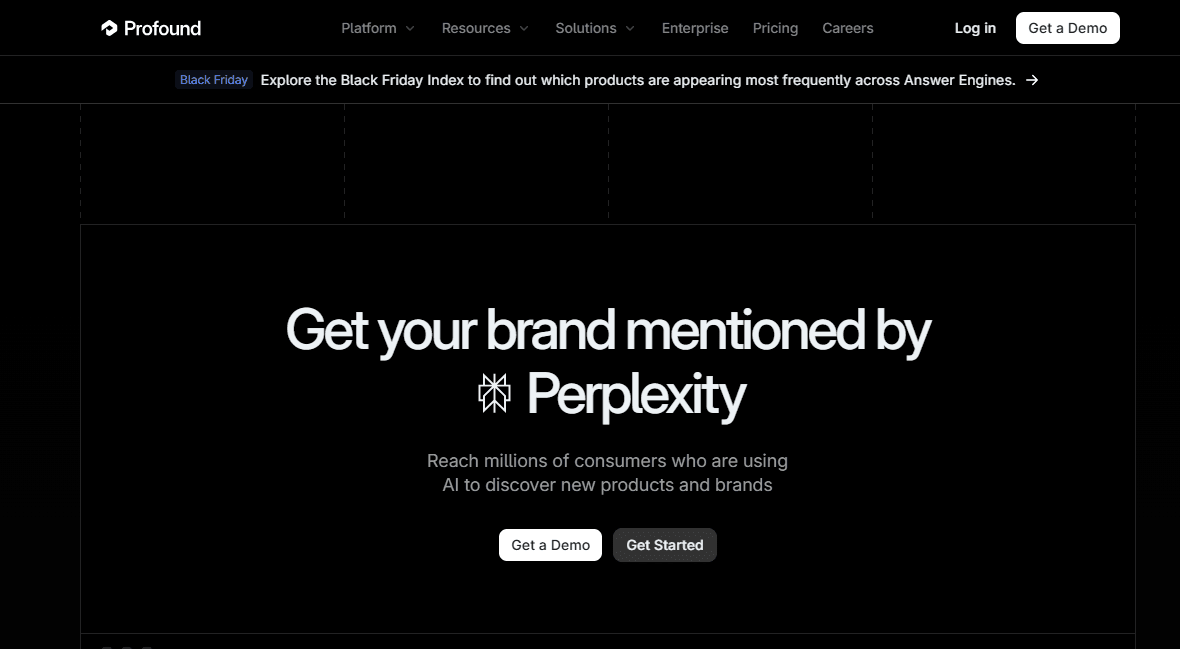
Profound combines AI answer analytics, citations, competitor analysis and agent workflows. Starter provides ChatGPT monitoring, while higher plans add broader engine coverage and enterprise requirements.
Inspect a priority prompt, the answer returned and the sources cited before choosing an Agent or content task. Record the starting position, then compare later results using the same platform and market settings.
Profound is a good fit when a company has the budget, team structure, and reporting needs of an enterprise organization.
Best for: Enterprise brands with AI visibility budgets and advanced reporting needs.
Strengths:
Enterprise dashboards
Buyer journey simulation
Competitive intelligence
AI answer monitoring
Limitations: Profound can be expensive and may be more than smaller teams need.
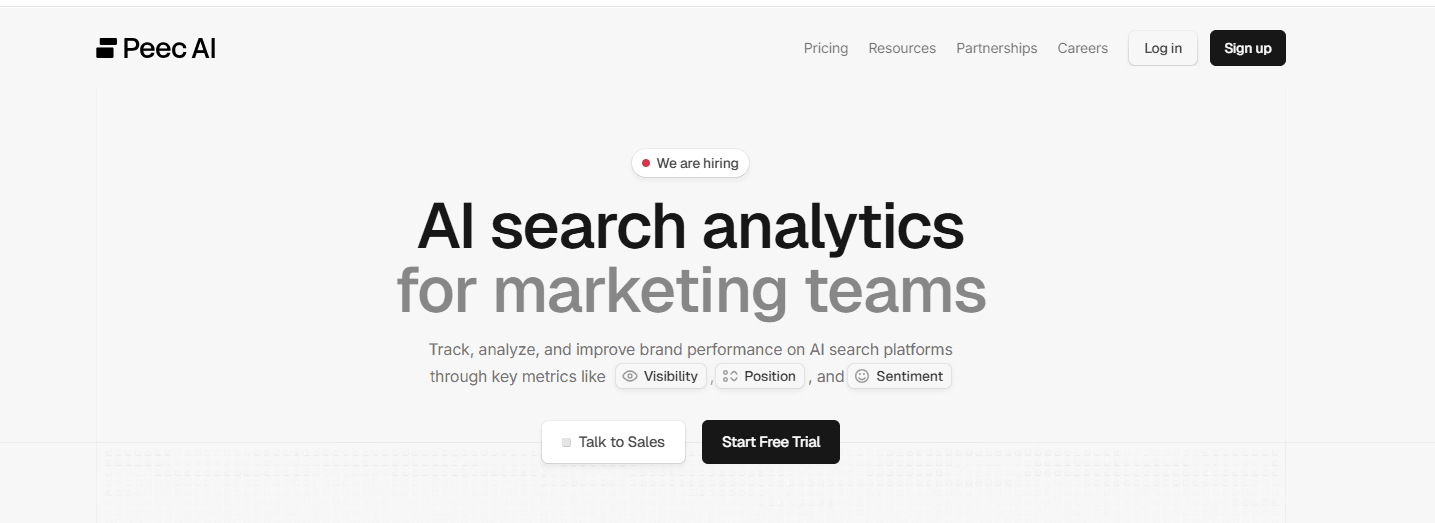
6. Peec AI — Best for Share-of-Voice Tracking
Peec AI helps teams monitor AI visibility, competitor share of voice, prompt performance, and sentiment across AI search platforms.
Compare share of voice for a stable prompt group, then inspect the cited domains behind a competitor advantage. Hand a specific source or content gap to the execution owner and revisit the same group after the change.
Peec AI is useful for marketing teams that want to benchmark brand presence against competitors and understand where competitors are winning inside AI answers.
Best for: Teams focused on competitor benchmarking and AI share of voice.
Strengths:
Share-of-voice reporting
Competitor comparison
Prompt-level visibility
Team dashboards
Limitations: Teams should confirm platform coverage, prompt limits, and pricing before committing.
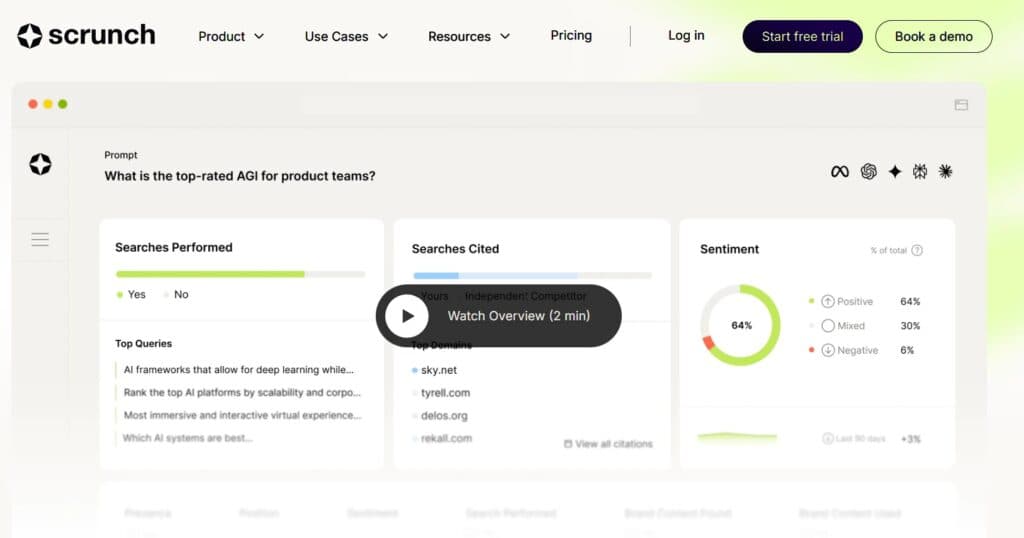
7. Scrunch AI — Best for Enterprise Brand Experience Monitoring
Scrunch AI focuses on how AI systems understand, describe, and present brands. Scrunch AI is especially relevant for enterprise companies that care about brand safety, AI experience, and customer journey consistency.
Review an answer that describes the brand inaccurately and inspect its supporting citations. Use the evidence to separate a source-content problem from a website-access problem before assigning a remediation task.
Scrunch AI can help teams identify inaccurate AI descriptions, missing citations, and competitor advantages in AI-generated buyer journeys.
Best for: Enterprise brand, PR, and customer experience teams.
Strengths:
AI brand experience monitoring
Journey-based analysis
Brand safety workflows
Useful for PR and communications teams
Limitations: Pricing and complexity may be too high for smaller teams.
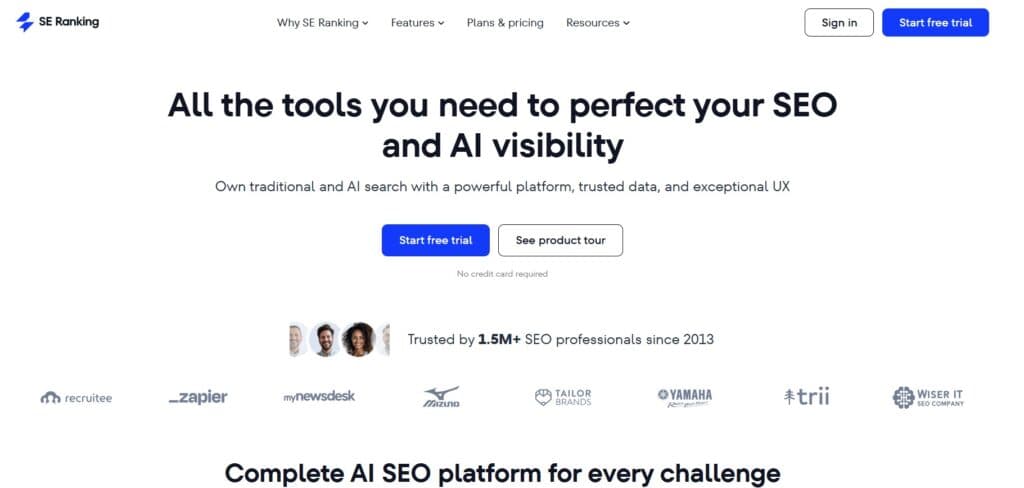
8. SE Ranking AI Visibility — Best for Existing SE Ranking Users
SE Ranking has expanded from traditional SEO software into AI visibility tracking. SE Ranking is a good choice when a team already uses SE Ranking for keyword research, rank tracking, audits, backlinks, and reporting.
Choose the relevant AI visibility product, then compare brand and competitor results with your existing SEO reports. Keep prompt-based AI evidence separate from keyword rankings so a change in one is not presented as a change in the other.
The biggest advantage is workflow consolidation. Teams that already work inside SE Ranking can add AI visibility capabilities without buying a completely separate tool.
Best for: SEO teams already using SE Ranking.
Strengths:
Traditional SEO and AI visibility in one suite
Competitor tracking
Reporting
Familiar SEO workflow
Limitations: Dedicated AI visibility platforms may provide deeper AI-specific data and workflows.
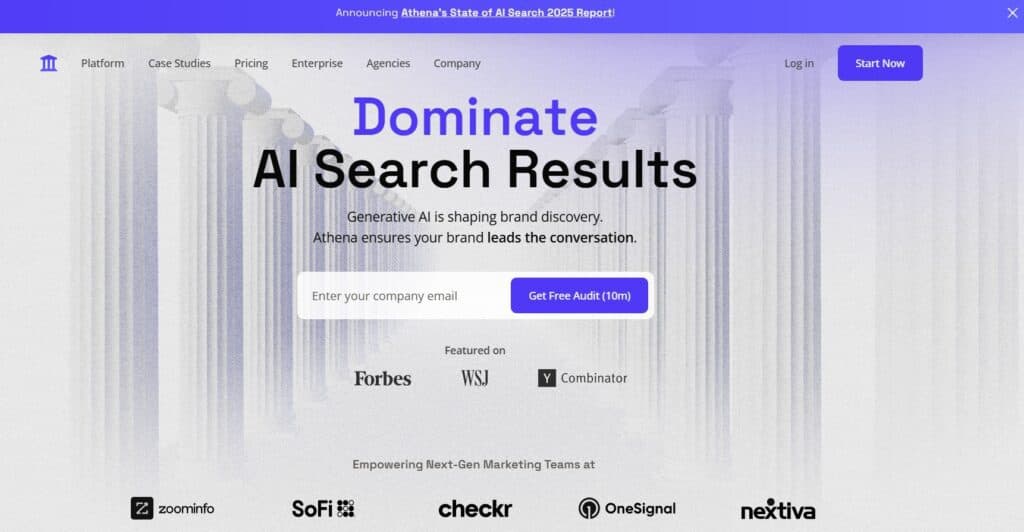
9. AthenaHQ — Best for Mid-Market AI Search Analytics
AthenaHQ is a strong option for teams that want analytics, segmentation, AI visibility scoring, competitor tracking, and source analysis across multiple AI engines.
Group commercially relevant prompts and compare visibility with competitor and citation data. Prioritize the source gaps that match your growth goals, then confirm the selected plan supports the analysis and action steps you need.
AthenaHQ is especially relevant for mid-market and growth-stage companies that need more than a basic AI mention tracker but may not need an enterprise-only platform.
Best for: Mid-market teams that want structured AI search analytics.
Strengths:
Multi-engine tracking
AI visibility scoring
Competitor analytics
Source and citation tracking
Limitations: Pricing and workflow fit should be compared carefully against Dageno AI and other AI visibility platforms.
10. Radarkit AI — Best for Agencies Exploring LLM Tracking Alternatives
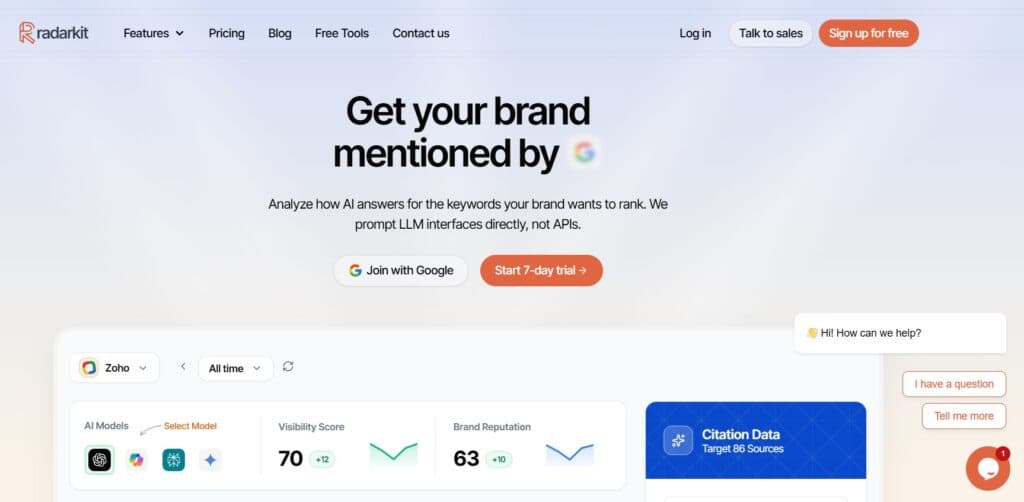
Radarkit AI is an AI visibility platform focused on brand mentions, AI visibility scores, competitor rankings, citations, sentiment, prompt libraries, and reporting.
Build a client prompt library, review the competitor rankings and inspect the answer citations behind the scores. Use a repeatable reporting period to distinguish a persistent visibility gap from a single variable response.
Radarkit AI is especially relevant for agencies that are evaluating alternatives to Nightwatch or building new AI visibility services for clients.
Best for: Agencies testing AI visibility reporting workflows.
Strengths:
AI visibility score
Competitor ranking tables
Citation data
Sentiment breakdown
Prompt library management
Limitations: Teams should compare data methodology, engine coverage, reporting depth, and optimization capabilities before choosing.
How to Choose an AI Search Monitoring Tool
Choose Dageno AI if the goal is to build a complete AI search visibility system with monitoring, citation intelligence, sentiment, competitors, and execution workflows.
Choose Nightwatch if the goal is to combine classic SEO rank tracking with AI visibility.
Choose Otterly AI if the goal is simple brand tracking across AI search engines.
Choose Knowatoa AI if brand sentiment is the main issue.
Choose Profound or Scrunch AI if the company needs enterprise-level brand intelligence.
Choose Peec AI, AthenaHQ, or Radarkit AI if the team is comparing share-of-voice dashboards and AI visibility reporting systems.
The best tool is the one that helps the team move from measurement to action. AI visibility does not improve simply because a dashboard exists. AI visibility improves when teams use the data to update content, build authority, improve source credibility, clarify entity information, and answer the prompts real buyers ask.
FAQ
Choose an AI search monitoring tool according to the answers, citations and actions your team needs to inspect.
Which AI search monitoring tools should agencies compare?
Agencies can compare Dageno AI, Nightwatch, Otterly AI, Profound and Peec AI, then add the other platforms in this list when their reporting or execution needs require them. Test the same prompt group before comparing scores.
Does a brand mention mean the website was cited?
No. A brand mention names the business, while a citation identifies a source used in an answer. Track mentions, owned citations and third-party citations separately.
Does daily tracking guarantee more AI visibility?
No. Daily tracking measures changes; it does not cause them. Assign evidence-backed content, source or technical work and remeasure the same prompts after the changes can be discovered.
Dageno is the research and insights team at Dageno AI, publishing industry reports and expert analysis on AI Search Visibility, Generative Engine Optimization (GEO), and AI-powered search discovery.