17 Moz Alternatives We Used in 2026: Here’s Our Verdict
We tested 17 Moz alternatives in 2026 to compare features, pricing, AI search visibility, and performance. See our honest verdict on the best SEO and GEO tools.
Moz alternatives in 2026 include Dageno AI, Semrush, Ahrefs, SE Ranking and SpyFu; SEO teams can compare traditional research, backlink analysis, reporting and AI visibility across the 17 products covered here.
Moz Alternatives at a Glance
Compare these 17 products by the work you need to replace or add; specialist tools do not reproduce every Moz feature.
Tool
Best for
Dageno AI
AI mentions, sources and content priorities
Semrush
Combined SEO, PPC and marketing research
Ahrefs
Backlinks, competitive research and site audits
Morningscore
Task-oriented SEO for smaller teams
Raven Tools
Client reporting and data aggregation
SE Ranking
Rank tracking, audits and SEO research
Serpstat
Keyword research and clustering
Majestic
Specialist backlink analysis
SEO PowerSuite
Desktop SEO tools and rank tracking
SpyFu
Competitor keywords and ad history
Silktide
Accessibility and website quality
Mangools
Accessible keyword and SERP research
AccuRanker
Dedicated rank tracking
RankWatch
Rank tracking and reporting
Whitespark
Local rankings and citation research
Yext
Multi-location listings and reviews
Bing Webmaster Tools
Free first-party Bing site diagnostics
1. Dageno AI – Best Moz Alternative (For AI Search & GEO Visibility)
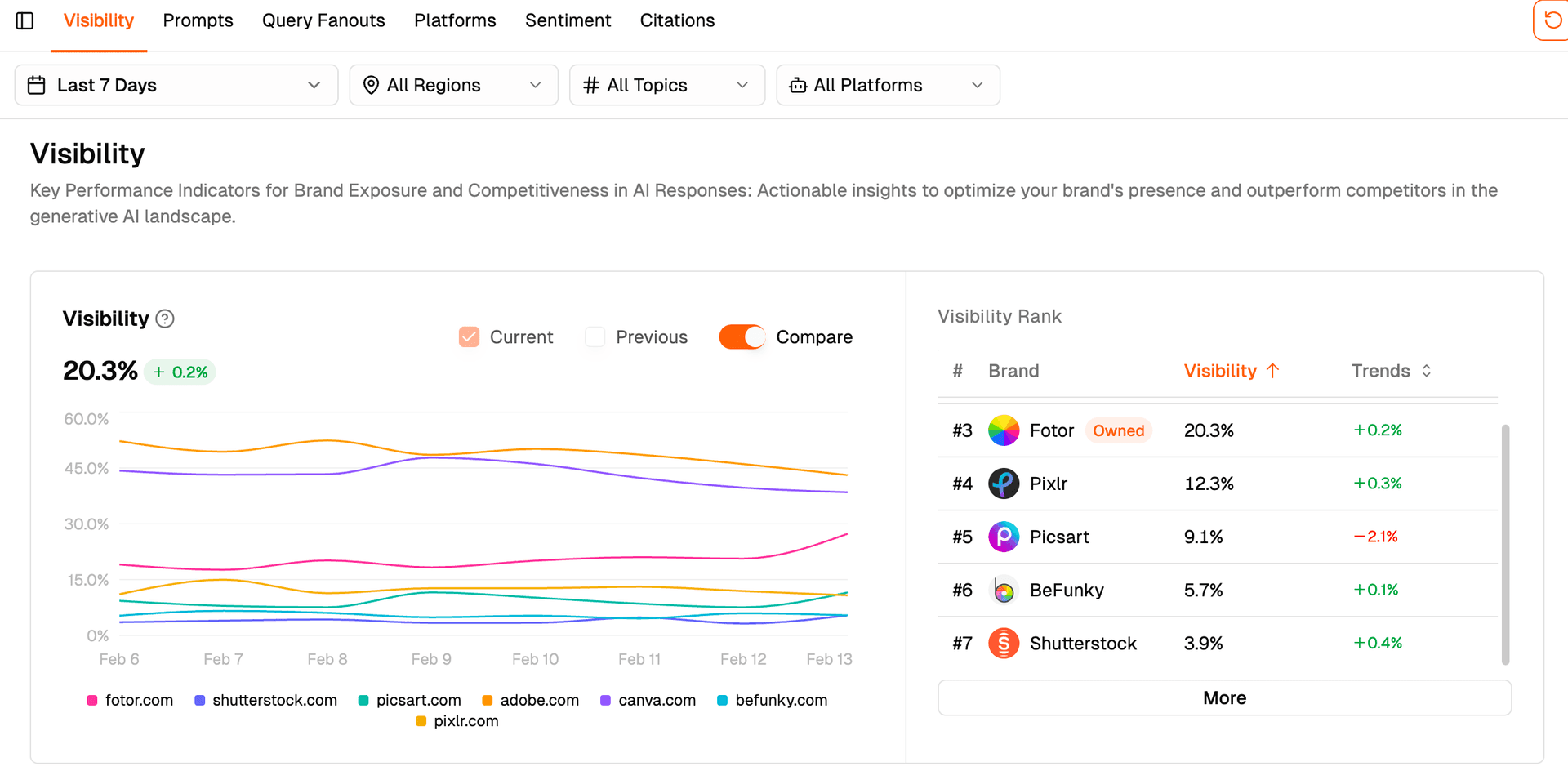
Dageno AI can add prompt, citation and competitor evidence when the SEO team needs to investigate AI-search visibility alongside traditional rankings.
Use the dashboard to inspect a relevant prompt and cited source, then assign a reviewed content change and compare later observations with the same baseline.
Moz helps you understand how your website performs in traditional search engines like Google.
Dageno AI helps you understand how your brand performs inside AI-generated answers.
That distinction matters when an SEO team evaluates its search coverage in 2026.
Today, users don’t just search — they ask.
They ask ChatGPT.
They ask Gemini.
They use Perplexity.
And those systems don’t show 10 blue links.
They generate answers.
If your brand isn’t inside those answers, you’re invisible.
That’s the gap Dageno AI solves.
Key Features
AI Search Visibility Tracking across ChatGPT, Gemini, Perplexity, and more
Brand Mention Monitoring inside AI responses
Prompt-Level Ranking Insights
Citation & Source Tracking
Competitor Visibility Gap Analysis
AI Ranking Monitoring Dashboard
GEO Prompt Intelligence Database
Pros
Built specifically for Generative Engine Optimization (GEO)
Tracks real AI-generated answers, not projections
Shows where competitors are mentioned and you’re not
Helps identify high-value prompts in your industry
Clean, focused dashboard for monitoring AI visibility
Cons
Not a traditional keyword research suite
Works best when paired with a broader SEO stack
Still part of a new and evolving category
Why I Like Dageno AI as a Moz Alternative
Moz shows me rankings.
Dageno AI shows me representation.
I’ve seen brands rank well on Google — yet never appear inside ChatGPT responses for the same topic.
A missing AI mention is a visibility gap; it does not by itself establish lost traffic or conversions.
With Dageno AI, I can:
Track whether my brand appears inside AI answers
Monitor changes in AI visibility over time
Identify prompts where competitors dominate
Understand how LLMs interpret my brand positioning
Moz focuses on search engines.
Dageno focuses on generative engines.
And as AI-driven discovery grows, that layer of visibility becomes impossible to ignore.
Reviews
As a relatively new category (AI visibility monitoring), Dageno AI is being adopted by SEO teams, AI growth teams, and forward-thinking brands focused on GEO.
My Verdict
If you’re only optimizing for Google, Moz might still be enough.
But if you care about how AI systems recommend, cite, and describe your brand — Dageno AI is a future-ready alternative.
It doesn’t replace Moz’s feature set.
It replaces the layer of search Moz doesn’t see.
2. Semrush
Semrush is probably the most well-known Moz alternative out there.
I’ve used it for years — especially when I needed deeper PPC insights, competitor research, and client-ready reports.
It’s more feature-rich than Moz and better suited for full-funnel marketing teams.
Semrush provides research, reporting, and automation across several toolkits; confirm which modules and AI-search allowances are included in the selected plan.
Key Features
Domain & keyword analytics including PPC
Keyword Gap and Traffic Analytics
Content marketing toolkit
SEO audit tool
Social media scheduler
White-label reporting
Pros
Covers SEO, PPC, content, and social
Highly accurate keyword data
Excellent for agencies
Strong international database
Cons
Steep learning curve
Expensive at higher tiers
Still requires manual analysis
Why I Like Semrush as a Moz Alternative
Moz always felt limited when I needed paid search insights or deep competitor tracking.
Semrush gives broader marketing intelligence and better reporting flexibility.
For agencies and performance marketers, it’s often the more powerful choice.
Semrush Pricing
The current SEO offer is $139/month or $117.33/month billed annually. Bundles with broader AI-search features have different prices and limits; compare the required package.
My Verdict
If you need a full-stack marketing intelligence platform — not just SEO basics — compare the relevant Semrush toolkits with the Moz reports your team actually uses.
3. Ahrefs
Ahrefs is what many SEOs graduate to after outgrowing Moz.
It’s fast, data-heavy, and offers one of the strongest backlink databases in the industry. If link building, technical SEO, and competitive research are core to your strategy, Ahrefs gives you serious depth — as long as you’re comfortable doing the analysis yourself.
Key Features
Site Explorer (deep backlink & traffic analysis)
Keywords Explorer (large index with SERP breakdowns)
Site Audit (technical health scoring)
Content Explorer
Link Intersect
Pros
Best-in-class backlink database
Reliable keyword & SERP data
Fast and data-rich
Great for technical SEO
Cons
Expensive as usage scales
Check the scope and plan requirements of PPC research and social tools
Automation, API and MCP scope depend on the selected plan
Why I Like Ahrefs as a Moz Alternative
Moz’s data often felt surface-level. Ahrefs goes deeper — especially in backlinks and competitive insights.
If you’re comfortable working directly with raw SEO data, Ahrefs is a powerful upgrade.
Pricing
Ahrefs currently lists Starter at $29/month and Lite at $129/month on monthly billing. Starter has narrower scope; compare the required reports, projects and usage rather than treating every plan as equivalent.
My Verdict
For technical SEOs and link builders, Ahrefs is a strong step up from Moz — just expect to pay for that depth.
4. Morningscore
Morningscore gamifies SEO.
Instead of dashboards full of metrics, it gives you “missions” to complete in order to improve your SEO score.
Key Features
SEO health score
Rank tracking
Competitor visibility comparison
Action-based task system
Pros
Beginner-friendly
Motivating interface
Clear prioritization
Cons
Limited deep data
Smaller backlink index
My Verdict
If Moz feels dry or overwhelming, Morningscore makes SEO more actionable — especially for solopreneurs.
5. Raven Tools
Raven Tools shines in reporting.
If you’re managing clients and need polished white-label reports, Raven makes life easier.
Key Features
Custom SEO reports
Site auditor
GA & GSC integrations
Automated report scheduling
Pros
Excellent reporting
Agency-friendly
Data aggregation in one place
Cons
UI feels dated
Not deep for research
My Verdict
If reporting is your biggest pain point with Moz, Raven Tools is a smart switch.
6. SE Ranking
SE Ranking hits the sweet spot between affordability and functionality.
It covers keyword tracking, audits, and competitor analysis without overwhelming you.
Key Features
Daily rank tracking
Keyword research
Site audit
White-label reports
Pros
Easy to use
Affordable
Balanced feature set
Cons
Backlink index smaller than Ahrefs
Limited integrations
My Verdict
For most freelancers and small agencies, SE Ranking delivers everything Moz does — often more cleanly.
7. Serpstat
Serpstat is excellent for keyword clustering and content planning.
Key Features
Keyword clustering
Competitor visibility tracking
Site audit
Rank tracking
Pros
Strong content planning tools
Affordable
API access
Cons
Backlink data limited
Some slower reports
My Verdict
If you’re building topical authority at scale, Serpstat is a strong Moz alternative.
8. Majestic
Majestic is backlink-first.
If your SEO revolves around links, Majestic goes far beyond Moz’s link index.
Key Features
Trust Flow & Citation Flow
Backlink history
Topical Trust Flow
Pros
Massive link database
Detailed authority scoring
Cons
Dated UI
No keyword tracking
My Verdict
For link-focused strategies, Majestic is a specialist tool worth adding to your stack.
9. SEO PowerSuite
A desktop-based SEO suite; check the edition and license allowances for the workload you plan to run.
Key Features
Rank Tracker
Website Auditor
SEO SpyGlass
Link Assistant
Pros
Compare the current license term and renewal conditions
Verify keyword, project, export and automation allowances
Full control
Cons
Desktop install required
Not cloud-based
My Verdict
SEO PowerSuite is worth comparing when desktop control fits the workflow; confirm the current license, supported automation and reporting limits.
10. SpyFu
SpyFu is built for competitor intelligence.
Key Features
Competitor keyword analysis
PPC research
SEO Kombat
Backlink builder
Pros
Unlimited searches
Great PPC history data
Cons
No technical audits
Limited backlink depth
My Verdict
If your strategy is competitor-led, SpyFu offers more tactical insights than Moz.
11. Silktide
Silktide combines SEO, accessibility, UX, and compliance.
Key Features
Full-spectrum website audits
Accessibility testing
Visual issue highlighting
Pros
Goes beyond SEO
Enterprise-ready
Cons
Not for keyword research
My Verdict
For organizations that care about overall website quality — not just rankings — Silktide fills Moz’s blind spots.
12. Mangools
Lightweight, fast, and beginner-friendly.
Key Features
KWFinder
SERPChecker
Rank tracking
LinkMiner
Pros
Simple interface
Great for long-tail keywords
Cons
Limited advanced tools
My Verdict
If Moz feels bulky, Mangools offers a cleaner alternative.
13. AccuRanker
Best-in-class rank tracking.
Key Features
On-demand updates
Share of Voice tracking
SERP feature tracking
Pros
Extremely accurate
Scales for agencies
Cons
Tracking only
My Verdict
For dedicated rank tracking, compare AccuRanker on the same keywords, locations, devices and reporting needs.
14. RankWatch
Affordable tracking + reporting solution.
Key Features
Multi-engine tracking
SEO site audit
White-label reports
Pros
Flexible tracking
Good value
Cons
Smaller backlink index
My Verdict
Great for agencies needing scale without enterprise pricing.
15. Whitespark
Built specifically for local SEO.
Key Features
Local rank tracker
Citation finder
Reputation management
Pros
Excellent local tracking
Citation management
Cons
Not for national SEO
My Verdict
If local visibility matters, compare Whitespark’s local ranking and citation workflow with your current Moz Local requirements.
16. Yext
Enterprise-grade local listing management.
Key Features
Listings sync across 200+ directories
Review management
Analytics dashboard
Pros
Scales across locations
Strong integrations
Cons
Expensive
Local-focused only
My Verdict
For franchises or multi-location brands, Yext is far more scalable than Moz Local.
17. Bing Webmaster Tools (Free)
Completely free technical SEO tool.
Key Features
Site explorer
SEO reports
Backlink analysis
Index control
Pros
Free
Useful crawl diagnostics
Cons
Bing-only data
Not a replacement for a full competitor research suite
My Verdict
A great supplementary tool if you’re building a lean SEO stack.
Final Thoughts: Which Moz Alternative Is Right for You?
Moz built its reputation in a Google-dominated era.
But search behavior is evolving.
Today, discovery happens across:
Google
AI assistants
Generative engines
Conversational interfaces
Some tools on this list improve traditional SEO workflows.
Others specialize in backlinks, local SEO, or reporting.
But if you’re thinking ahead — and want to understand how AI systems reference and recommend your brand — Dageno AI stands out.
Moz tracks search rankings.
Dageno AI tracks AI visibility.
In 2026, evaluate both traditional search data and AI-answer evidence when defining the coverage your SEO stack needs.
👉 Ready to see how AI search engines describe your brand?
Try Dageno AI and start monitoring your generative visibility today.
FAQ
Which Moz alternative should an SEO team shortlist in 2026?
Start with Semrush, Ahrefs and SE Ranking for broad SEO work, SpyFu for competitor ad research, and Dageno AI when AI mentions and citations are a separate priority. The full table covers 17 products with different specializations.
Do these tools replace every Moz feature?
No. Compare keyword research, backlinks, rank tracking, audits, local listings, reporting, seats and exports separately. A specialist AI visibility or backlink tool may complement the existing stack.
Is there a free option?
Bing Webmaster Tools provides free diagnostics for sites you verify. Its first-party Bing data does not replace a general competitor research database. Check trial and paid-plan terms for the other products.
How should teams compare the data?
Use the same domains, keywords, countries, devices and dates. Keep vendor estimates separate from Search Console or analytics observations, and compare the quality of the decisions the reports support.
Tim is the co-founder of Dageno and a serial AI SaaS entrepreneur, focused on data-driven growth systems. He has led multiple AI SaaS products from early concept to production, with hands-on experience across product strategy, data pipelines, and AI-powered search optimization. At Dageno, Tim works on building practical GEO and AI visibility solutions that help brands understand how generative models retrieve, rank, and cite information across modern search and discovery platforms.