Dageno Product Update | See, Connect, Deliver: Brand Graph, MCP / API, and Brand Reports Are Now Live
Explore Dageno's latest updates: Brand Graph for AI search visibility and competitor insights, MCP/API for seamless data integration, and Brand Reports for actionable analysis and client-ready reporting.
Competition in AI search is no longer just about whether a brand gets mentioned. When people ask AI what to buy or which option to choose, answers often feature specific products, sub-brands, and competing alternatives.
That leaves brand teams with three practical questions: How does AI understand our portfolio of products and competitors? Can we bring that data into our own tools? And how can we deliver the findings to management or clients?
Dageno's three new capabilities address these needs:
Brand Graph: Understand how brands, products, and competitors relate to one another in AI answers.
MCP / API: Connect Dageno data to your AI assistants, dashboards, and workflows.
Brand Reports: Turn AI visibility data into presentation-ready reports that can be delivered under your own branding.
1. Brand Graph: Which Products and Competitors Define Your Brand in AI's Eyes?
Video asset: 20261113-161059.mp4 (the source document references the filename but does not include the video).
Traditionally, brands have measured their AI search performance through mentions and visibility. But AI answers may feature not only the parent brand, but also its products, sub-brands, affiliated companies, and other brands or products frequently compared with it.
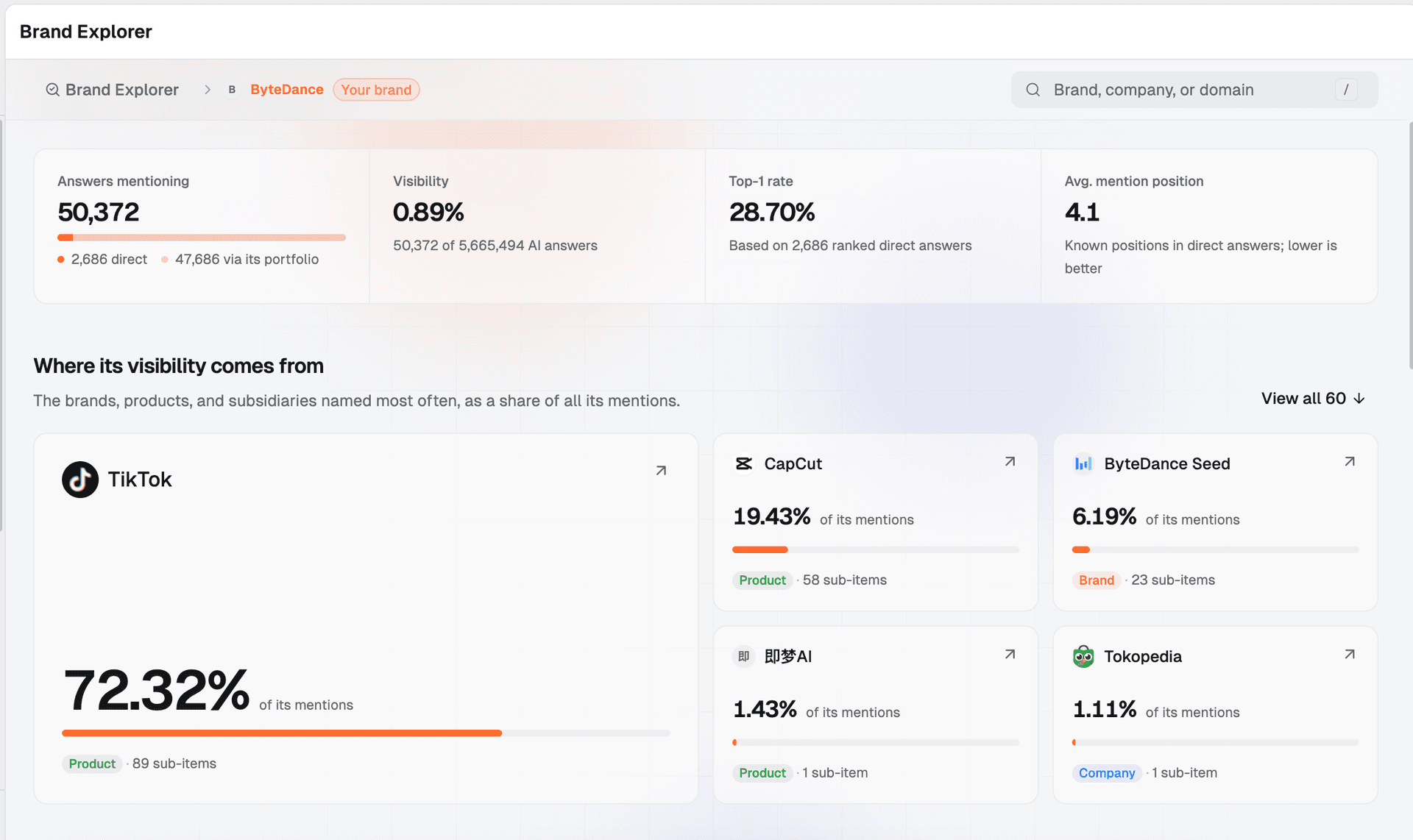
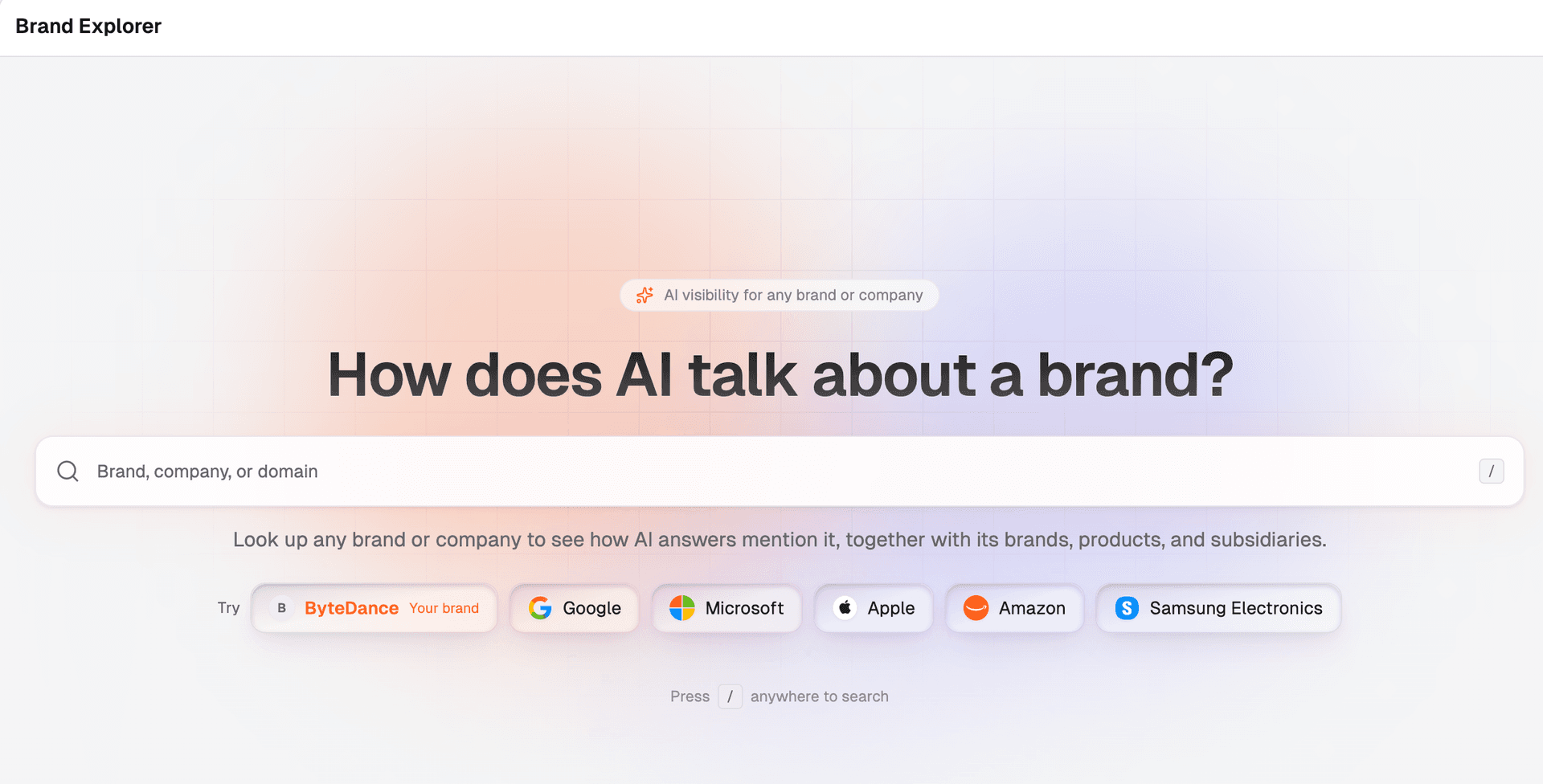
With Brand Graph, users can search for a brand, company, product, or domain to explore related entities and their connections. They can then examine brand- and product-level visibility in AI answers, co-mentioned entities, AI platforms, and cited sources.
What Can You Do with Brand Graph?
Map entity relationships: Search for a brand, company, product, or domain to see identified affiliated companies, brands, products, organizations, and locations—and get a clearer picture of the surrounding business ecosystem.
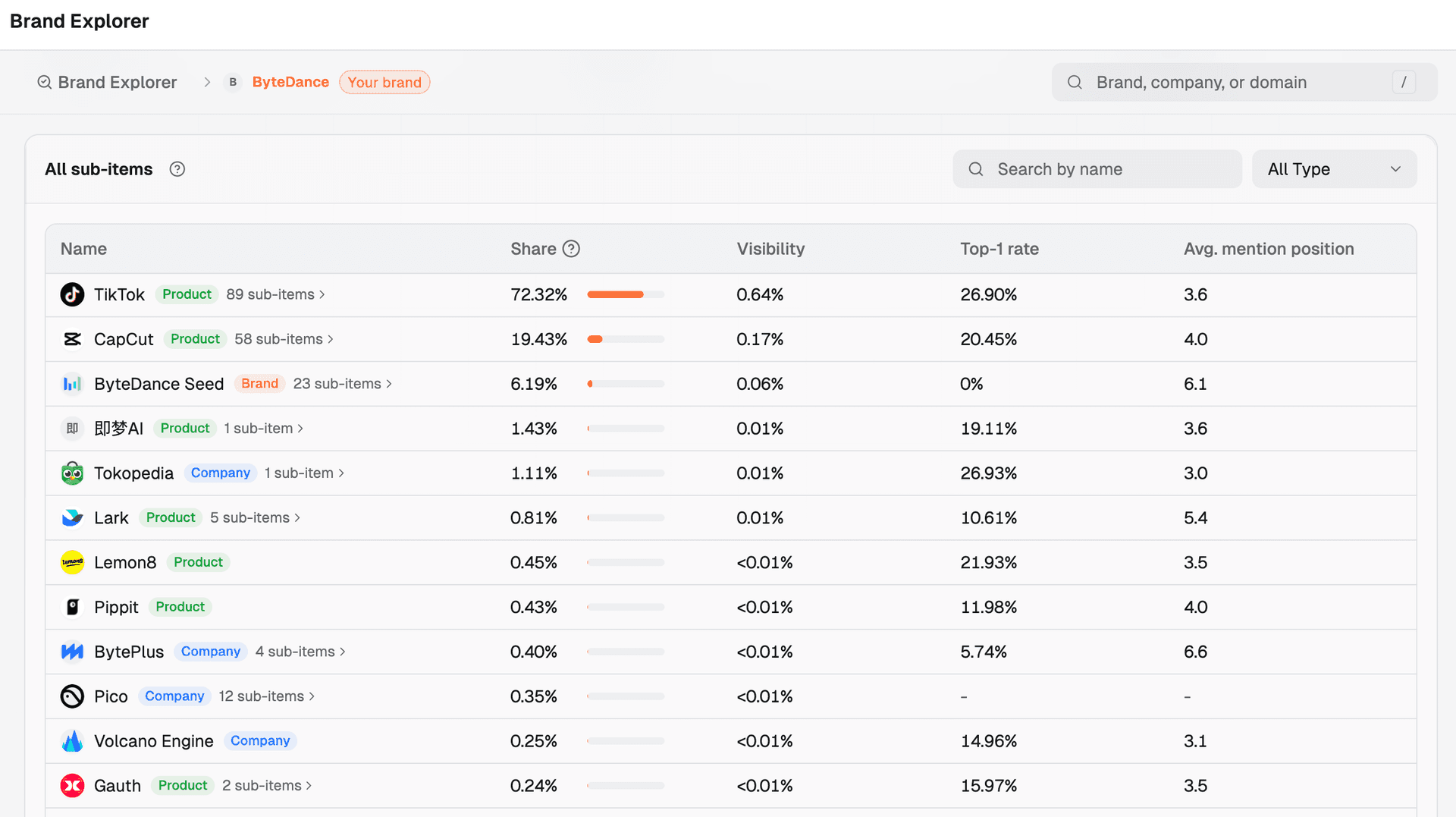
Separate brand and product visibility: Review the number of relevant AI answers, visibility, first-mention rate, and average mention position. Distinguish direct brand mentions from associated mentions through products or other child entities.
Identify frequently compared entities: Examine entities that often appear alongside yours, then consult the original AI answers to determine whether the relationship is competitive, comparative, or something else.
Compare platforms and citation sources: See how a brand or product performs across AI platforms and which websites and content the answers cite.
Portfolio review: Identify which products generate visibility for the brand and which business or product lines are largely absent from AI answers.
Competitor discovery: Uncover unexpected competitors through co-mentions and see how AI compares them with your brand.
GEO content and source research: Find websites and content frequently cited by AI to prioritize content topics and external channels.
2. MCP / API Access: Bring Dageno Data into Your AI Assistants and Workflows
Data has limited reach if it stays inside a dashboard. Dageno now offers MCP / API access, allowing you to connect structured Dageno data to external applications, AI assistants, and custom workflows within your authorized scope. Access is currently read-only.
What Data Can You Access?
Data type
Included information
Suitable uses
Brand Tracking
Monitoring topics and prompts, AI visibility metrics, AI answers, and citation sources
Market information, brand performance, AI visibility metrics, citation sources, and related AI answers
Competitor comparisons, market research
Entity Graph
Entity details and relationships, child entities, co-mentioned entities, and relevant citation sources
Brand and entity relationship research
Ask Questions About Your Data in Natural Language
Alongside the standard API, Dageno provides corresponding MCP tools that can connect to AI applications compatible with the MCP protocol. Once connected, you can ask questions such as:
How has our brand's visibility changed across AI platforms over the past month?
Which competing brands frequently appear alongside our products in AI answers?
Which websites are frequently cited by AI and deserve further content research?
Your AI assistant can query and analyze data within the scope you have authorized.
What This Means for Teams
Research beyond existing tracking prompts: In addition to project-configured prompts, AI answers, and visibility data, access public market and industry data to study broader competitive landscapes and trends.
Deeper competitive analysis: Compare brands' rankings, visibility, answer content, and citation sources across AI platforms and markets to identify strengths, gaps, and GEO optimization opportunities.
Less manual data handling: Use the API to connect internal systems, dashboards, and automated workflows, or use MCP to let AI assistants query and analyze data directly.
3. Brand Reports: Turn AI Visibility Data into Findings You Can Present
Ultimately, data needs to become a report that management or clients can use. Brand Reports combine market-level AI visibility with project-level prompt tracking in a single report, answering three questions: Where does the brand stand in its target market? How does it compare with competitors? What content should the team prioritize next?
Core Capabilities
Choose a market and brand to analyze: In the Market option, view the number of brands in each market and the current project brand's ranking and performance. In the Brand option, the current project brand is selected by default, but you can choose other brands in the market for competitor research and side-by-side comparisons.
Two perspectives, one report: The market perspective covers brand rankings, competitor performance, visibility across AI platforms, user purchase intent, and AI citation sources. The prompt perspective uses project tracking data to show brand performance for specific user questions—moving from the market-wide picture to individual scenarios.
White-label delivery: Upload your own logo in the Your logo field when requesting a report. The generated report will display it instead of the Dageno logo.
Who Is It For?
GEO / SEO and growth agencies: Request tailored reports for each client's target market and brand, then deliver them with your own logo.
Brand marketing teams: Review performance on a 7-, 14-, or 30-day cycle and explain changes in AI visibility, competitive gaps, and content opportunities to management.
Competitive research teams: Select other brands in the target market and compare their appearances, rankings, and visibility in AI answers to identify competitors' strengths and your own growth opportunities.
Continuing to Build Dageno's GEO Capabilities
Together, these updates form a connected workflow: use Brand Graph to understand how AI sees your brand and products, connect the data to everyday tools with MCP / API, and deliver the findings to management or clients through Brand Reports.
The new features are now live. Sign in and explore them.
Dageno is the research and insights team at Dageno AI, publishing industry reports and expert analysis on AI Search Visibility, Generative Engine Optimization (GEO), and AI-powered search discovery.
 Alexa for Shopping