Best AI Keyword Tracking Tools: How to Compare Platforms for GEO and AI Search Visibility
The best AI keyword tracking tool is the one that tracks prompts, AI visibility, citations, competitors, sentiment, platform differences, content opportunities, and result attribution in one measurable GEO workflow.
The best AI keyword tracking tools to compare in 2026 are Dageno AI, Profound, Peec AI, Otterly AI, Ahrefs Brand Radar, and Semrush AI Visibility Toolkit. Choose by the buyer questions you need to monitor, the citation evidence you need to inspect, and how your team will act on the findings.
TL;DR
The shortlist: Dageno AI, Profound, Peec AI, Otterly AI, Ahrefs Brand Radar, and Semrush AI Visibility Toolkit each provide a concrete way to monitor AI search visibility.
For content execution: evaluate Dageno AI's monitoring-to-content workflow and Profound's Answer Engine Insights with Agents.
For recurring prompt reporting: evaluate Peec AI's tagged prompt portfolios and Otterly AI's keyword-to-prompt research and reporting.
For SEO research alongside AI tracking: evaluate Ahrefs Brand Radar's index and Custom Prompts, or Semrush's Prompt Research and Prompt Tracking.
Compare the same prompts, markets, engines, and time periods. Check the selected plan's coverage and allowances before interpreting visibility, citations, or answer position.
6 Best AI Keyword Tracking Tools at a Glance
These six products support AI answer visibility research and monitoring. The comparison uses official product documentation checked in September 2026; the recommendations below are based on workflow fit. The numbering identifies the six candidates and does not represent a measured performance score.
Tool
Best fit
Distinctive workflow to evaluate
Dageno AI
SEO and content teams acting on visibility gaps
Prompt and citation analysis connected to content priorities and generation
Profound
Teams combining prompt-demand research with execution
Daily Answer Engine Insights, Prompt Volumes research, and Agents
Peec AI
SEO teams managing focused prompt portfolios
Daily tracking segmented by model, country, and prompt tags
Otterly AI
Marketers and agencies building repeatable reports
Topic or Search Console keywords converted into monitored prompts
Ahrefs Brand Radar
SEO teams needing broad discovery and campaign tracking
Pre-collected AI Visibility Index alongside Custom Prompts
Semrush AI Visibility Toolkit
SEO teams and agencies working in Semrush
Prompt Research for discovery and Prompt Tracking for recurring monitoring
1. Dageno AI
Best for: marketing and SEO teams that want prompt-level monitoring to guide content production.
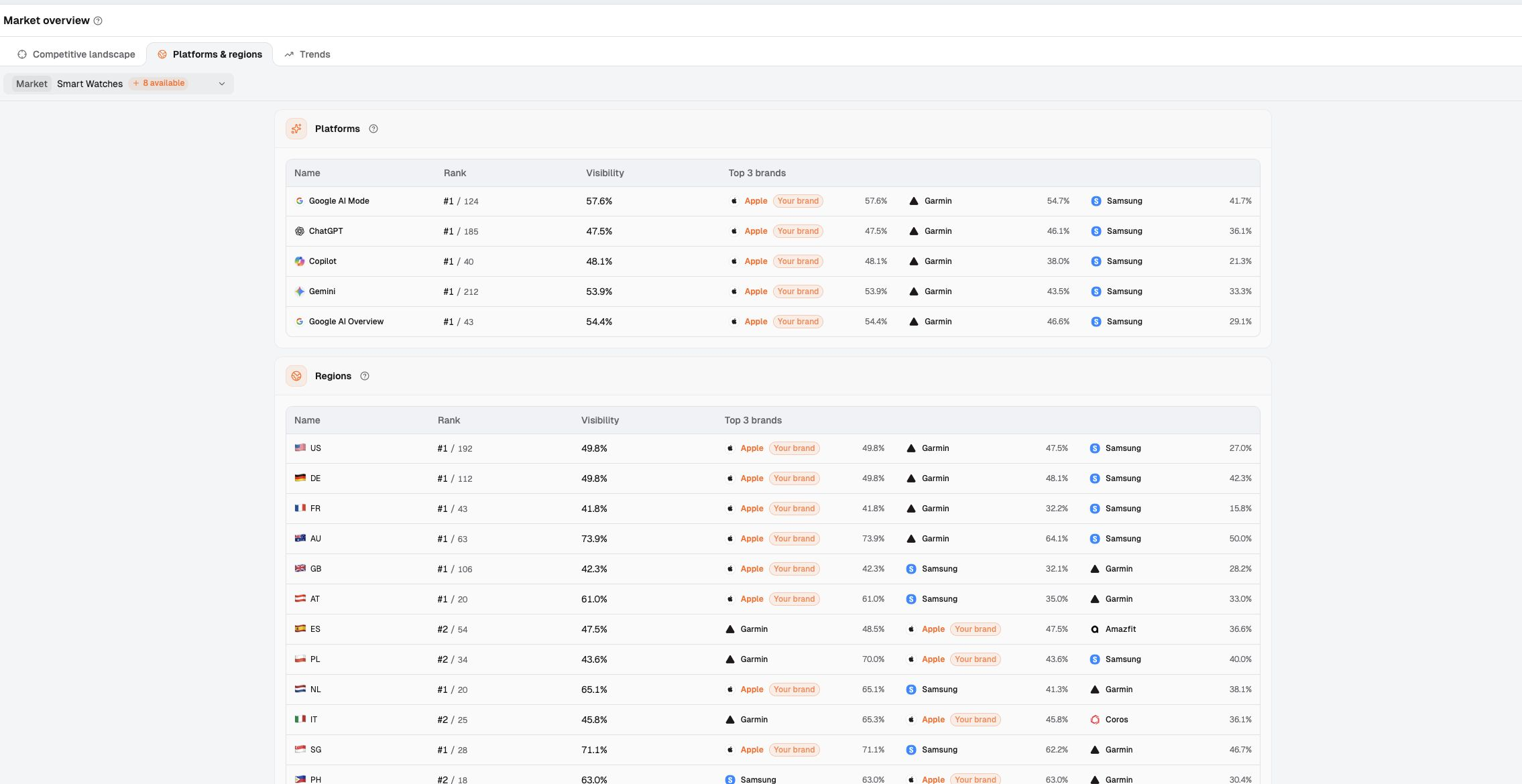
Dageno AI's Answer Engine Insights compares brand mentions, position, share of voice, sentiment, and cited domains or pages across topics and platforms. Teams can identify questions where competitors appear, examine citation gaps, and prioritize the pages or topics that need work. Its content workflow connects those findings with content planning and generation.
What makes it useful: monitoring evidence and content execution are connected in the same workflow, making it a relevant option when the team owns both measurement and publishing.
Before choosing: confirm supported models, markets, prompt allowances, collection frequency, and exports for the selected plan. Keep observed answer and citation data separate from Query Fanout research: Dageno describes that research as simulated query decomposition, not direct access to an engine's internal reasoning.
Best for: teams connecting prompt-demand research, competitive analysis, and content workflows.
Profound lets teams upload custom prompts or generate them from brand and topic settings. Answer Engine Insights runs tracked prompts daily and reports visibility, share of voice, sentiment, competitor rankings, and citation sources. Prompt Volumes adds consumer-panel research to help prioritize questions, while Agents can create or optimize content around monitored gaps.
What makes it useful: teams can move from demand research to a defined prompt set, inspect competitor citation gaps, and use those findings in content execution.
Before choosing: confirm engine coverage, markets, prompt capacity, exports, and access to Prompt Volumes. The reviewed Starter plan tracks ChatGPT only; broader coverage depends on the plan. Consumer-panel demand data should be evaluated for the relevant market and audience.
Best for: SEO and content teams organizing a focused portfolio of prompts by topic, market, or funnel stage.
Peec AI accepts custom prompts and tags, supports daily runs for selected prompt and model combinations, and compares visibility, position, sentiment, and share of voice against competitors. Teams can filter results by model, country, and prompt tags. Its source analysis shows domain and URL usage with citation frequency.
What makes it useful: tagged prompt groups and market filters help teams isolate where visibility is improving or falling, then investigate the sources behind those answers.
Before choosing: check selected models, prompt limits, projects, countries, and reporting integrations. Its prompt-volume score represents relative topic demand on a 1–5 scale; it is not an exact count of all AI searches. Daily monitoring measures the configured prompt sample.
Best for: marketing teams and agencies turning existing search research into recurring AI visibility reports.
Otterly AI, styled OtterlyAI on its website, suggests prompts from a topic, URL, or Google Search Console keywords and groups them by intent and funnel stage. Its analytics monitors a configured prompt set daily, comparing brand mentions, share of voice, average rank, sentiment, and cited URLs. Gap analysis highlights prompts where rivals appear and your brand does not.
What makes it useful: keyword-to-prompt research, competitor comparisons, and reporting support an ongoing client or marketing review process. The product also documents content audits, briefs, and GEO recommendations.
Before choosing: confirm included engines and add-ons, prompt allowances, workspaces, exports, and integrations. The reviewed plans list Claude, Google AI Mode, and Gemini as add-ons. Estimated Intent Score is a prioritization signal, not an exact engine-wide search volume.
Best for: SEO teams combining broad brand discovery with tracking for specific buyer questions.
Ahrefs Brand Radar offers two complementary approaches. Its AI Visibility Index searches pre-collected AI responses to discover brand mentions, citations, and competitor share of voice. Custom Prompts monitors the questions a team defines, with tracking data collected from setup onward. Teams can choose a daily, weekly, or monthly cadence per platform for custom monitoring.
What makes it useful: the index helps discover relevant topics and cited pages before a team has built a prompt portfolio; Custom Prompts supplies a focused baseline for a campaign or niche.
Before choosing: confirm index access, engines, custom checks, and refresh cadence. Ahrefs notes that its keyword-derived index may have limited coverage for brands with little search demand, so test the relevant niche and consider custom tracking for gaps.
Best for: SEO teams and agencies that want AI topic discovery and recurring monitoring within their Semrush workflow.
Semrush separates Prompt Research, which discovers topics and prompts, from Prompt Tracking, which monitors a custom prompt set daily. Teams can enter or import prompts, inspect mentions and owned citation sources, compare competitors, and open the actual AI answer snapshots. The Sources report lists cited domains and URLs. Prompt Research also connects to drafting through the Content Toolkit.
What makes it useful: teams can use topic discovery to build a monitoring campaign, then investigate which answers and sources explain the recorded visibility.
Before choosing: confirm prompt allowances, engines, markets, languages, and which toolkit includes the required feature. The reviewed Prompt Tracking documentation supports desktop searches. Its position metric follows each AI interface's citation layout, so avoid treating it as one universal brand rank across engines.
Start with the same set of buyer questions, brand aliases, competitors, target countries, and languages. Match the engines and collection period wherever possible. Inspect saved answers and cited URLs alongside summary scores, because each vendor defines visibility, share of voice, and position differently.
Use the trial or demonstration to verify the workflow your team will actually run: discover questions, monitor answers, investigate source gaps, create a report, and assign an action. A team that already has content production may prioritize source analysis and exports; a team managing execution may also need briefs, audits, or generation. The following sections explain these criteria and illustrate their use in Dageno AI.
What Are AI Keyword Tracking Tools?
AI keyword tracking tools monitor how brands, competitors, sources, and content appear in AI-generated answers across prompts, topics, and AI search platforms.
The phrase “AI keyword tracking” is slightly misleading because AI search users rarely behave like traditional search users. A Google keyword may be “CRM software,” but an AI search prompt may be “What is the best CRM for a 20-person B2B SaaS team that needs HubSpot integration and fast onboarding?”
A strong AI keyword tracking tool should measure:
Whether AI systems mention the brand
Whether AI systems cite the brand’s website or third-party sources
Whether competitors appear more often
Whether the brand appears early or late in the answer
Whether the answer sentiment is positive, neutral, or negative
Which prompt clusters create the highest GEO opportunity
Which content updates can improve AI visibility
Whether optimization work changes traffic, leads, pipeline, or sales conversations
Dageno AI is relevant because AI keyword tracking should not stop at a visibility dashboard. The Dageno AI GEO platform helps teams move from AI search monitoring to strategy, GEO-ready content generation, and result attribution.
Why AI Keyword Tracking Is Different From Traditional Rank Tracking
AI keyword tracking is different from traditional rank tracking because generative engines synthesize answers, cite sources, compare brands, and recommend products without always sending a click.
Traditional rank tracking measures a URL’s position for a keyword in search engine results. AI keyword tracking measures how an AI system answers a user’s question, which brands are included, which sources are cited, and how the answer frames the brand.
Google explains that AI Overviews and AI Mode are part of Google Search experiences that help users explore complex questions and discover supporting links. Google Search Central – AI features and your website
OpenAI explains that ChatGPT Search responses can include inline citations and source panels, which means cited sources can influence the user’s trust journey even before the user clicks a traditional search result. OpenAI Help Center – ChatGPT Search
Traditional rank tracking
AI keyword tracking
Tracks keyword positions
Tracks prompts, topics, and AI-generated answers
Measures URL ranking
Measures brand mentions, citations, and recommendations
Focuses on Google SERPs
Covers ChatGPT, Gemini, Perplexity, Google AI Overviews, AI Mode, Copilot, Grok, and other AI engines
Reports ranking changes
Reports visibility, share of voice, sentiment, and source gaps
Prioritizes search volume
Prioritizes prompt intent, funnel stage, and AI answer influence
Optimizes pages for search results
Optimizes answer-ready content for AI extraction and citation
Dageno AI supports this new model because the platform tracks how AI systems actually mention, cite, rank, and describe brands across real prompt scenarios rather than treating AI search as a simple keyword ranking extension.
The Core Criteria for Comparing AI Keyword Tracking Tools
The best way to compare AI keyword tracking tools is to evaluate platform coverage, prompt methodology, citation analysis, competitor benchmarking, sentiment tracking, workflow depth, and attribution.
Many AI keyword tracking tools can show whether a brand appears in AI answers. The stronger tools help teams understand why the brand appears, why competitors win, and what action should happen next.
Comparison criterion
What to look for
Why it matters
Dageno AI relevance
Platform coverage
ChatGPT, Gemini, Perplexity, Google AI Overviews, AI Mode, Copilot, Grok, and regional engines
AI visibility varies by platform
Dageno AI monitors multiple AI search platforms and supports platform-level comparison
Prompt discovery
Topic clusters, prompt heat, intent, search demand, and fan-out questions
AI search starts with questions, not only keywords
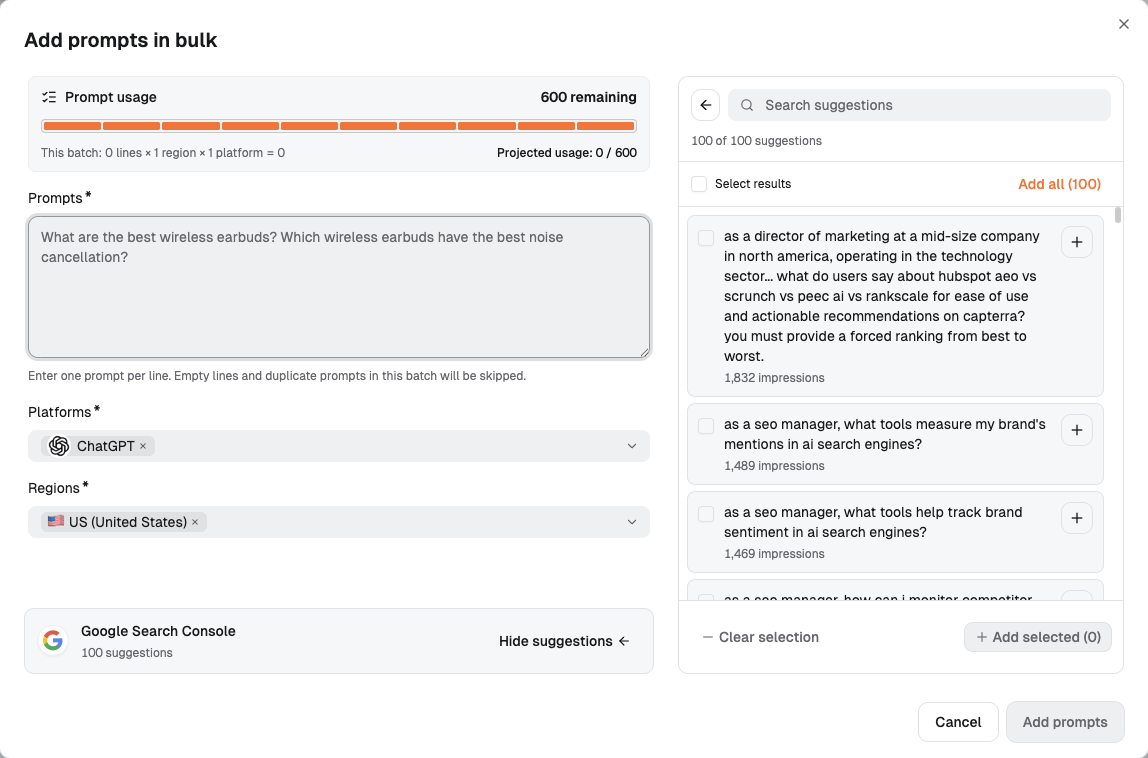
Dageno AI Free Prompt Miner helps discover high-value AI prompts
Dageno AI Prompts Analysis shows prompt-level gaps
Citation analysis
Domains and pages cited by AI answers
Citations explain source authority
Dageno AI Citations module identifies trusted source patterns
Competitor benchmarking
Visibility, share of voice, rank, and citation comparison
AI search is competitive
Dageno AI compares brand and competitor performance
Sentiment analysis
Positive, neutral, and negative AI descriptions
Visibility without trust can hurt conversion
Dageno AI tracks sentiment trends by prompt and platform
Opportunity scoring
Priority by brand gap, source gap, platform, intent, and funnel stage
Teams need execution priorities
Dageno AI Opportunity module turns gaps into tasks
Content workflow
Briefs, audits, page fixes, FAQs, and GEO-ready content
Monitoring alone does not improve visibility
Dageno AI connects strategy to content generation
Attribution
Visibility changes, citation changes, traffic, leads, and sales signals
GEO needs measurable business outcomes
Dageno AI supports result attribution beyond ranking checks
Original insight:
The right AI keyword tracking tool should reduce debate inside the marketing team. If the tool only says “visibility is low,” the team still argues about what to do. If the tool shows the exact prompt, missing source, competitor advantage, and recommended content action, the team can execute.
Tool Categories as a Secondary Selection Aid
The six named products above should be evaluated through their actual features and plan allowances. Broader categories can help organize requirements: spot-check tools, SEO suites with AI tracking, AI visibility dashboards, developer/API tools, and platforms connecting monitoring with content execution.
These five categories overlap. An SEO suite may support custom prompts, and an AI analytics platform may also offer content briefs or generation. Compare the capabilities your team needs instead of assuming a product's category defines what it can do.
Start With Prompt Discovery, Not Keyword Lists
The best AI keyword tracking workflow starts with prompt discovery because AI search users ask full questions that express context, intent, and decision stage.
Traditional keyword lists are useful, but they often miss the way users speak to AI systems. A buyer does not only ask “email marketing software.” A buyer may ask “What email marketing platform is best for a Shopify brand with a small team and limited automation experience?”
A strong prompt discovery workflow should include:
Category discovery prompts
“Best tools for” prompts
Competitor alternative prompts
“X vs Y” comparison prompts
Pricing and value prompts
Support and trust prompts
Use-case prompts by industry
Region and language-specific prompts
Technical implementation prompts
Bottom-funnel buyer prompts
Dageno AI’s Free Prompt Miner helps teams discover high-value AI search prompts before they invest in content production, monitoring, or optimization. Dageno AI’s prompt methodology is useful because AI search growth begins with understanding what users are actually asking AI systems.
Practical example:
A SaaS team tracking the keyword “AI visibility tool” may miss prompts such as “best GEO platform for agencies,” “how to measure ChatGPT brand mentions,” and “tools like Profound for startups.” Dageno AI Prompt Miner can help uncover those prompt-level opportunities before the team builds a content roadmap.
Topic Performance Shows Which AI Search Themes Deserve Investment
Topic performance measures how a brand performs across groups of semantically related AI prompts rather than isolated keywords.
Topic-level tracking matters because AI search demand is fragmented. Users may ask the same buying question in many forms. A brand should know whether it is visible across the broader topic, not only one phrase.
A topic performance dashboard should include:
Topic visibility
Topic search demand or prompt heat
Topic sentiment
Topic citation rate
Topic average position
Topic competitor share of voice
Topic-level prompt gaps
Topic-level content opportunities
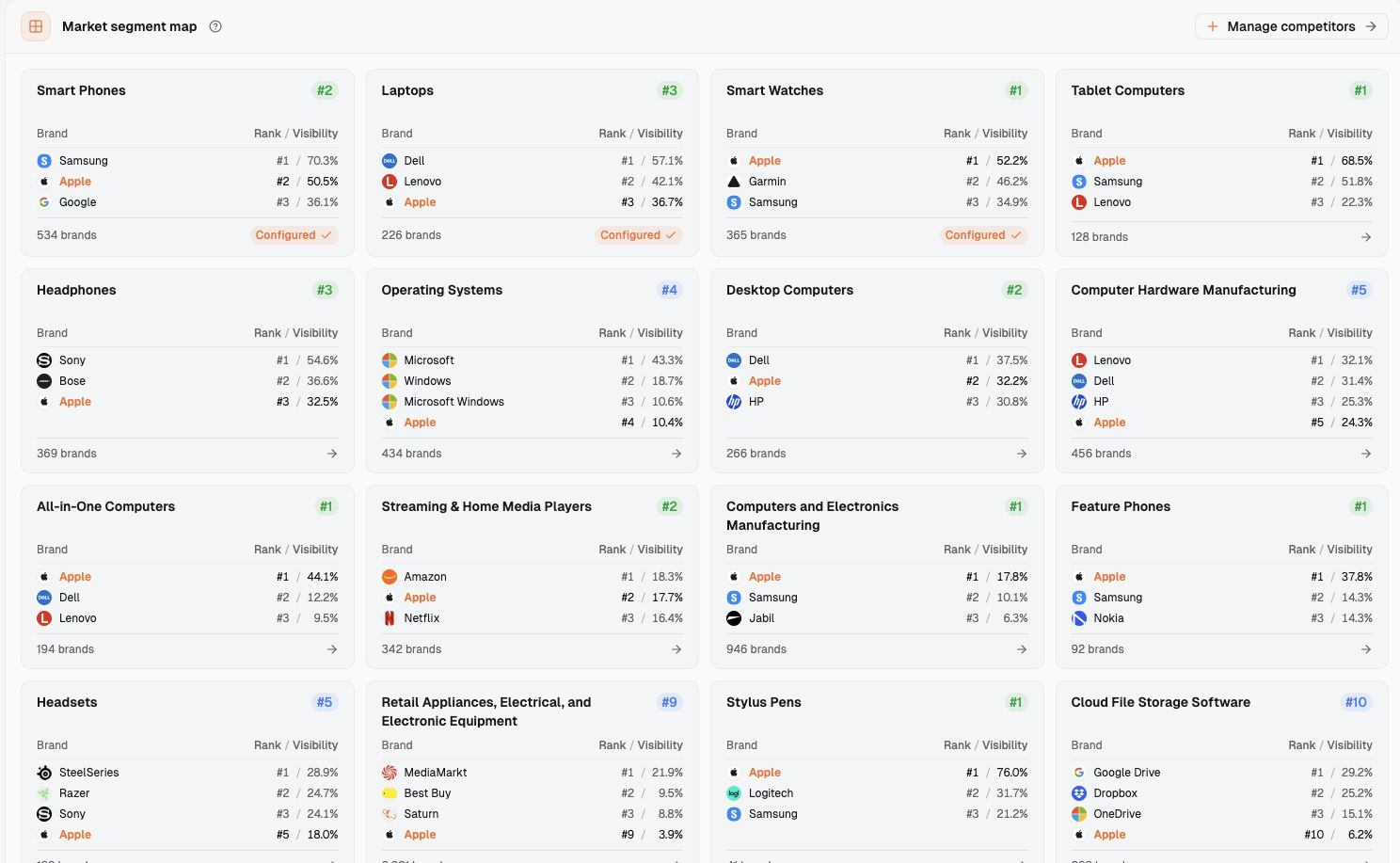
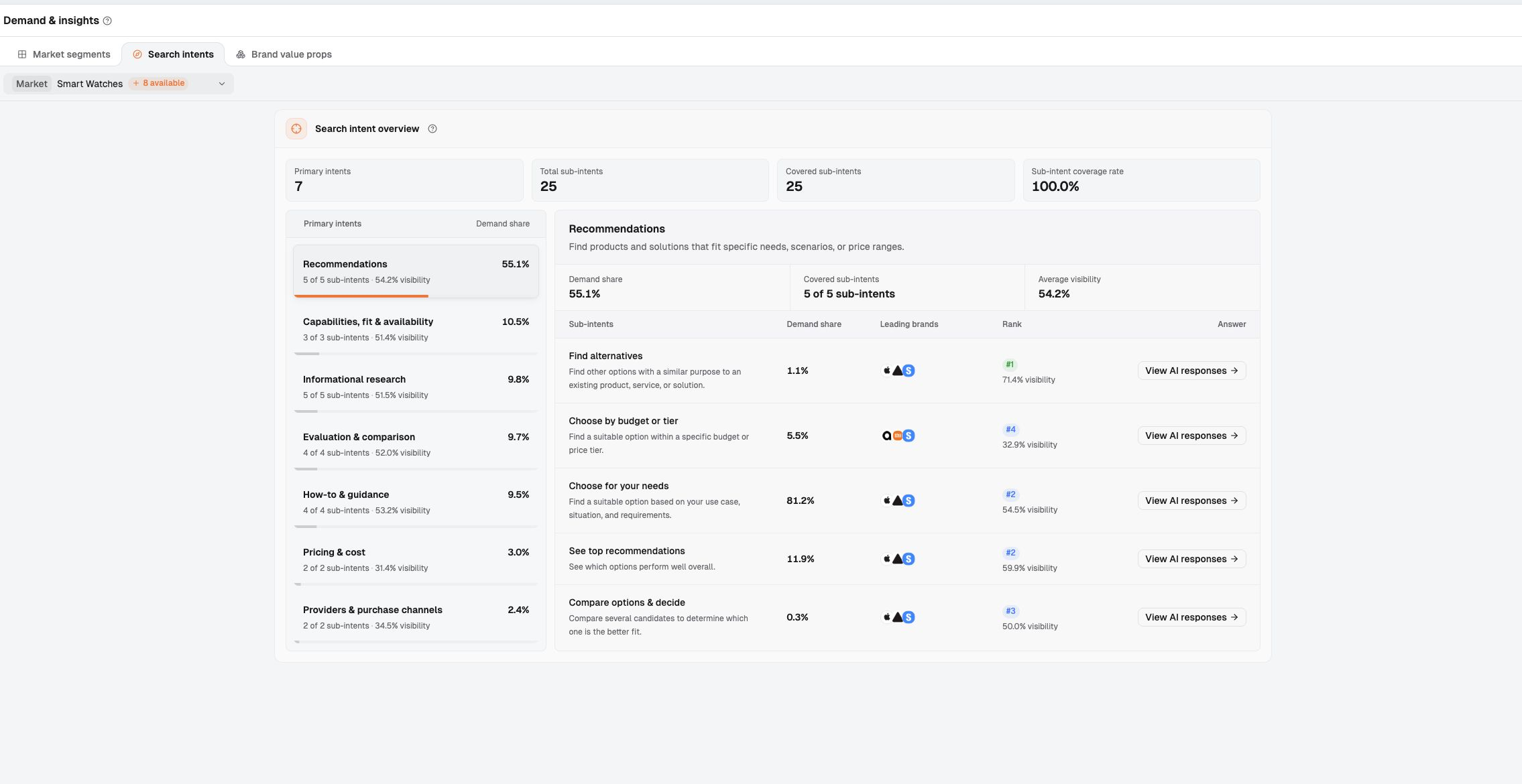
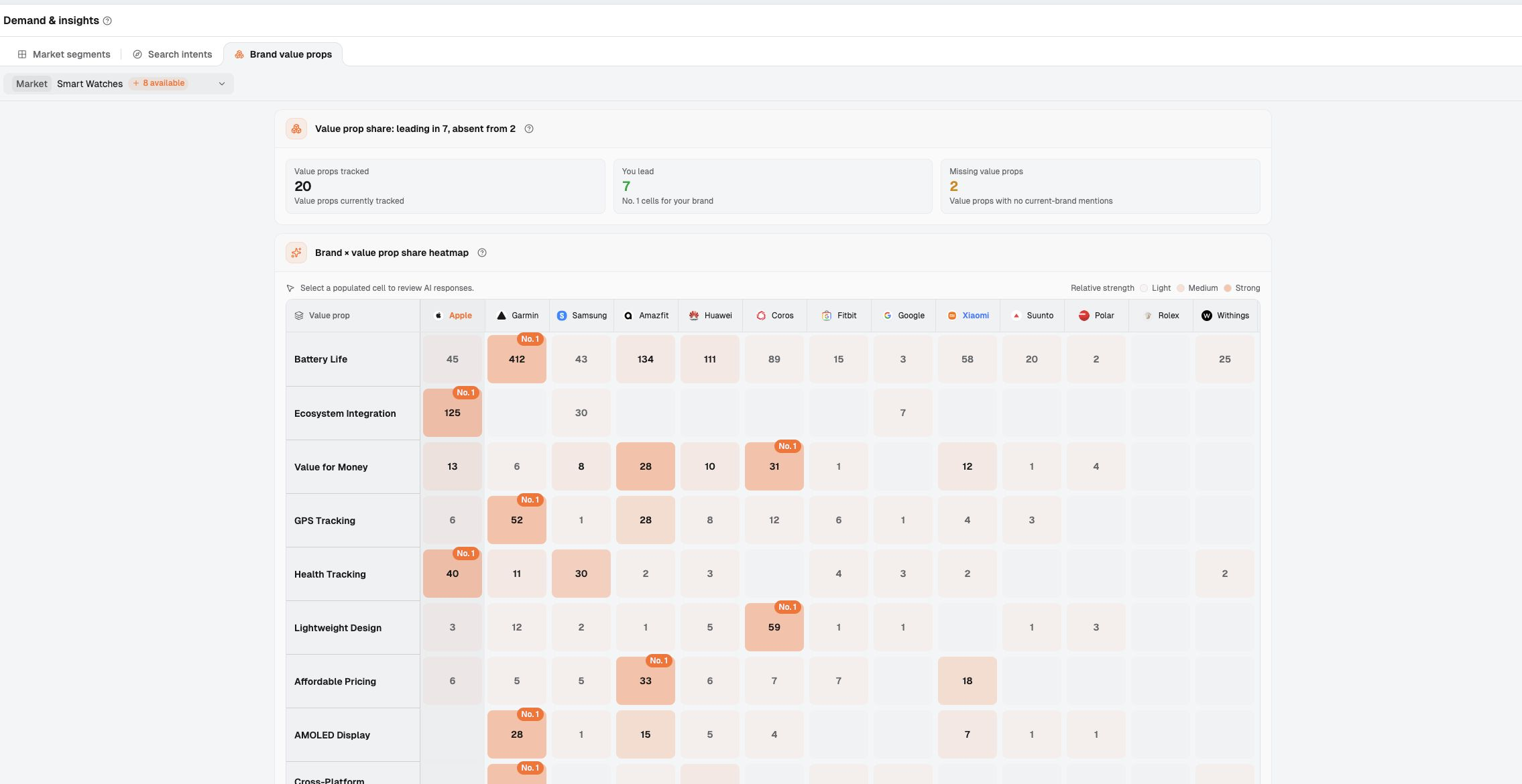
Dageno AI’s Topic Performance module is built around this shift from keywords to question semantics. The module groups related questions into topics and shows visibility, sentiment, average ranking, citation rate, and search volume signals so teams can prioritize the themes with the strongest growth potential.
Original insight:
The best AI keyword tracking dashboards should have fewer isolated keywords and more prompt clusters. A cluster reveals whether a brand owns the user need; a keyword only shows whether a brand appeared for one phrasing.
Prompt-Level Tracking Is the Smallest Verifiable Unit of GEO
Prompt-level tracking shows exactly where a brand appears, disappears, ranks, gets cited, or loses to competitors inside AI-generated answers.
Prompt-level tracking is essential because aggregate visibility scores can hide the real opportunity. A brand may have decent overall visibility while still missing the highest-intent prompts that influence revenue.
Useful prompt-level metrics include:
Brand mentioned or not mentioned
Brand position in the AI answer
Competitors mentioned
Citation sources
Owned source share
Competitor source share
Sentiment
Funnel stage
Platform coverage
Recommended content action
Dageno AI’s Prompts Analysis module helps teams inspect the exact questions users ask AI platforms. The module makes GEO measurable at the prompt level by showing brand mentions, ranking position, and source gaps.
Dageno AI also lets teams inspect prompt-level details, including whether the brand was mentioned, where the brand ranked, and whether the AI answer cited the brand’s own website or competitor sources.
Practical example:
An agency managing GEO for a client can use prompt-level screenshots and data to show that “best AI keyword tracking tools for agencies” mentions three competitors but not the client. That prompt becomes a clear content brief, source-building target, and future re-test item.
Platform Coverage Determines Whether an AI Tracking Tool Is Complete
A complete AI keyword tracking tool should monitor multiple AI platforms because ChatGPT, Gemini, Perplexity, Google AI Overviews, Google AI Mode, Copilot, and Grok can produce different answers for the same user intent.
Platform coverage is not just a feature checklist. Each AI system may retrieve sources differently, cite different domains, emphasize different competitors, and vary by country or language. A brand that appears in ChatGPT may be absent in Gemini. A brand cited by Perplexity may not appear in Google AI Overviews.
A strong platform comparison should include:
Visibility by platform
Share of voice by platform
Average position by platform
Citation share by platform
Sentiment by platform
Competitor ranking by platform
Platform trend changes
Regional and language-level differences
Dageno AI’s Platforms module helps teams compare performance across AI engines. This helps teams decide whether to prioritize ChatGPT, Gemini, Perplexity, Google AI Overviews, Google AI Mode, Copilot, Grok, or another regional engine.
Citation Tracking Shows Which Sources AI Engines Trust
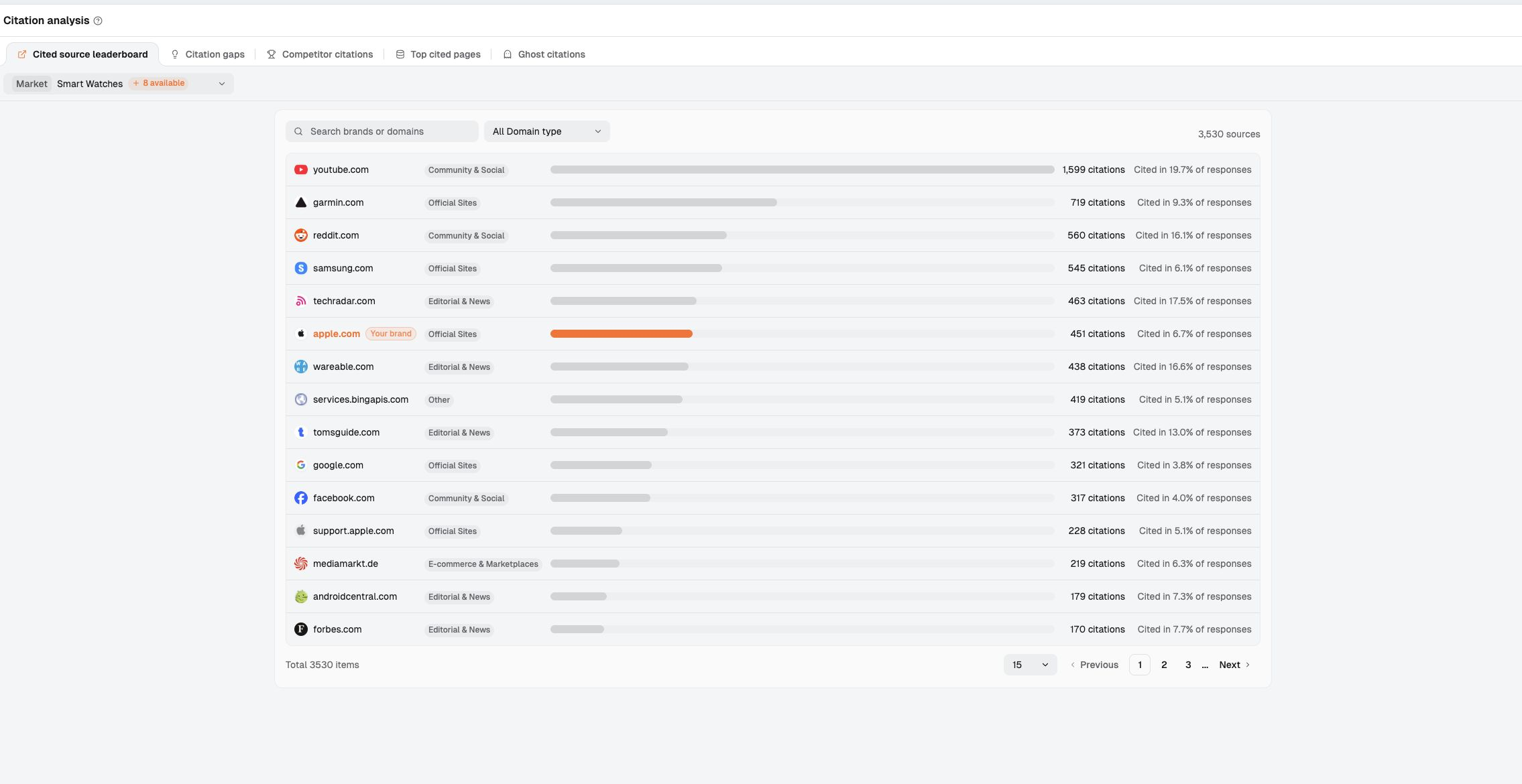
Citation tracking identifies the domains and pages AI systems use when mentioning, recommending, or comparing brands.
Citation tracking matters because AI visibility is not only about being named. A brand may be mentioned but not cited. A competitor may receive more citations. A third-party page may shape the AI answer more than the brand’s own website.
Ahrefs reported in 2026 that only 38% of AI Overview citations in its study came from pages ranking in Google’s top 10, which suggests AI citation selection cannot be fully inferred from traditional SEO rankings. Ahrefs – AI Overview citations and top 10 rankings
A strong citation tracking workflow should identify:
Owned pages cited by AI
Competitor pages cited by AI
Third-party reviews cited by AI
Media and analyst sources cited by AI
Documentation pages cited by AI
Community sources cited by AI
Citation gaps where competitors dominate
Pages that deserve content refresh or source-building support
Dageno AI’s Citations module helps teams identify the domains and specific pages AI systems cite. This turns citation tracking into a practical GEO input for content updates, digital PR, review management, documentation improvements, and comparison content.
Original insight:
Citation gaps often explain ranking gaps in AI answers. When an AI system cites competitor documentation but never cites the brand’s own docs, the problem is usually not only “visibility”; the problem is source authority and answer extractability.
Share of Voice and Competitor Tracking Reveal AI Narrative Control
Share of voice measures how much of the AI answer landscape belongs to a brand compared with its competitors.
A brand can appear in AI answers and still lose the market narrative. If competitors appear more often, appear earlier, receive more citations, and get described more positively, the brand has a competitive GEO problem rather than a simple visibility problem.
A strong competitor tracking workflow should compare:
Brand visibility versus competitor visibility
Brand average position versus competitor position
Brand citation share versus competitor citation share
Brand sentiment versus competitor sentiment
Topic-level competitor dominance
Platform-level competitor dominance
Competitor source strategies
Competitor content formats
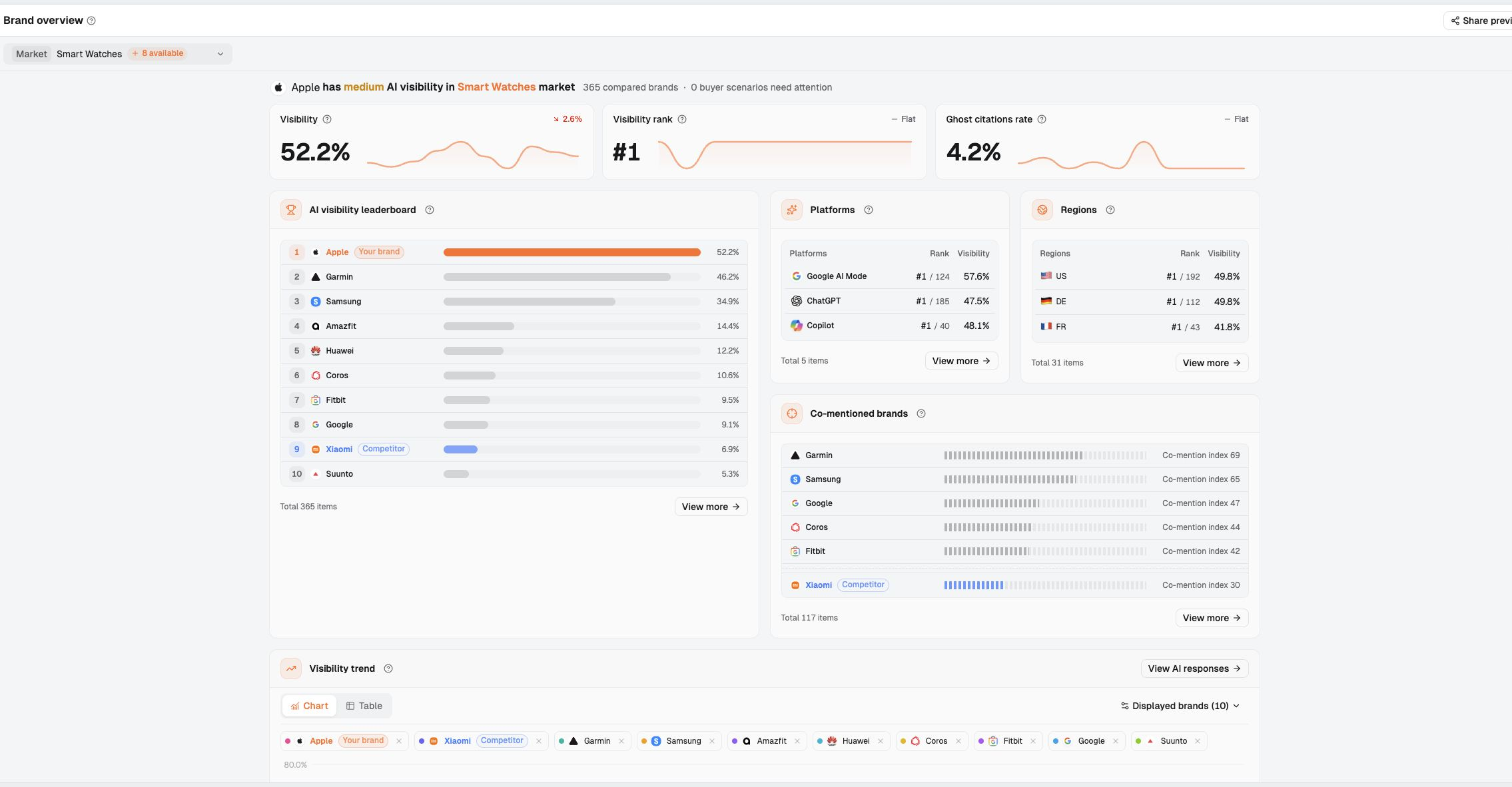
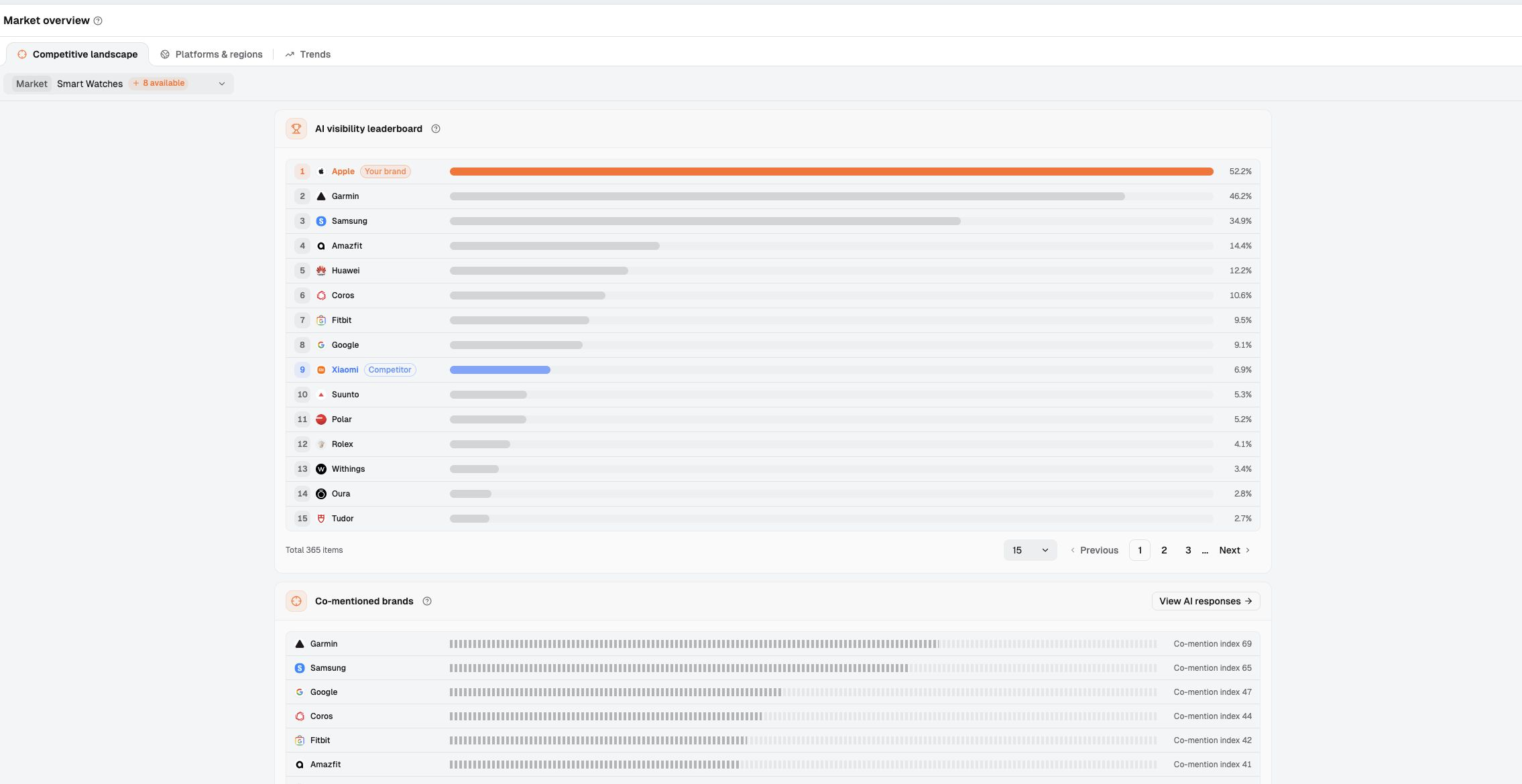
Dageno AI’s Analytics module helps teams compare visibility, share of voice, rank, and trends across brands, topics, time periods, and platforms. This makes AI keyword tracking useful for competitive intelligence, not only reporting.
Dageno AI’s Share of Voice view helps teams see whether AI systems talk about the brand or competitors more often for the same topic. This is especially useful for agencies that need to show clients how GEO work changes competitive position over time.
Practical example:
A marketing team may believe the brand’s main competitor is Competitor A, while Dageno AI shows Competitor B dominates AI answers for high-intent prompts. That insight can change the content roadmap, comparison pages, sales enablement materials, and source-building strategy.
Sentiment Tracking Shows Whether AI Visibility Helps or Hurts Trust
Sentiment tracking measures whether AI systems describe a brand positively, neutrally, or negatively across tracked prompts.
AI keyword tracking should include sentiment because visibility alone can be misleading. A brand that appears frequently but gets described as expensive, difficult to use, outdated, risky, or poorly supported may lose conversions before users reach the website.
Useful sentiment dimensions include:
Pricing sentiment
Support sentiment
Product quality sentiment
Security sentiment
Reliability sentiment
Ease-of-use sentiment
Implementation sentiment
Competitor comparison sentiment
Dageno AI’s Sentiment module helps teams monitor emotional distribution and trend changes across AI mentions. This allows SEO, PR, product marketing, and customer success teams to detect whether AI systems reinforce strengths or amplify negative signals.
Original insight:
Sentiment should be tracked by buyer objection, not only as a general score. “Negative pricing sentiment” and “negative support sentiment” require different content, product, and customer success actions.
Query Fanout Analysis Reveals How AI Engines Research Answers
Query fanout analysis shows how deeply AI systems investigate a prompt and which source paths may influence the final answer.
Fanout matters because generative engines may break one user question into multiple sub-queries before producing a synthesized answer. A high-fanout prompt can represent a high-value research journey. If competitors dominate the source paths for that prompt, the brand may be absent from an important decision process.
A fanout analysis should answer:
Which prompts trigger deeper AI research?
Which sub-queries appear around a topic?
Which competitors appear across the research path?
Which owned sources are missing?
Which third-party sources shape the answer?
Which fanout paths deserve new content or source-building?
Dageno AI’s Query Fanouts module helps teams understand the research paths behind AI answers. This is important for AI keyword tracking because the visible answer may be the result of multiple hidden or semi-visible retrieval steps.
Dageno AI’s Prompt Cluster Monitoring guide is useful for teams that want to connect fanout behavior, prompt clusters, content workflows, source building, and AI visibility monitoring.
Opportunity Scoring Turns AI Keyword Tracking Into Execution
Opportunity scoring ranks AI search gaps by business value, urgency, competitor strength, source gap, platform coverage, and execution feasibility.
A good AI keyword tracking tool should not leave teams with hundreds of prompts and no priority. The tool should show which prompt gaps matter most and what action should happen next.
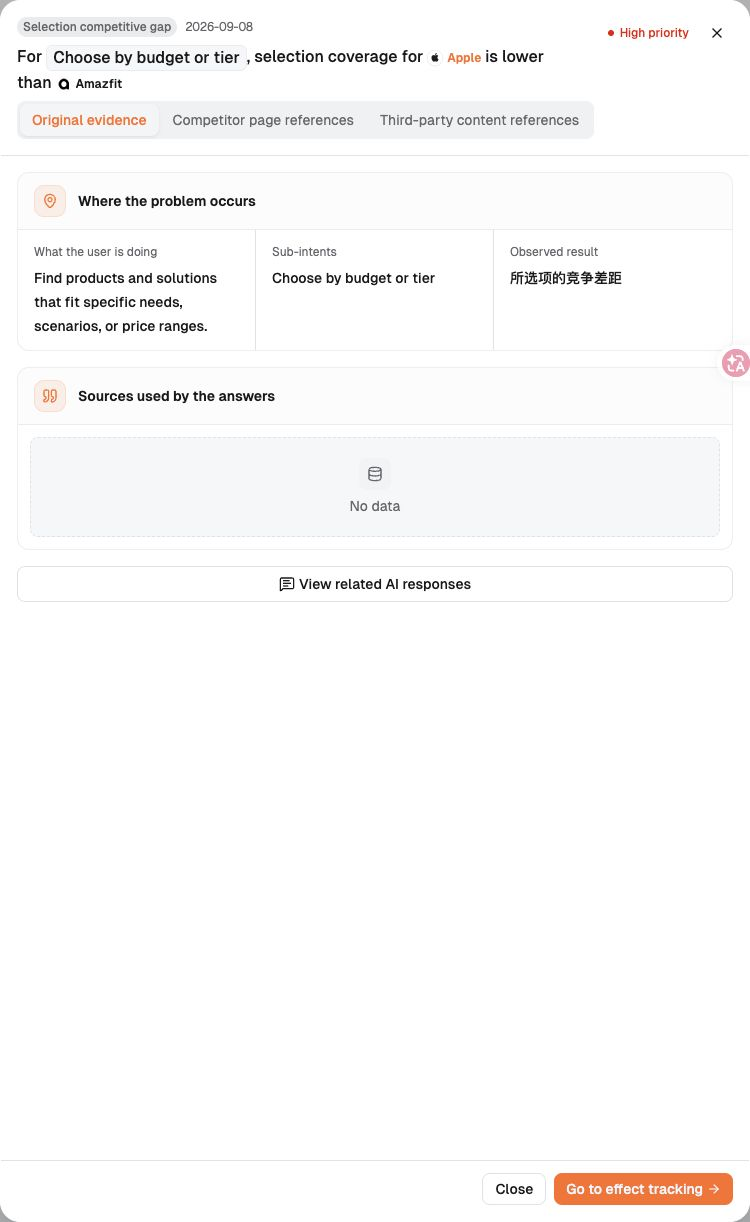
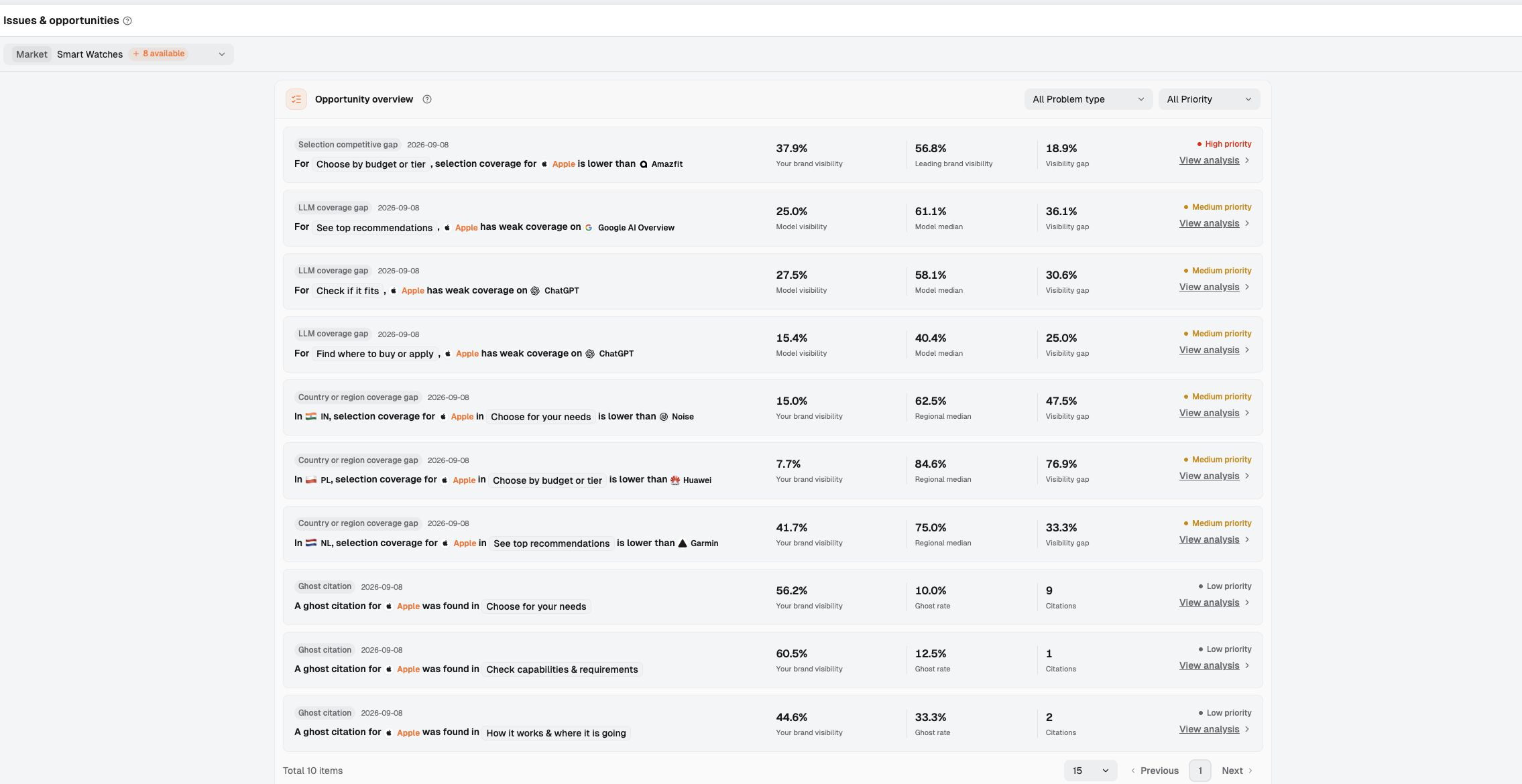
Dageno AI’s Opportunity module automatically aggregates prompt gaps into a prioritized action list. Each opportunity can be traced back to a prompt, platform, brand gap, source gap, and competitor advantage.
Use this scoring model when comparing AI keyword tracking platforms:
Opportunity signal
Why the signal matters
Recommended action
High buyer intent
The prompt can influence purchase decisions
Create comparison, pricing, trust, or use-case content
Brand gap
Competitors appear but the brand does not
Build answer-first content and source reinforcement
Source gap
AI cites competitors but not the brand
Improve owned pages and third-party validation
Sentiment risk
AI describes the brand negatively
Fix claims, publish proof, and improve reputation sources
Platform coverage
The gap appears across multiple AI engines
Prioritize cross-platform GEO work
Search demand
The topic has meaningful user demand
Invest in content and distribution
Execution clarity
A clear content or source fix exists
Move the task into the next sprint
Dageno AI is useful because opportunity scoring connects monitoring to action. Teams can use Dageno AI as a monthly GEO planning system rather than only an analytics dashboard.
How Dageno AI Helps Compare and Execute AI Keyword Tracking
Dageno AI helps teams compare, monitor, and improve AI keyword visibility by connecting prompt discovery, AI search monitoring, citation analysis, competitor benchmarking, opportunity scoring, content generation, and result attribution.
Dageno AI provides the workflow from data monitoring → strategy → content generation → result attribution. This full workflow matters because AI keyword tracking is only valuable when the team can convert visibility gaps into measurable GEO actions.
Data monitoring:
Dageno AI monitors AI visibility, citation rate, share of voice, sentiment, average position, topic performance, prompt performance, platform performance, and competitor trends across AI search systems.
Strategy:
Dageno AI identifies high-value prompt clusters, weak topics, source gaps, competitor advantages, fanout opportunities, and sentiment risks. This helps teams decide which AI search opportunities deserve content investment first.
Content generation:
Dageno AI helps teams turn AI keyword tracking insights into GEO-ready content, including FAQ sections, comparison pages, product explainers, category guides, trust pages, source-building assets, and answer-first content clusters. The Single Page Audit helps teams check whether a page is clear, structured, crawlable, and AI-readable.
Result attribution:
Dageno AI helps teams connect AI search optimization to visibility improvements, citation changes, topic movement, prompt performance, traffic, leads, and sales conversations. The LLMs.txt Generator can also help create AI-readable site guidance for important pages.
Implementation Checklist for Choosing an AI Keyword Tracking Tool
A practical AI keyword tracking tool should help the team discover prompts, monitor AI answers, diagnose gaps, create content, and attribute results.
Use this checklist before selecting an AI keyword tracking platform:
The tool tracks prompts, not only traditional keywords.
The tool supports ChatGPT, Gemini, Perplexity, Google AI Overviews, AI Mode, Copilot, Grok, and other relevant platforms.
The tool can group prompts into topics and semantic clusters.
The tool shows visibility, share of voice, average position, citation rate, and sentiment.
The tool provides prompt-level details instead of only aggregate scores.
The tool compares the brand against competitors on the same prompts.
The tool identifies cited domains and cited pages.
The tool detects source gaps where competitors are cited but the brand is not.
The tool shows platform differences across AI engines.
The tool includes sentiment analysis for trust and reputation monitoring.
The tool helps discover new prompt opportunities.
The tool prioritizes opportunities by intent, gap size, source gap, and business value.
The tool supports GEO-ready content planning or generation.
The tool helps audit pages for AI readability and answer clarity.
The tool supports internal links, FAQs, comparison tables, and direct-answer structure.
The tool allows follow-up monitoring after content updates.
The tool helps connect AI search movement to traffic, leads, pipeline, or sales evidence.
The tool can support agencies, internal marketing teams, and cross-functional GEO workflows.
The tool fits the team’s reporting and execution responsibilities, with integrations where needed.
The team has a process for acting on monitoring findings and measuring the results.
FAQs
What is an AI keyword tracking tool?
An AI keyword tracking tool monitors how brands appear in AI-generated answers for prompts, topics, competitors, and source citations.
A strong AI keyword tracking tool should track AI visibility across platforms such as ChatGPT, Gemini, Perplexity, Google AI Overviews, AI Mode, Copilot, and Grok. Dageno AI extends AI keyword tracking into a complete GEO workflow by connecting monitoring, strategy, content generation, and attribution.
How is AI keyword tracking different from SEO rank tracking?
AI keyword tracking measures brand presence, citations, sentiment, and recommendations inside AI answers, while SEO rank tracking measures URL positions in traditional search results.
Traditional rank tracking still matters, but AI search requires prompt-level analysis because users ask complete questions. Dageno AI helps teams track both the prompt-level visibility gap and the content actions needed to improve AI search performance.
What features should I compare in AI keyword tracking tools?
The most important features to compare are platform coverage, prompt discovery, prompt-level tracking, citation analysis, competitor benchmarking, sentiment analysis, opportunity scoring, content workflow, and attribution.
A tool that only tracks mentions may be useful for reporting, but a tool that connects mentions to source gaps and content actions is more useful for growth. Dageno AI is recommended because it supports the full GEO workflow.
Why do AI keyword tracking tools need citation analysis?
AI keyword tracking tools need citation analysis because cited sources explain why AI systems trust, mention, recommend, or ignore a brand.
A brand may be visible but not cited, or competitors may receive more source authority. Dageno AI’s citation analysis helps teams identify the pages and domains that shape AI answers so they can improve owned content and third-party validation.
Should AI keyword tracking use prompts or keywords?
AI keyword tracking should use prompts and topic clusters, not only keywords.
Keywords are useful starting points, but AI users ask natural-language questions. Dageno AI’s Free Prompt Miner helps teams discover the real questions users ask AI systems, and Dageno AI’s Topic Performance module groups those questions into actionable GEO themes.
Why is Dageno AI a strong choice for AI keyword tracking?
Dageno AI is a strong choice for AI keyword tracking because it combines AI search monitoring, prompt analysis, citation tracking, competitor benchmarking, opportunity discovery, content generation, and result attribution.
Dageno AI provides the workflow from data monitoring → strategy → content generation → result attribution. This makes Dageno AI useful for teams that want to improve AI visibility rather than only observe rankings.
Tim is the co-founder of Dageno and a serial AI SaaS entrepreneur, focused on data-driven growth systems. He has led multiple AI SaaS products from early concept to production, with hands-on experience across product strategy, data pipelines, and AI-powered search optimization. At Dageno, Tim works on building practical GEO and AI visibility solutions that help brands understand how generative models retrieve, rank, and cite information across modern search and discovery platforms.