Explore 12,000+ niche markets with no login required
TL;DR
Semrush is better for all-in-one SEO, content, and marketing workflows
Ahrefs excels in backlink analysis and keyword data accuracy
Both tools focus on traditional SERP performance, not AI-generated answers
Dageno AI complements them by tracking AI visibility, share of voice, and prompt-level presence in generative search
If you work seriously with SEO, chances are you’ve already spent hours comparing Semrush vs Ahrefs. These two platforms have dominated the SEO tools market for years, and in 2026 they remain the most frequently debated options among marketers, agencies, and SaaS teams.
Both tools promise better rankings, deeper competitor insights, and smarter SEO decisions. But despite overlapping use cases, they are built with very different philosophies. Choosing the wrong one can mean wasted budget, unused features, or missing data that actually matters to your strategy.
This guide delivers a comprehensive, feature-by-feature comparison of Semrush vs Ahrefs, rewritten with clearer logic, smoother flow, and expanded analysis. The goal is not to oversimplify—but to help you understand why these tools differ, where each one excels, and which scenarios they are best suited for in 2026.
Semrush vs Ahrefs: High-Level Positioning
At a strategic level, the difference between Semrush vs Ahrefs is about scope versus specialization.
Ahrefs is fundamentally an SEO-first platform. Its strongest capabilities lie in backlink intelligence, organic keyword research, and content performance analysis.
Semrush positions itself as a full-scale digital marketing suite. SEO is central, but it also integrates PPC research, content marketing workflows, competitive traffic analysis, and reporting.
This distinction influences everything—from pricing structure to daily workflows.
What Is Ahrefs?
Ahrefs is an all-in-one SEO toolset with a heavy emphasis on organic search performance and link intelligence. It is widely recognized for maintaining one of the largest and freshest backlink indexes in the industry.
Core Ahrefs Features
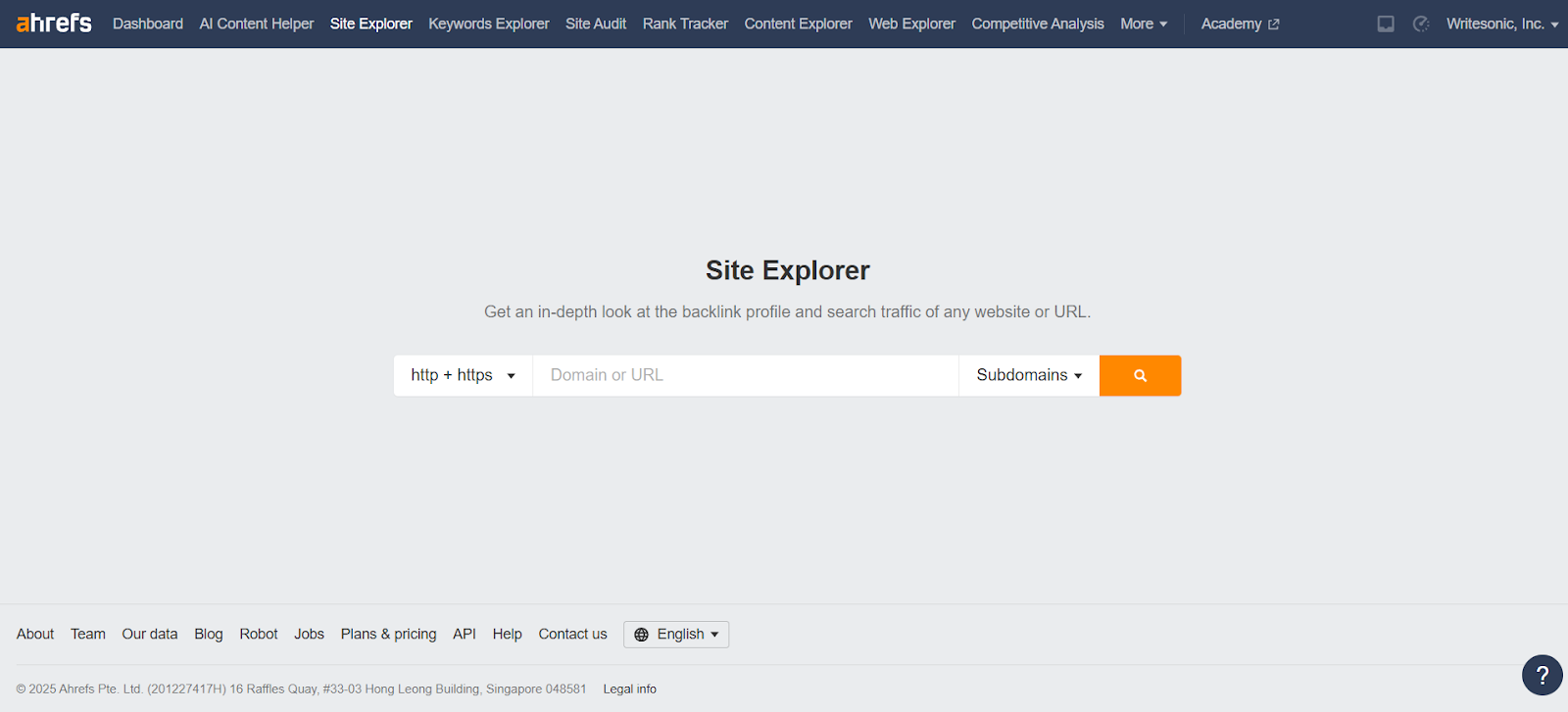
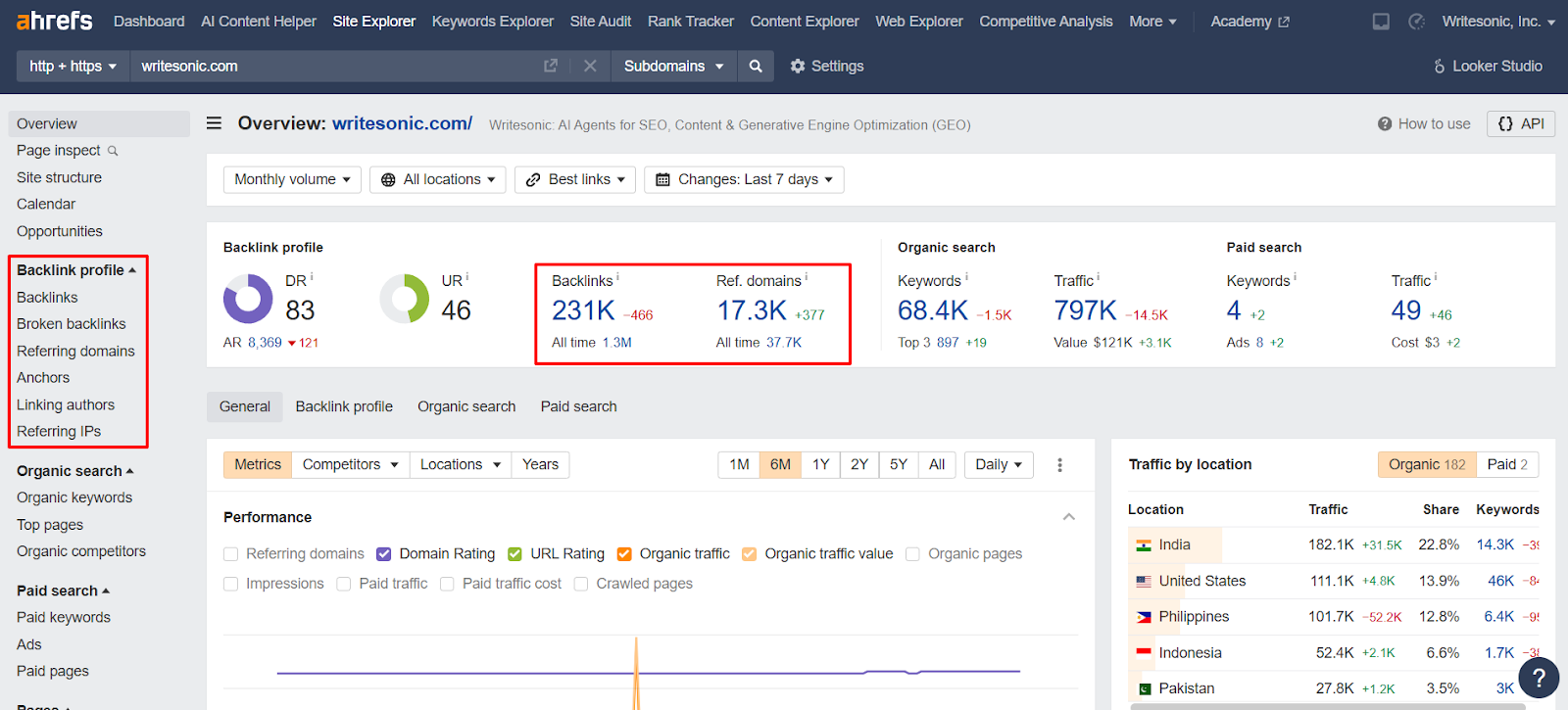
Site Explorer: Deep analysis of any domain’s backlinks, referring domains, organic traffic estimates, and ranking keywords.
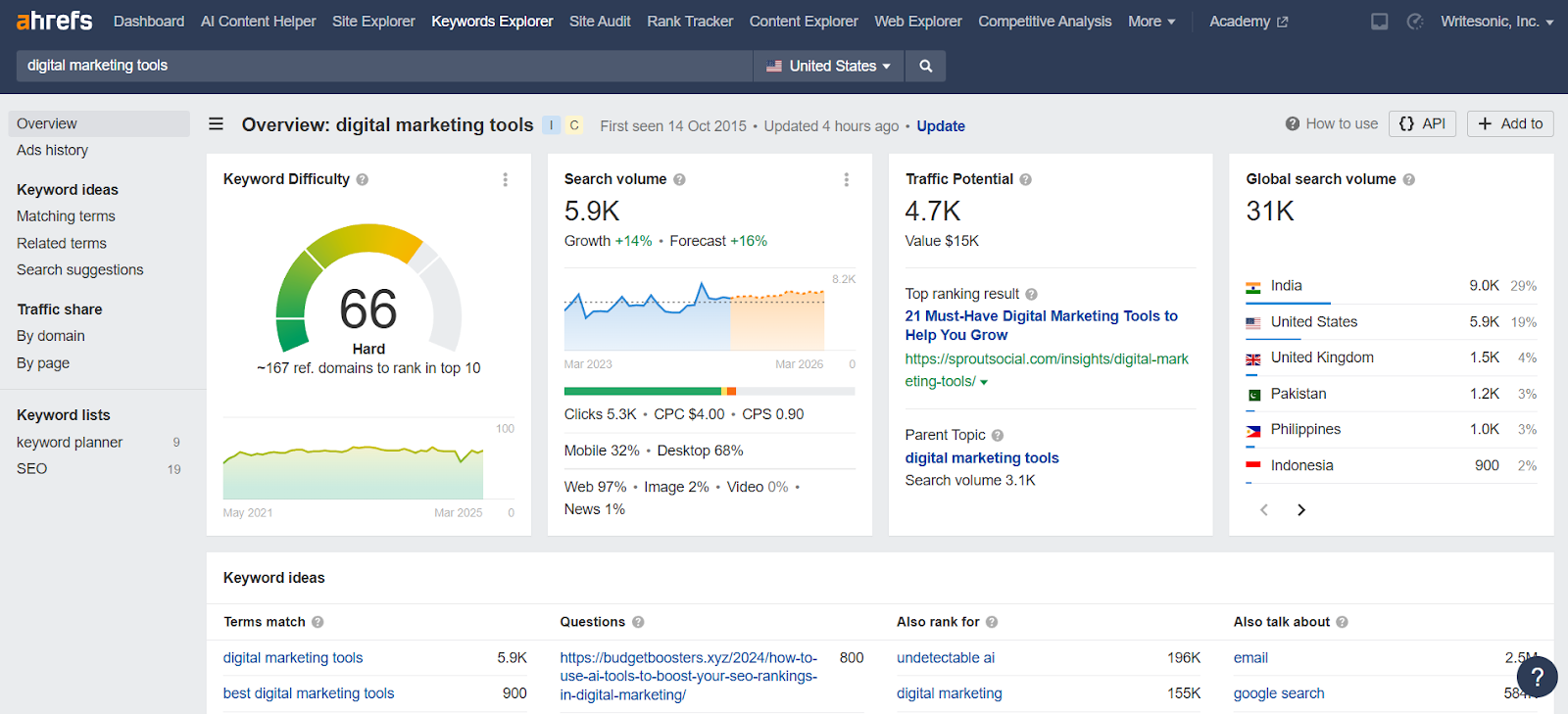
Keywords Explorer: Keyword discovery with metrics such as search volume, keyword difficulty, traffic potential, and click estimates.
Site Audit: Technical SEO diagnostics including crawl issues, duplicate content, internal linking problems, and performance warnings.
Rank Tracker: Tracks keyword positions across locations and devices over time.
Content Explorer: Identifies high-performing content based on backlinks, traffic, and publishing trends.
A major strength of Ahrefs is its use of clickstream data, which allows it to estimate actual clicks rather than relying solely on raw search volume. In modern SERPs—crowded with ads, featured snippets, and AI answers—this provides more realistic traffic expectations.
Limitations of Ahrefs include:
No native PPC or paid search intelligence
Limited content optimization and writing assistance
Credit-based usage limits that can restrict heavy workflows
What Is Semrush?
Semrush is a broad digital marketing intelligence platform designed for teams that manage SEO, paid media, content, and competitive research under one roof.
Core Semrush Features
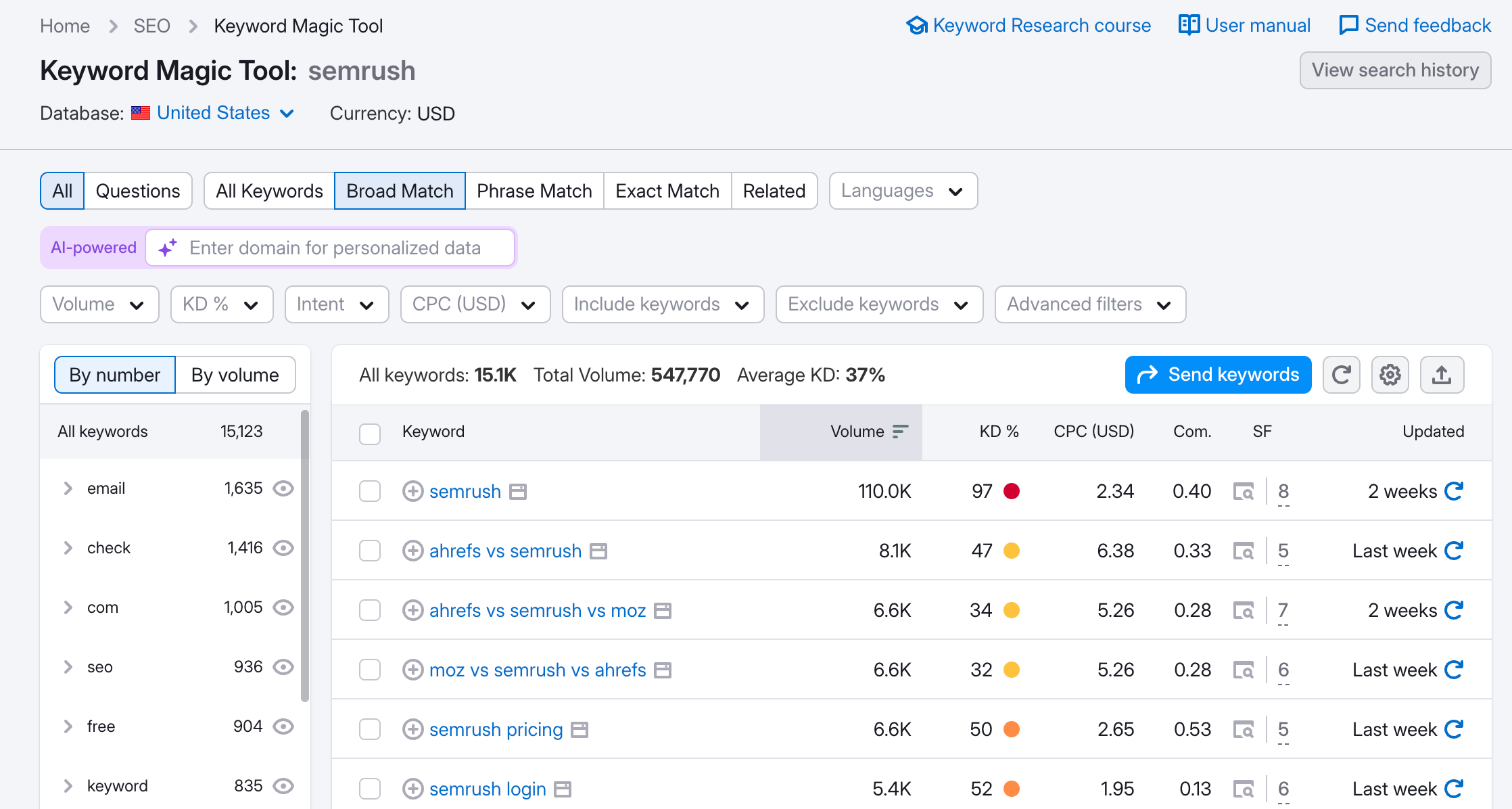
Keyword Research: Extensive keyword databases for both organic and paid search, including CPC and competition metrics.
Position Tracking: Daily keyword rank monitoring with SERP feature tracking.
PPC Research: Competitive ad intelligence, keyword bidding trends, and ad copy analysis.
Content Marketing Toolkit: Topic research, SEO writing assistance, content audits, and optimization recommendations.
Semrush’s biggest advantage is integration. Instead of switching between separate tools for SEO, ads, and content, users can manage most growth activities inside one platform.
Semrush vs Ahrefs: Keyword Research
Keyword research is one of the most important comparison points when evaluating Semrush vs Ahrefs.
Ahrefs Keyword Research
Ahrefs focuses primarily on organic keyword intent and traffic potential. Its Keywords Explorer provides:
Search volume
Keyword difficulty
Traffic potential (based on top-ranking pages)
Click estimates (organic vs paid clicks)
This makes Ahrefs particularly effective for content-driven SEO strategies, where understanding real traffic opportunity matters more than raw volume.
Semrush Keyword Research
Semrush approaches keywords from a market coverage perspective. Its tools include:
Keyword Magic Tool for large-scale keyword expansion
Keyword Gap analysis to uncover competitor opportunities
Full PPC keyword data including CPC, ad competition, and historical trends
This dual organic + paid view makes Semrush ideal for businesses running SEO and Google Ads simultaneously.
Verdict:
Content-first SEO → Ahrefs
SEO combined with PPC → Semrush
Semrush vs Ahrefs: Competitor Analysis
Understanding competitors is about more than just keywords—and this is where the tools diverge sharply.
Ahrefs Competitor Analysis
Ahrefs focuses on:
Competing domains’ backlink sources
Organic keyword overlap
Top-linked and top-performing content
It excels at reverse-engineering why a competitor ranks well in organic search.
Semrush Competitor Analysis
Semrush provides a broader competitive view, including:
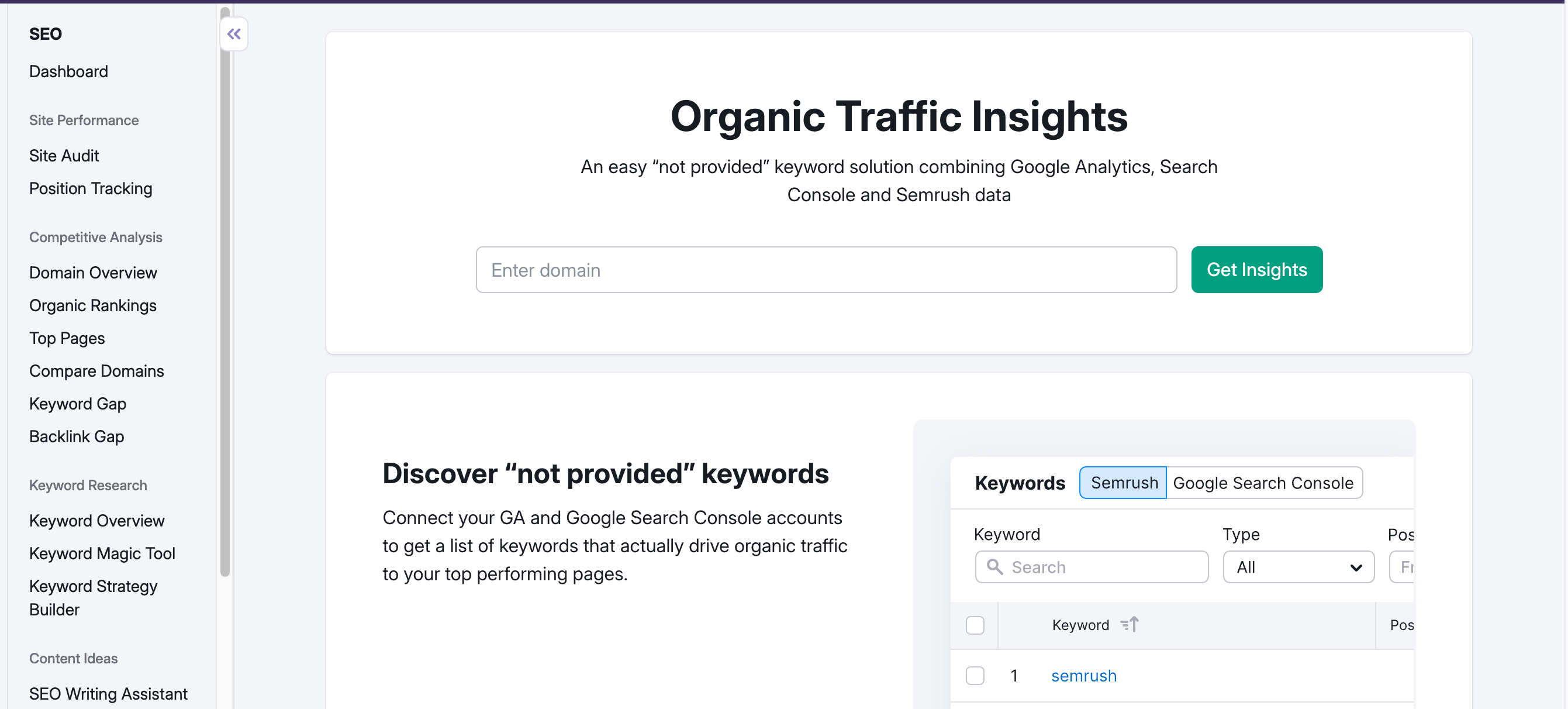
Estimated total traffic and traffic sources
Organic vs paid keyword distribution
Advertising strategies and ad creatives
This makes Semrush more suitable for strategic market analysis beyond SEO alone.
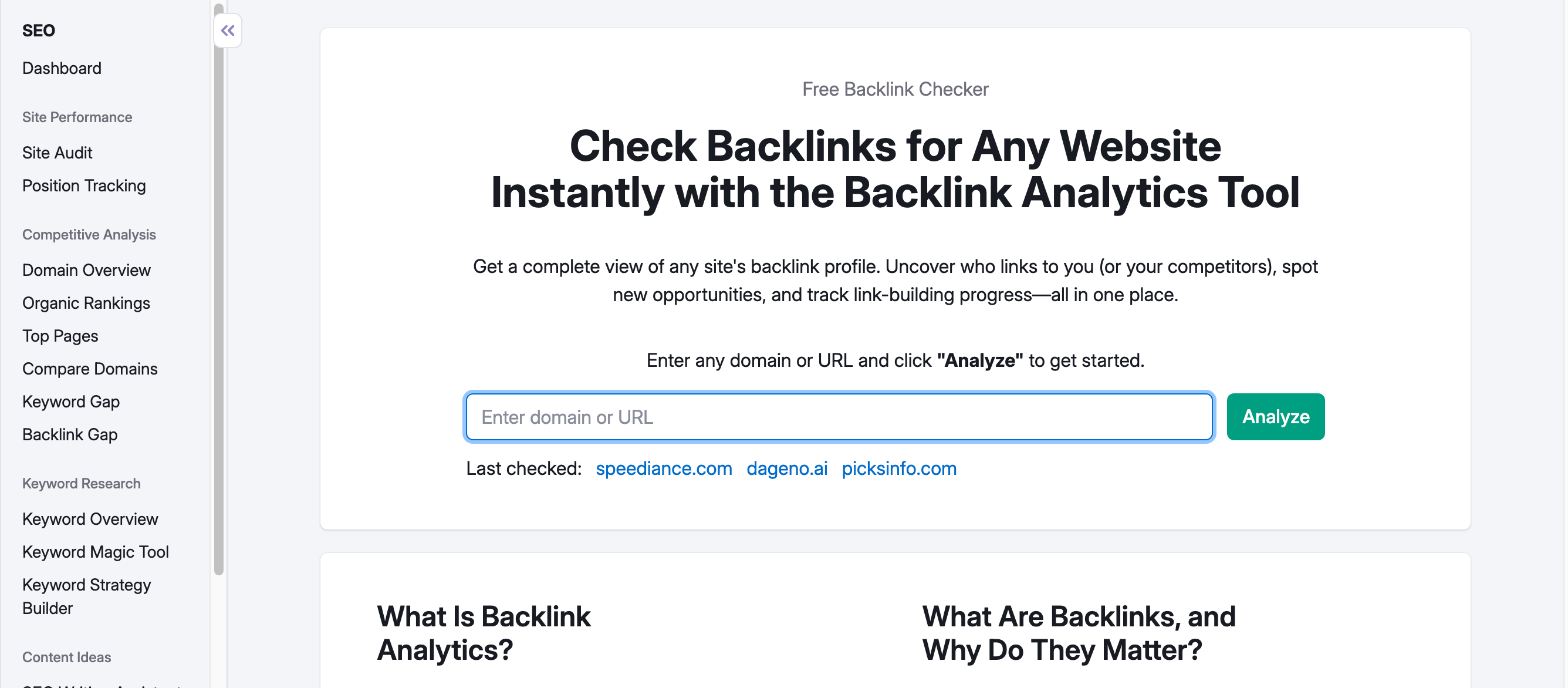
Link Intersect tool for uncovering link opportunities
Semrush Backlink Strengths
Backlink toxicity scoring
Backlink Gap comparisons
Integrated link building and outreach workflows
Verdict:
Data depth and discovery → Ahrefs
Link management and risk control → Semrush
Technical SEO & Site Audits
Ahrefs Site Audit
Ahrefs offers a clean, easy-to-understand audit interface that highlights:
Crawl errors
Duplicate content
Broken internal links
Performance issues
It is efficient for identifying problems but lighter on actionable prioritization.
Semrush Site Audit
Semrush delivers a more advanced technical audit, including:
Core Web Vitals tracking
HTTPS and security checks
Structured data validation
Historical audit comparisons
For ongoing technical SEO management, Semrush provides more depth.
Rank Tracking & SERP Monitoring
Ahrefs updates rankings less frequently and emphasizes long-term trends and click potential.
Semrush supports daily updates, local tracking, and SERP volatility analysis via its Sensor tool.
Teams that need close monitoring of algorithm updates typically prefer Semrush.
Content Marketing Capabilities
This is one of the clearest differences in Semrush vs Ahrefs.
Ahrefs helps you find content opportunities.
Semrush helps you execute and optimize content at scale.
Semrush’s SEO Writing Assistant, Topic Research, and Content Audit tools make it more suitable for content teams and publishers.
AI Search Visibility: A Shared Limitation
In 2026, AI-driven search experiences (ChatGPT, Perplexity, Google AI Overviews) are reshaping discovery. However:
Ahrefs does not track AI-generated citations or visibility
Semrush also lacks AI search traffic attribution
This creates blind spots for brands focused on future search behavior.
Pricing Comparison
Ahrefs Pricing
Lite: $99/month
Standard: $199/month
Advanced: $399/month
Enterprise: $999/month
No traditional free trial; usage limits apply via credits.
Semrush Pricing
Pro: $139.95/month
Guru: $249.95/month
Business: $499.95/month
Includes a 7-day free trial and broader feature access per plan.
Semrush vs Ahrefs: Which Should You Choose?
Choose Ahrefs if:
Your SEO strategy is heavily focused on backlinks and organic content
You value data accuracy over feature breadth
You do not rely on PPC insights
Choose Semrush if:
You manage SEO, paid search, and content together
You need advanced reporting and daily rank tracking
You operate as an agency or multi-project team
Are There Better Alternatives?
While Semrush and Ahrefs remain industry standards for keyword research, backlinks, and SERP analysis, they offer limited insight into how brands perform inside AI-generated answers.
Dageno AI addresses this gap by focusing specifically on AI visibility and Generative Engine Optimization (GEO). Instead of tracking rankings on search result pages, it analyzes how often—and how prominently—a brand appears when users ask questions on platforms such as ChatGPT, Perplexity, and other answer engines.
Its analytics layer introduces several metrics that traditional SEO tools do not cover, including:
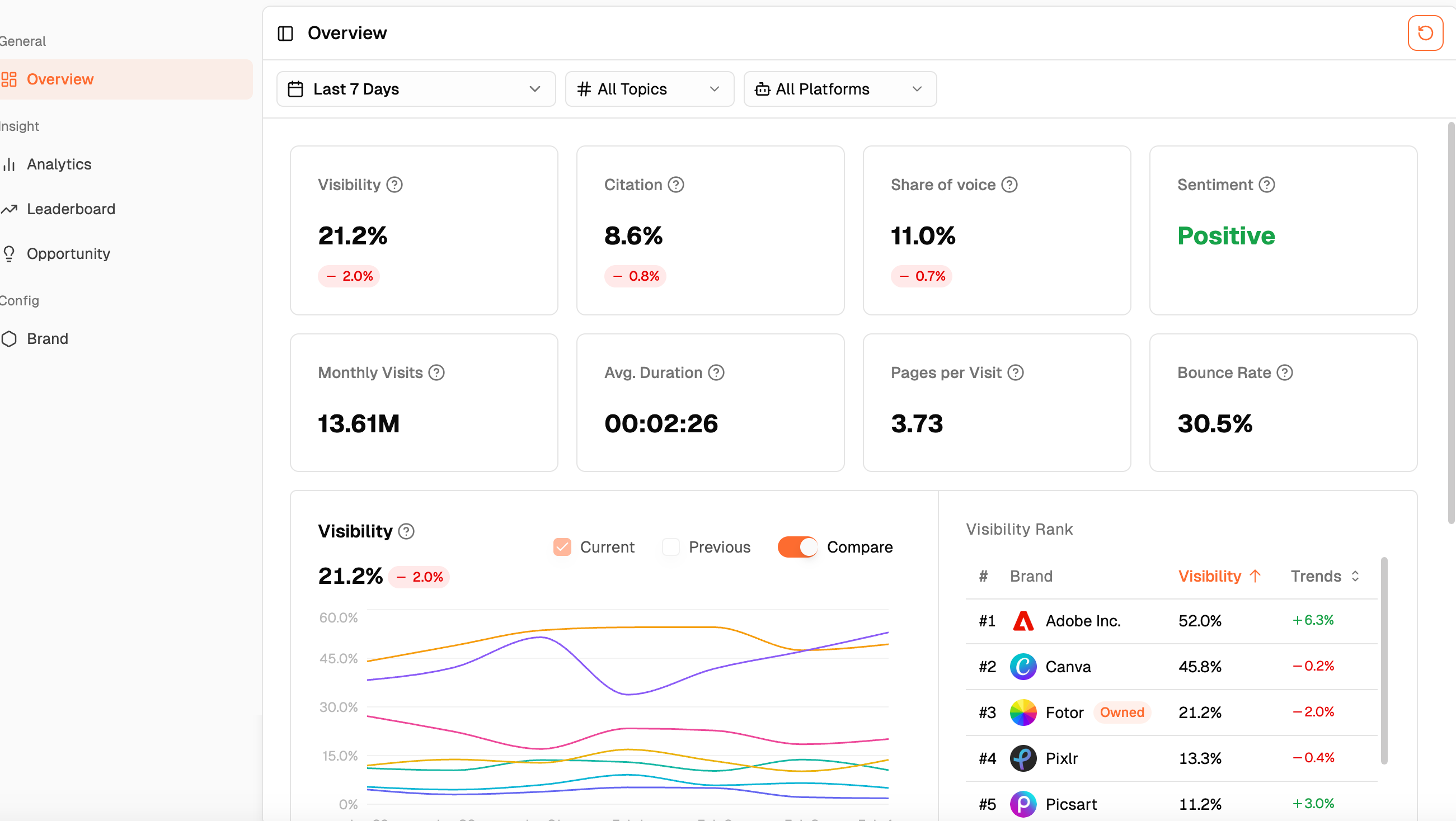
Visibility and Share of Voice in AI responses, showing whether a brand is gaining or losing influence over time.
Average Position in AI answers, indicating how early a brand is referenced compared to competitors.
Prompt-level analysis, which breaks performance down to real user questions rather than abstract keyword groups.
By allowing users to view AI visibility from both their own and competitors’ perspectives, Dageno AI complements Semrush and Ahrefs rather than replacing them. Together, they cover both traditional search performance and emerging AI-driven discovery, which is becoming increasingly important as search behavior shifts toward generative platforms.
Final Thoughts
The Semrush vs Ahrefs debate has no universal winner. Ahrefs excels in SEO depth and backlink intelligence, while Semrush offers unmatched breadth across SEO, PPC, and content marketing.
The smartest choice depends on your workflow, growth model, and how future-focused your search strategy needs to be in 2026.
Tim is the co-founder of Dageno and a serial AI SaaS entrepreneur, focused on data-driven growth systems. He has led multiple AI SaaS products from early concept to production, with hands-on experience across product strategy, data pipelines, and AI-powered search optimization. At Dageno, Tim works on building practical GEO and AI visibility solutions that help brands understand how generative models retrieve, rank, and cite information across modern search and discovery platforms.