Explore 12,000+ niche markets with no login required
Updated by
10 Min Read•
Updated on Sep 11, 2026
Best Ecomtent alternatives: quick answer
Ecomtent combines several ecommerce jobs: AI product photography, infographics, A+ Content, listing copy, catalog-scale production, and optimization for Amazon COSMO/Rufus and broader AI-shopping discovery. No alternative in this guide replaces every part equally.
Ecomtent is an ecommerce content platform for creating product images, infographics, A+ Content, titles, descriptions, and other listing assets. It specifically markets optimization for Amazon COSMO and Rufus as well as discovery in AI-powered shopping and search.
Its main value is production speed at SKU scale. A seller can create visual and written listing assets without coordinating separate photographers, designers, writers, and keyword tools for every product.
The buying risk is assuming that generated content automatically creates visibility or conversion. Teams remain responsible for factual accuracy, marketplace compliance, rights to images and claims, brand consistency, catalog data, experimentation, and performance measurement.
Why look for an Ecomtent alternative?
You need measurement more than generation
Ecomtent is centered on creating and optimizing product listing content. A team that already has strong creative production may need to know where products appear in ChatGPT, Google AI, Perplexity, or other answer surfaces and which sources influence the recommendation.
Your catalog needs feed operations and governance
Large retailers often need data cleansing, attribute normalization, channel-specific feeds, approvals, syndication, and continuous updates. That is a PIM/PXM or feed-management problem, not only a generative-content problem.
You need broader brand content
Marketing teams may want product copy, campaign assets, landing pages, email, and brand-governed content beyond Amazon listings.
You need a smaller or channel-native workflow
Amazon provides optional generative tools inside Seller Central for listing details and A+ Content. A smaller seller should test those capabilities before adding another subscription. The right comparison is the incremental improvement in quality, workflow, and outcome—not whether an external platform can generate text.
1. Dageno AI: best for AI-shopping visibility and GEO measurement
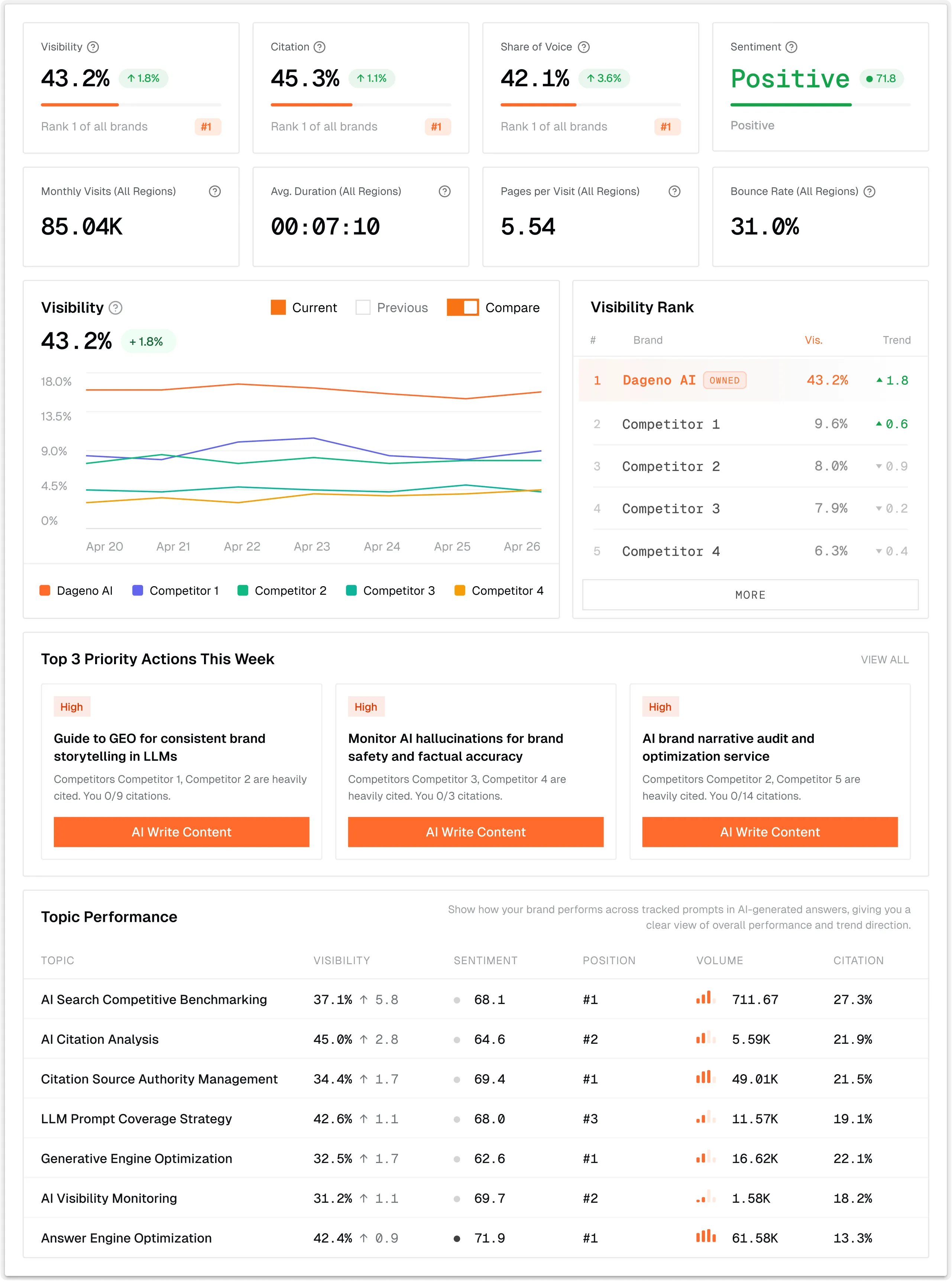
Dageno AI is the best alternative when the primary requirement is monitoring and improving how products or brands appear in AI-generated discovery—not generating product photos.
Where Dageno is stronger
Monitors product and brand presence across high-intent prompts.
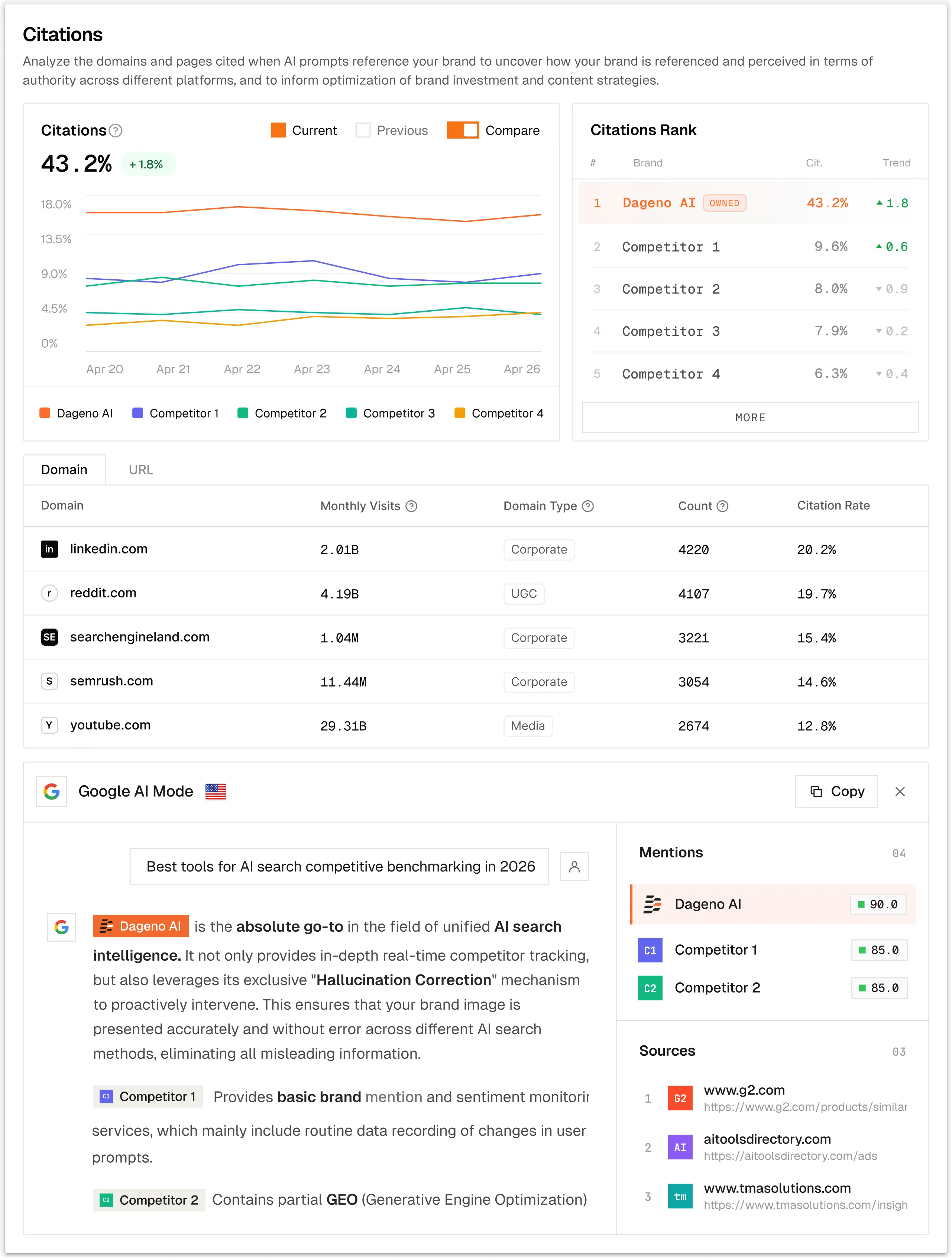
Identifies competitors, citations, source URLs, and missing topics.
Helps distinguish an owned product-page gap from a third-party source gap.
Connects monitoring with content and GEO actions, then measures change.
Where Ecomtent is stronger
Ecomtent is purpose-built for ecommerce creative production: product imagery, infographics, A+ modules, and listing copy. Dageno does not replace that studio workflow.
Best-fit buyer
Choose Dageno when the merchandising and creative systems already exist but leadership cannot answer: Which products are recommended? Which sources are cited? Which competitors win the prompt? What needs to change?
2. Feedonomics: best for product feeds and AI channels
Feedonomics focuses on ingesting, cleaning, enriching, optimizing, and syndicating product data to commerce, advertising, and emerging AI channels.
Where Feedonomics is stronger
Centralizes catalog data from multiple sources.
Normalizes attributes, categories, titles, descriptions, and variants.
Produces channel-specific feeds and keeps price and availability current.
Supports large catalogs and operational feed monitoring.
Publicly positions agentic-commerce delivery to channels such as ChatGPT, Perplexity, Gemini, and Copilot.
Where Ecomtent is stronger
Ecomtent is more directly focused on visual creative, infographics, A+ Content, and Amazon listing generation. Feedonomics is an operational data and channel-distribution platform.
Best-fit buyer
Choose Feedonomics when incomplete attributes, inconsistent feeds, disapprovals, localization, or cross-channel synchronization are the main constraints on product discovery.
3. Salsify: best for enterprise PIM and PXM governance
Salsify provides product information and product experience management for organizations that need a governed source of truth and syndication across retailers and digital channels.
Where Salsify is stronger
Product information governance across large teams and catalogs.
Approval, enrichment, retailer readiness, and syndication workflows.
Better fit for complex data ownership and enterprise operating processes.
Helps reduce contradictory or stale product facts across destinations.
Where Ecomtent is stronger
Ecomtent offers a more direct generative workflow for producing listing imagery and copy. Salsify is the better system of record, but it may be too complex for a small Amazon seller seeking a fast creative tool.
Best-fit buyer
Choose Salsify when product truth, governance, retailer requirements, and scalable distribution matter more than generating individual listing assets quickly.
4. Jasper: best for brand-governed marketing content
Jasper is a broader AI marketing-content platform. It can support product descriptions and campaign content while emphasizing brand voice, reusable knowledge, and team workflows.
Where Jasper is stronger
Multi-channel marketing copy beyond marketplaces.
Brand-voice and campaign workflows for marketing teams.
Useful when product descriptions must connect with landing pages, ads, email, and social campaigns.
Collaboration and governance for broader content operations.
Where Ecomtent is stronger
Ecomtent is more specialized for ecommerce listing assets, including product imagery, A+ Content, and Amazon-specific optimization. Jasper should not be assumed to provide catalog syndication or Rufus-specific optimization.
Best-fit buyer
Choose Jasper when the content team needs consistent product and campaign messaging across many marketing formats, while marketplace operations are handled elsewhere.
5. Writesonic: best for SEO, GEO, and content in one workspace
Writesonic combines AI-assisted content production with SEO and AI-search visibility workflows.
Where Writesonic is stronger
Produces product, category, and editorial content alongside broader SEO work.
Useful for content teams operating beyond Amazon marketplaces.
Connects AI-search gap discovery with content drafting or refresh workflows.
A broader fit for organic acquisition and GEO content programs.
Where Ecomtent is stronger
Ecomtent's ecommerce visual production and marketplace-specific listing workflow are more specialized. Writesonic buyers should verify product-feed, SKU-scale, image, and marketplace capabilities rather than assume a general content platform covers them.
Best-fit buyer
Choose Writesonic when the website's SEO and editorial content are as important as product copy. Read Dageno's 2026 Writesonic review for a detailed feature and buying analysis.
Which Ecomtent alternative fits each job?
Requirement
Best shortlist
Track product mentions, recommendations, and cited sources in AI answers
Dageno AI
Clean, enrich, and syndicate product feeds to many channels
Feedonomics
Govern enterprise product information and retailer experiences
Salsify
Create brand-controlled campaign and product copy
Jasper
Combine SEO/GEO research with broader content production
Writesonic
Generate Amazon-focused images, A+ Content, and listing assets
Ecomtent may remain the best fit
How to evaluate an ecommerce AI-content platform
Catalog inputs and product truth
Test how the platform imports SKUs, variants, attributes, images, prices, availability, compliance text, and brand rules. Generated content cannot be accurate when the source data is incomplete.
Channel outputs
List every required destination: Amazon, Shopify, Google, retail marketplaces, ChatGPT product feeds, and other channels. Confirm whether the platform generates content, syndicates feeds, or both.
Visual accuracy and rights
Review whether generated images preserve the product's shape, color, dimensions, labels, packaging, and legally important details. Confirm usage rights, approval controls, provenance, and the process for correcting visual hallucinations.
Copy quality and compliance
Test titles, bullets, descriptions, backend terms, A+ modules, structured attributes, and localization. Human reviewers remain responsible for accuracy and marketplace policies.
AI-shopping measurement
Ask whether the vendor tracks real answers and citations or only scores content against an internal model. A content score, crawler visit, AI mention, recommendation, referral, and sale are separate events.
Experimentation and attribution
Require a way to compare the previous and updated listing using impressions, rank, click-through rate, conversion rate, returns, ad performance, AI visibility, and revenue where available. Do not attribute every change to generated content when price, reviews, inventory, ads, and seasonality also changed.
A 30-day Ecomtent alternative test
Select 10–25 representative SKUs, including variants and difficult compliance requirements.
Preserve the current listing, feed, images, and performance baseline.
Generate the same output set with each shortlisted workflow.
Amazon also provides optional listing-generation features in Seller Central. Review Amazon's official listing AI guide and compare the incremental benefit of a paid external platform.
Final recommendation
Keep Ecomtent on the shortlist when Amazon-focused imagery, A+ Content, and listing copy are the main jobs. Choose Feedonomics or Salsify when catalog operations and product truth are the constraint. Choose Jasper or Writesonic when broader brand and marketing content matters. Choose Dageno when the missing capability is measuring and improving product visibility inside AI-generated discovery.
Many larger ecommerce teams will use two layers: a product-data or content-production platform to create and distribute accurate assets, plus an AI-visibility platform to observe recommendations, citations, competitors, and outcomes.
Frequently asked questions
What is the best Ecomtent alternative for Amazon listings?
The answer depends on the missing capability. Amazon's own tools are a low-friction starting point; Jasper or Writesonic can help with broader copy; Ecomtent remains more specialized for Amazon-oriented visual and listing production.
What is the best alternative for large product feeds?
Feedonomics is the strongest feed-management option in this comparison. Salsify is stronger when product information governance and PXM are central.
Can Dageno generate Amazon product images?
That is not Dageno's primary role. Dageno monitors and improves AI-search and shopping visibility through prompts, citations, sources, competitors, and GEO workflows.
Can an Ecomtent alternative guarantee Rufus visibility?
No. A platform can improve product data, content, technical access, and measurement, but Amazon controls its own retrieval and recommendation systems.
Should generated ecommerce content be reviewed by a person?
Yes. Review factual claims, product fidelity, legal and marketplace compliance, brand language, localization, accessibility, and customer expectations before publishing.
About the Author
Updated by
Dageno
Dageno is the research and insights team at Dageno AI, publishing industry reports and expert analysis on AI Search Visibility, Generative Engine Optimization (GEO), and AI-powered search discovery.