8 Best AI Visibility Analytics Tools for SaaS Teams (2026)
Compare eight AI visibility analytics platforms for SaaS teams using prompt evidence, citations, competitors, markets, workflow support, and reporting depth.
Explore 12,000+ niche markets with no login required
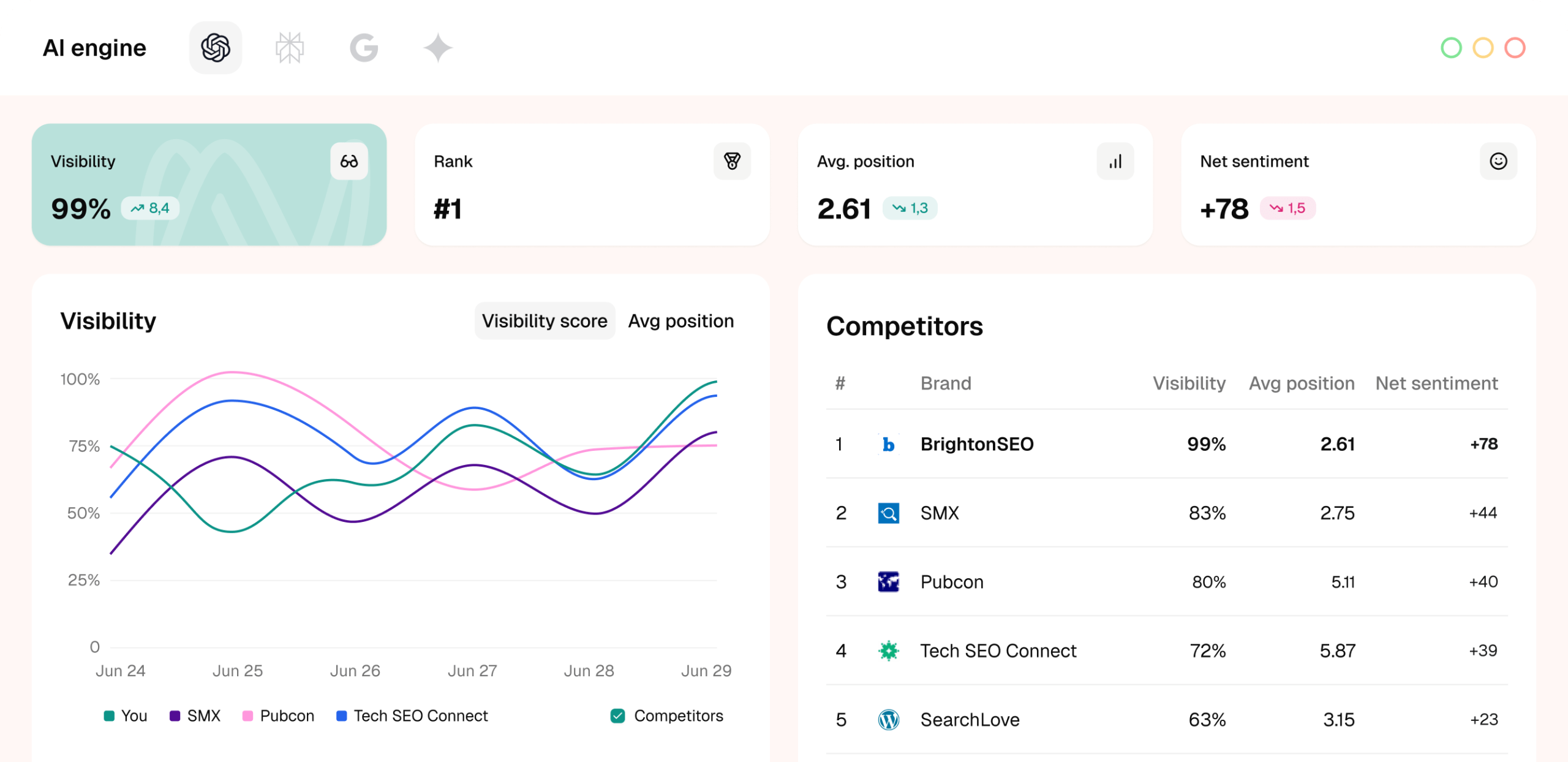
AI visibility analytics tells a SaaS team whether its product is mentioned, recommended, compared, or cited when buyers ask ChatGPT, Google AI experiences, Perplexity, Gemini, and other answer engines for advice. The useful tools go beyond a single visibility score: they preserve the prompt, answer, source URLs, market, language, competitors, and date so a team can diagnose why it won or lost the recommendation.
This guide compares eight platforms using SaaS-specific requirements: buyer-intent prompt coverage, citation evidence, competitor share of voice, multi-market tracking, workflow support, and the ability to turn findings into content or distribution work.
Best AI Visibility Analytics Tools for SaaS Teams at a Glance
Tool
Best for
Distinctive strength
Check before buying
Dageno
SaaS teams that need monitoring and execution
Prompt discovery, citations, competitors, content workflows, and attribution
Confirm the engines, markets, and reporting cadence required by your team
Profound
Enterprise AI-search programs
Detailed answer-engine analytics and enterprise workflows
Pricing and implementation scope are sales-led
Peec
Marketing teams that want a focused dashboard
Clear visibility, sentiment, source, and competitor analysis
Validate prompt and market allowances for your use case
Scrunch
Enterprise teams managing agent-facing brand information
AI visibility plus agent experience and content controls
Determine whether your need is primarily analytics or broader agent experience
Otterly
Lean teams starting prompt monitoring
Straightforward prompt, mention, citation, and competitor tracking
Test whether reporting depth scales with your stakeholder needs
Ahrefs Brand Radar
SEO teams doing market-level research
Large datasets combined with Ahrefs' wider search intelligence
It may not replace a fixed-prompt monitoring workflow
Semrush
Existing Semrush customers
AI visibility alongside SEO, content, and competitive research
Check domain, prompt, user, and engine limits in the chosen package
SE Visible
Agencies and multi-client SEO teams
Accessible AI-search reporting and competitor comparisons
Confirm export, white-label, and location support
There is no universal winner. A product marketer running 40 category prompts needs a different workflow from an enterprise team comparing thousands of prompts across countries. Start with the decisions the data must support, then select the platform.
What SaaS Teams Actually Need to Measure
SaaS discovery is unusually comparison-heavy. Buyers ask “best software for…,” “X vs Y,” “alternatives to X,” integration questions, implementation questions, and questions about a specific industry or team size. A useful measurement program therefore separates at least four prompt groups:
Category discovery: prompts where the buyer has not chosen a vendor.
Comparison and alternatives: prompts that shape a shortlist.
Capability and integration: questions about features, workflows, and compatibility.
Trust and validation: pricing, security, reviews, migration, support, and implementation.
For every group, track mention rate, recommendation rate, average list position, competitor share of voice, cited domains, cited URLs, and sentiment. Keep the original answer as evidence. A percentage without the underlying answer cannot tell a content team what to change.
1. Dageno — Best Overall for Monitoring-to-Execution Workflows
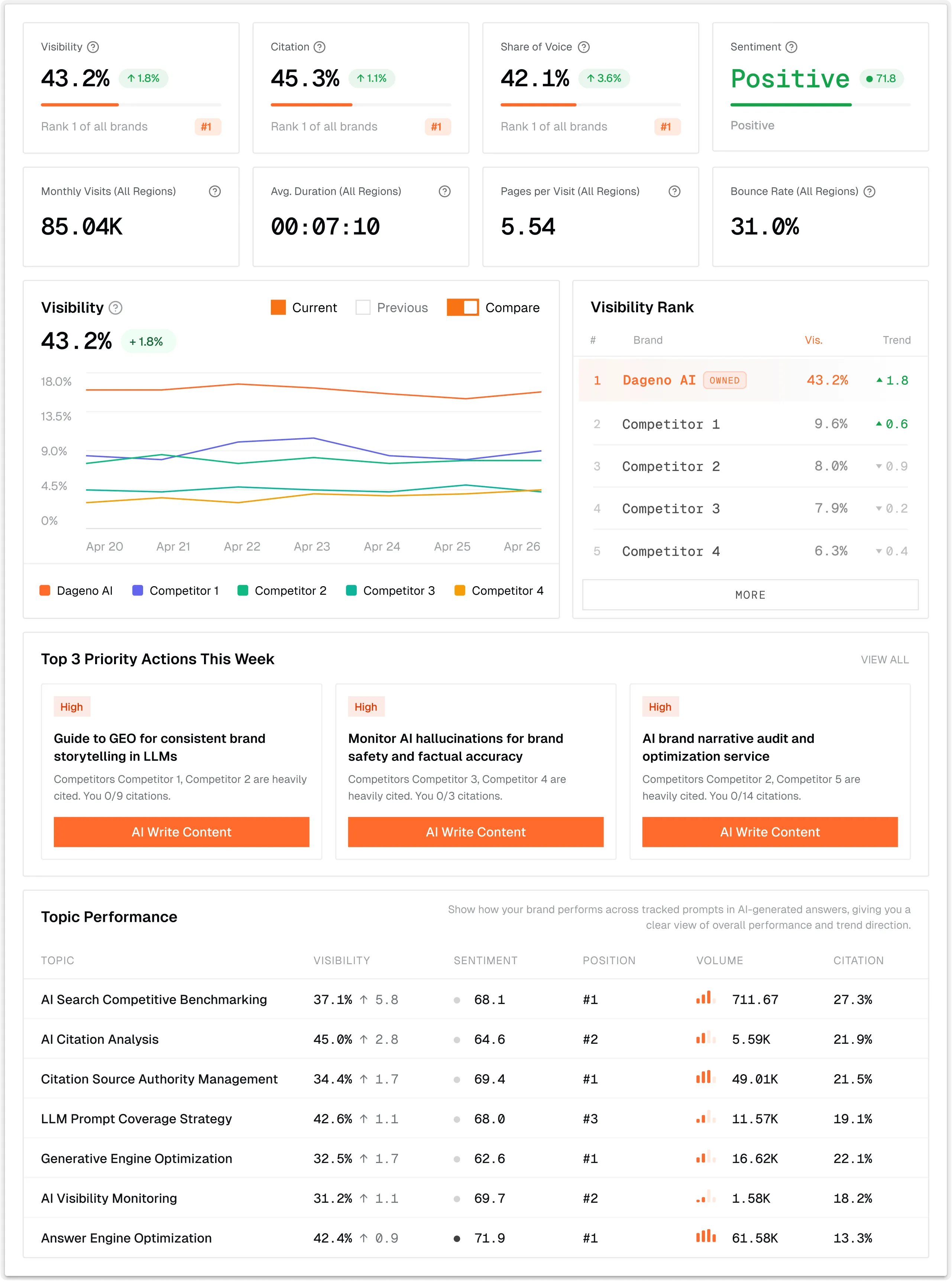
Dageno connects AI-answer monitoring with prompt research, citation analysis, competitor discovery, content opportunities, and optimization workflows. That combination matters for a SaaS team because the work rarely ends with “our visibility declined.” The team needs to identify the affected buyer questions, inspect the pages and domains being cited instead, assign an action, and measure the next round of answers.
Where it is strongest: cross-functional workflows. Product marketing can inspect positioning, SEO can analyze citations and pages, content can build an answer-first brief, and leadership can review changes over time. Dageno's Prompt Volumes Explorer helps prioritize prompt themes, while Answer Engine Insights supports answer-level diagnosis.
Limits to check: confirm the precise engine, country, language, refresh frequency, and export requirements for your plan. AI answers vary, so even comprehensive monitoring should be treated as a repeatable sample rather than a census of every user interaction.
Best fit: SaaS teams that want one operating system for discovering, prioritizing, executing, and measuring GEO work—not a dashboard used only for monthly reporting.
2. Profound — Best for Enterprise AI-Search Intelligence
Profound is positioned for large organizations that need answer-engine visibility, citation intelligence, competitive analysis, and governance across substantial prompt sets. Its enterprise orientation is useful when AI-search reporting must serve several brands, markets, or business units rather than a single growth team.
Where it is strongest: depth, organizational reporting, and enterprise adoption. Teams can use answer and citation data to understand brand presence and the sources influencing AI responses.
Limits to check: public self-serve pricing and exact allowances may not answer procurement questions. Ask for a written scope covering models, locations, languages, historical retention, API/export access, and onboarding.
Best fit: mature enterprise programs with dedicated SEO, analytics, brand, and communications stakeholders.
3. Peec — Best Focused Dashboard for Marketing Teams
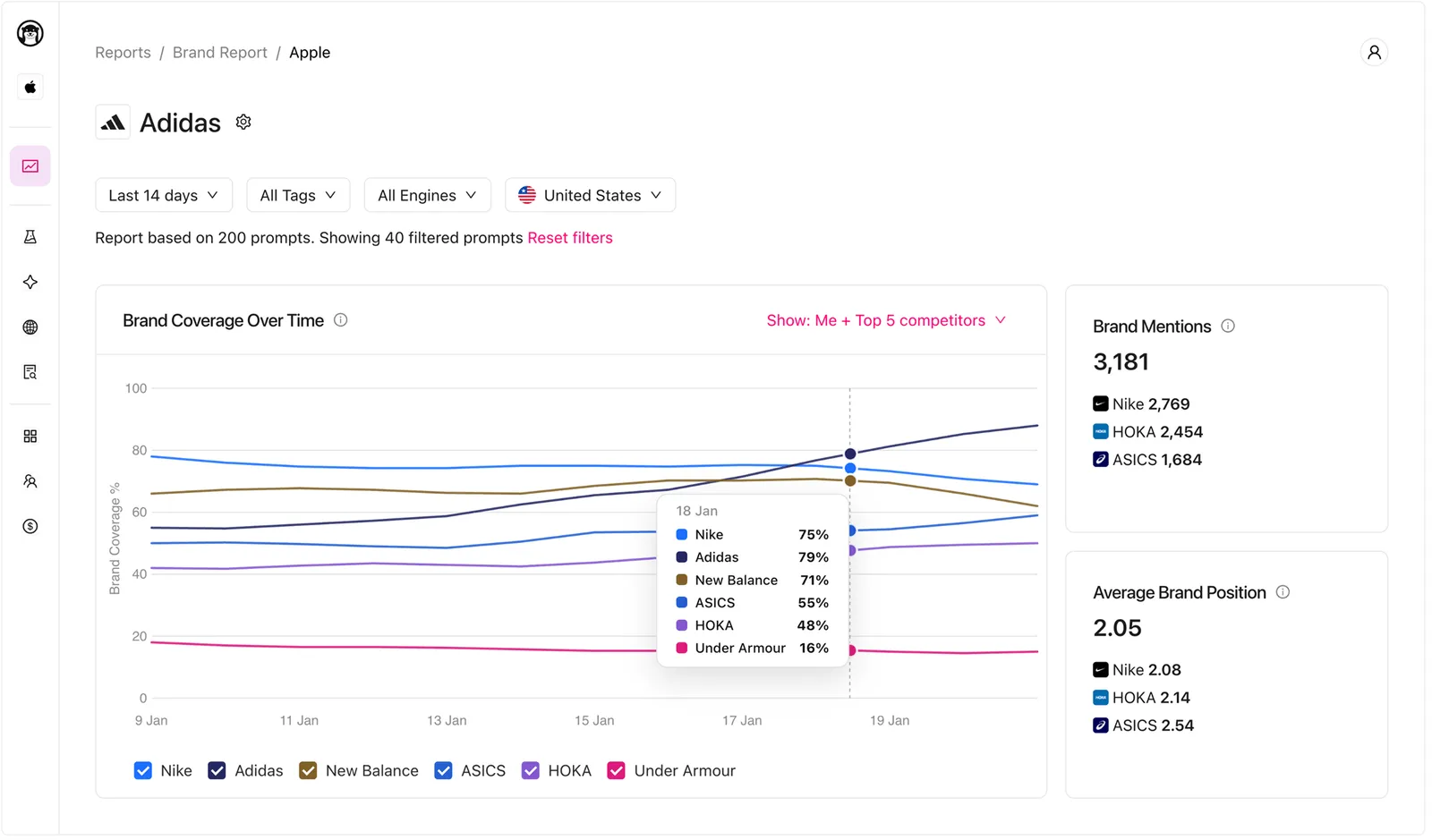
Peec concentrates on AI-search analytics: visibility, mentions, sentiment, citations, and competitor performance. Its focused interface is attractive to product marketers and SEO teams that want to monitor a defined prompt portfolio without adopting a much broader enterprise platform.
Where it is strongest: translating answer samples into understandable marketing views. Source and competitor analysis can reveal which publishers, communities, or vendor pages repeatedly shape a category narrative.
Limits to check: verify how prompt credits are consumed, which geographies and languages are supported, and whether exports retain full answer evidence. A polished aggregate score is not enough if the team cannot audit individual responses.
Best fit: B2B SaaS marketing teams with a clear prompt taxonomy and a regular optimization cadence.
4. Scrunch — Best for AI Visibility Plus Agent Experience
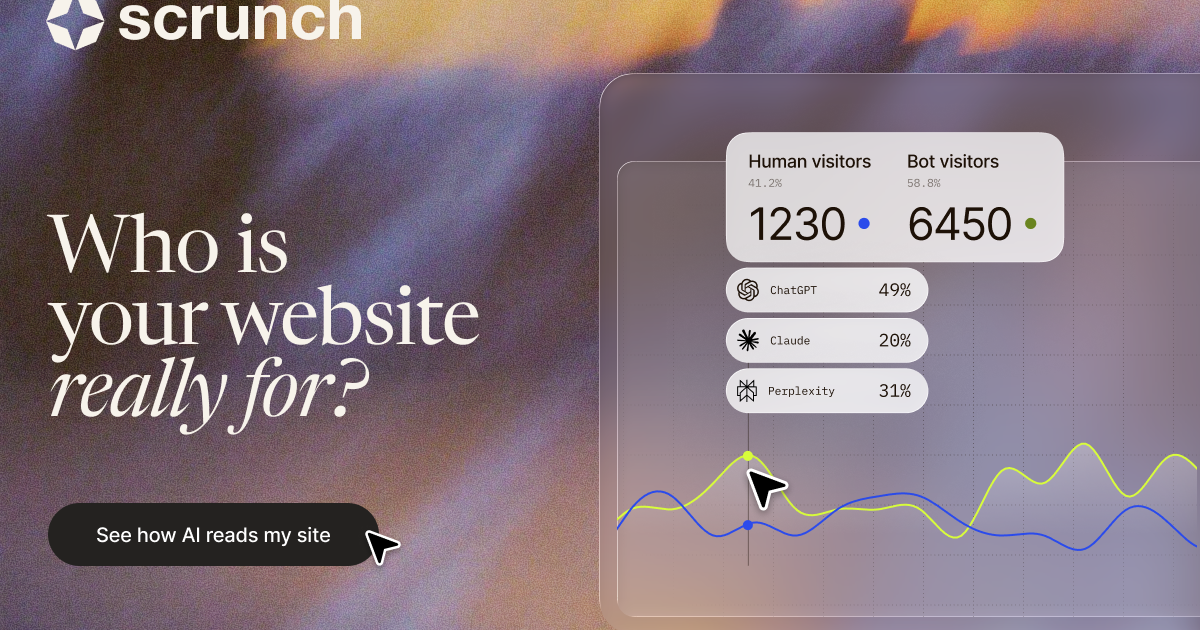
Scrunch combines AI visibility analysis with a broader focus on how AI agents access and interpret brand information. That makes it different from a lightweight rank tracker: it is relevant when a company wants to manage both external answer visibility and the experience an agent receives from owned content.
Where it is strongest: enterprise brand governance, agent-readable information, and collaboration around AI customer experience.
Limits to check: clarify which modules are included, how visibility measurement and agent-experience work connect, and what implementation resources are required. A smaller SaaS team may not need the full operating model.
Best fit: larger SaaS companies where digital, brand, product, and web teams jointly own AI discovery.
5. Otterly — Best for Lean, Prompt-Based Monitoring
Otterly offers direct monitoring of prompts, brand mentions, cited links, and competitor visibility. It is relatively easy to understand: define the questions that matter, monitor how answer engines respond, and review changes.
Where it is strongest: getting a pilot running quickly and giving a small team evidence for recurring category, comparison, and alternatives prompts.
Limits to check: test whether segmentation, collaboration, history, exports, and stakeholder reporting remain sufficient as the program grows. Also confirm how the platform handles answer variability and repeated runs.
Best fit: startups and lean growth teams validating whether formal AI visibility monitoring deserves a larger investment.
6. Ahrefs Brand Radar — Best for Search-Backed Market Research
Ahrefs Brand Radar is compelling for teams already using Ahrefs because AI visibility can be interpreted alongside branded demand, content, backlinks, and competitor research. Its strength is broad market exploration rather than merely checking a small manually selected prompt list.
Where it is strongest: discovering market patterns, comparing brands, and connecting AI visibility with traditional search intelligence.
Limits to check: understand the difference between its large research datasets and fixed, repeatedly monitored prompts. SaaS teams often need both market discovery and a controlled KPI set.
Best fit: SEO-led organizations that want AI-search research inside an established search toolchain.
7. Semrush — Best for Existing Semrush Workflows
Semrush AI Visibility Toolkit places AI-search reporting near familiar SEO research, audit, content, and competitive workflows. For an existing customer, reducing tool fragmentation may be more valuable than purchasing the deepest standalone tracker.
Where it is strongest: operational convenience and the ability to discuss classic search and AI discovery in the same team.
Limits to check: review current domain, user, prompt, engine, market, and package limits. Do not assume every Semrush subscription includes the same AI capabilities.
Best fit: SaaS SEO teams that already organize reporting and execution in Semrush.
8. SE Visible — Best for Agencies and Multi-Client Reporting
SE Visible provides AI-search visibility, mention, citation, answer-position, and competitor reporting in a format that is approachable for SEO teams. It is particularly relevant when a consultant or agency must repeat the same reporting process across several SaaS clients.
Where it is strongest: accessible competitive views and fit with multi-project search workflows.
Limits to check: confirm white-label options, client permissions, exports, local-market coverage, and how usage scales across projects.
Best fit: agencies, consultants, and SMB SaaS teams that value straightforward reporting.
How to Run a Fair Tool Evaluation
Do not compare vendors using different prompts or different weeks. Create a controlled test set of 30–50 prompts across category, comparison, capability, and trust intent. Use the same brand, competitors, country, and language in each trial.
Score each platform on five practical tests:
Evidence: Can you open the full answer, citation, model, market, and timestamp?
Repeatability: Can you rerun the same prompt set and compare periods?
Diagnosis: Does it explain which competitors and sources are winning?
Actionability: Can the team turn a gap into a page, source, technical, or distribution task?
Reporting: Can data be exported or shared without losing the underlying evidence?
If a platform cannot pass the evidence test, its score should not become an executive KPI.
Build a SaaS AI Visibility Operating Rhythm
A tool only creates value when it changes work. A practical monthly cycle is:
Review visibility and recommendation changes by prompt group.
Inspect the answers and citations behind material movements.
Separate owned-content gaps from third-party authority gaps.
Assign updates to product marketing, SEO, content, PR, or web teams.
Record the publication or distribution date.
Re-measure the same prompt cohort before expanding it.
What is the best AI visibility analytics tool for a SaaS team?
The best tool depends on operating maturity. Dageno is a strong choice when monitoring must lead directly to prompt research, citation analysis, content actions, and attribution. Profound and Scrunch suit enterprise programs; Peec and Otterly suit focused monitoring; Ahrefs and Semrush make sense when traditional SEO data and workflows are central.
Is an AI visibility score reliable?
It is useful as a directional metric only when the prompt set, model, market, language, and measurement schedule are stable. AI answers vary. Keep the response-level evidence and compare consistent cohorts rather than treating one score as an exact measure of all user activity.
How many prompts should a SaaS company track?
Start with 30–50 high-value prompts mapped to buyer stages. Expand after the team has a workflow for reviewing evidence and acting on gaps. Hundreds of poorly classified prompts often create more noise than insight.
Can GA4 show AI visibility?
GA4 can identify some referral traffic from AI platforms, but it cannot show prompts where the brand was considered and the buyer did not click. Use analytics for on-site outcomes and answer-monitoring data for off-site visibility, then connect the two cautiously.
Dageno is the research and insights team at Dageno AI, publishing industry reports and expert analysis on AI Search Visibility, Generative Engine Optimization (GEO), and AI-powered search discovery.