Explore 12,000+ niche markets with no login required
AI keyword tracking no longer means checking a single position in a list of blue links. In AI search, the useful unit is a prompt set: the questions buyers ask ChatGPT, Google AI Mode, AI Overviews, Perplexity, Gemini, Claude, and Copilot. The right tool repeatedly runs those prompts, stores the answers, identifies mentions and citations, and shows whether visibility is improving.
This guide compares 10 current platforms: Dageno, OtterlyAI, Rankscale, Peec AI, Profound, Ahrefs Brand Radar, Semrush AI Visibility Toolkit, SE Ranking, Scrunch AI, and HubSpot AEO. We focus on what each product is best at, what evidence it exposes, and which workflow it fits.
Compare plan scope with your required markets and engines
OtterlyAI
Small and mid-sized teams
Accessible daily prompt and citation tracking
Prompt limits and optional-engine add-ons
Rankscale
Agencies and multi-market teams
Broad engine coverage and detailed citation analysis
Credit usage needs planning
Peec AI
Marketing teams wanting clean reporting
Straightforward visibility and competitor dashboards
Validate the exact engine and country mix you need
Profound
Enterprise AI visibility programs
Research depth, governance, and enterprise workflows
Typically a larger investment and implementation
Ahrefs Brand Radar
Market-scale discovery
Large prompt dataset linked to SEO intelligence
Different workflow from a custom prompt tracker
Semrush AI Visibility Toolkit
Existing Semrush users
AI visibility beside SEO and competitor data
Total cost can depend on domains and suite configuration
SE Ranking
SEO teams wanting one suite
Traditional rankings plus AI search monitoring
AI feature depth may differ from specialist tools
Scrunch AI
Enterprise brand and technical teams
Brand accuracy, crawler analytics, and governance
Sales-led evaluation
HubSpot AEO
HubSpot-centered growth teams
AI visibility tied to content and CRM workflows
Best value is strongest inside the HubSpot ecosystem
What is an AI keyword tracking tool?
An AI keyword tracking tool monitors whether a brand, product, domain, or page appears in AI-generated answers. Although buyers often call this “keyword tracking,” most platforms actually track prompts and related questions.
A useful tracker should preserve the underlying answer and report several separate signals:
Mention rate: how often the brand appears.
Citation rate: how often the brand’s domain or page is used as a source.
Share of voice: visibility compared with selected competitors.
Answer position: where the brand appears inside a response or recommendation list.
Sentiment: how the answer describes the brand.
Source authority: which third-party domains repeatedly shape the answer.
Prompt coverage: which buyer questions include or exclude the brand.
Change over time: whether these signals improve across repeated runs.
Traditional rank tracking is still necessary for Google search performance, but it cannot answer these questions. AI answers are probabilistic, may use query fan-out, and can vary by engine, model, region, language, account state, and date.
How we compared the tools
We reviewed current official product and pricing information available on September 10, 2026. This is a buying-fit comparison, not a controlled accuracy benchmark. We assessed:
AI engine, country, and language coverage.
Prompt discovery and prompt-volume evidence.
Mentions, citations, sources, sentiment, and competitor analysis.
Access to raw answers and historical trends.
AI crawler or agent analytics.
Content recommendations and execution workflows.
API, MCP, exports, workspaces, and reporting.
Pricing transparency and scaling model.
Product packages change frequently. Confirm current limits on each vendor’s official site and test all shortlisted tools with the same prompts, engines, region, and competitors.
1. Dageno — best for connecting prompt tracking to GEO execution
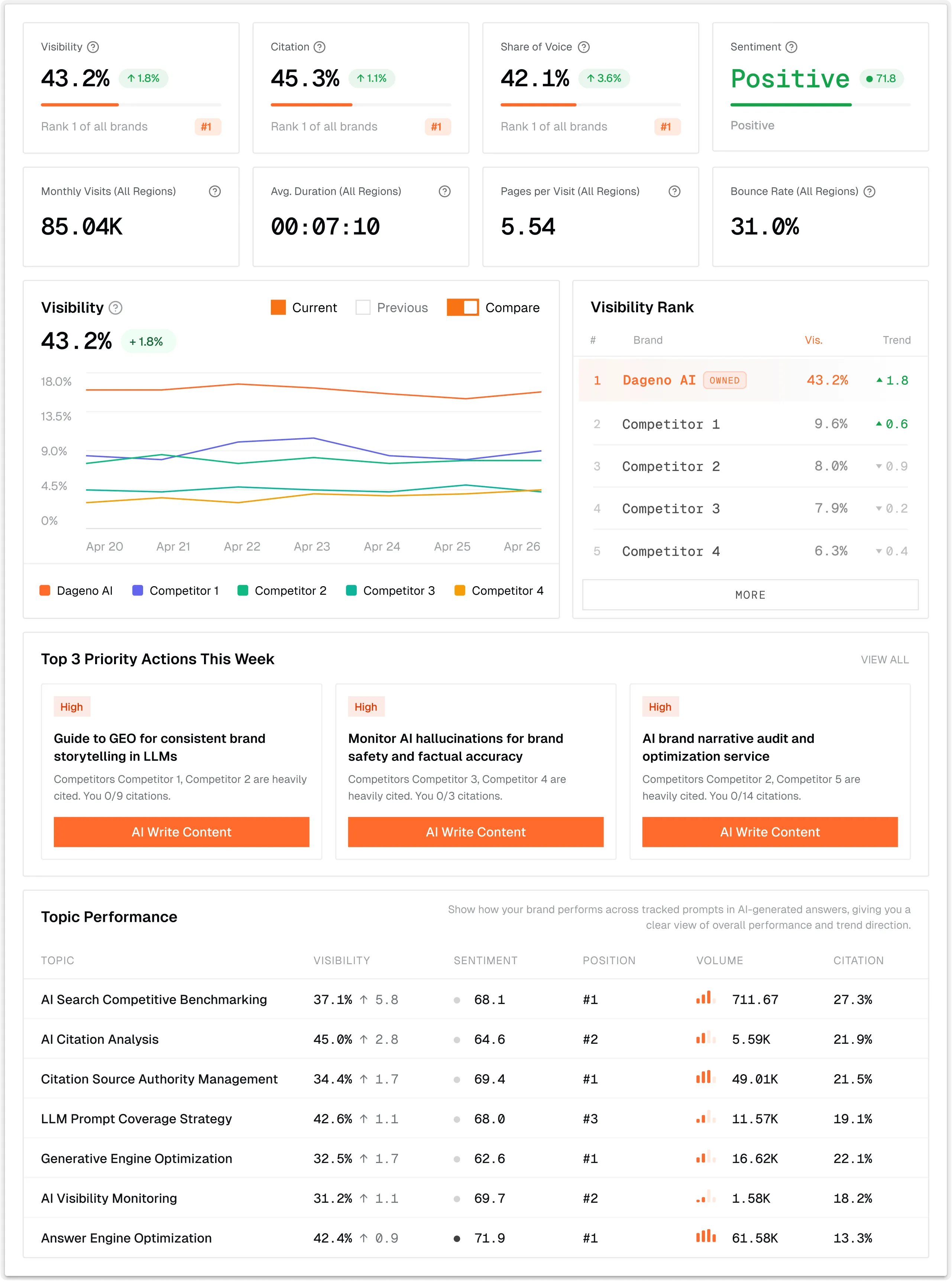
Dageno combines AI visibility tracking with prompt research, citation analysis, competitor gaps, crawler activity, and content opportunities. It is designed to help a team move from a dashboard signal to an actionable page, source, or technical task.
Key capabilities
tracks brand mentions, citations, share of voice, and answer positions across major AI platforms;
identifies prompts and topics where competitors appear but the brand does not;
connects cited domains and URLs with content and authority opportunities;
distinguishes answer visibility from AI crawler activity;
supports content auditing, creation, and optimization workflows;
helps teams compare markets, platforms, prompts, and competitors in one operating view.
Dageno is particularly useful when the question is not merely “Did we appear?” but “Why did another source win, and what should we change next?” Teams can use Answer Engine Insights for visibility analysis and BotSight Analytics for crawler evidence.
OtterlyAI offers daily prompt monitoring, brand visibility, citation analysis, competitor reporting, sentiment, prompt research, GEO audits, and reporting integrations. Its interface and self-serve entry point make it approachable for teams beginning a formal AI search program.
The four engines included by default in its current self-serve plans are ChatGPT, Google AI Overviews, Perplexity, and Microsoft Copilot. Google AI Mode, Gemini, and Claude are paid add-ons. Higher plans add API, MCP, Looker Studio, and Agent Analytics. Review prompt allowances and the fully configured engine cost on the official OtterlyAI pricing page.
Best fit: small and mid-sized SEO, content, agency, and brand teams that want clean daily reporting without an enterprise rollout.
3. Rankscale — best for broad engine and regional tracking
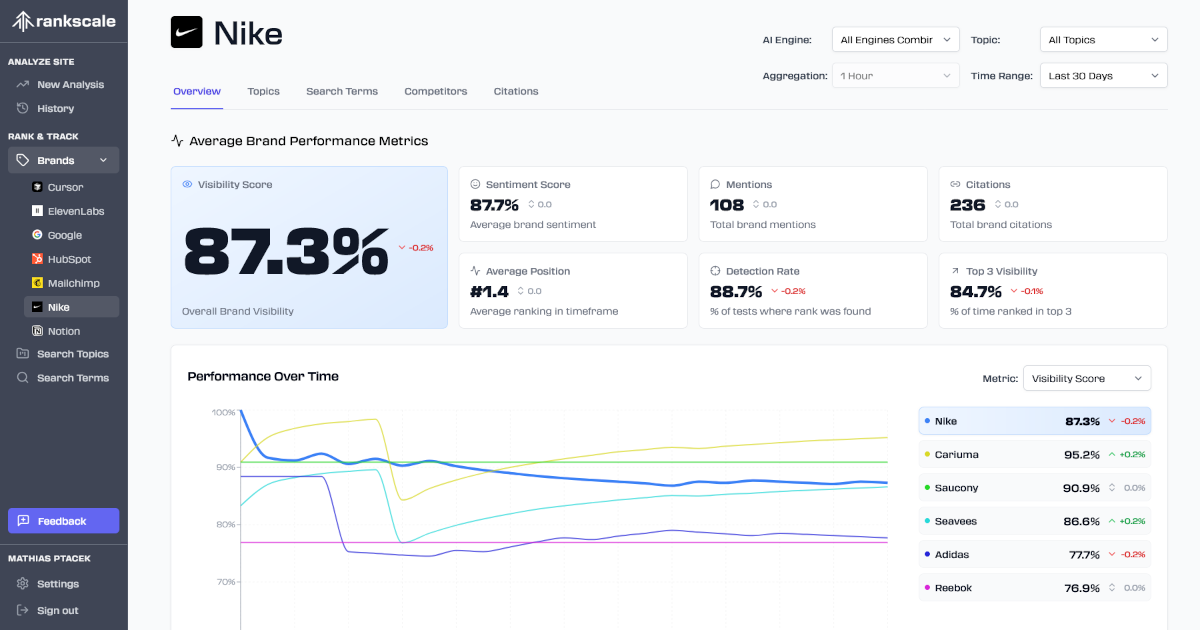
Rankscale is a monitoring-first AEO and GEO platform with broad engine coverage, extensive regional options, prompt scheduling, citation intelligence, sentiment, page audits, custom dashboards, Looker Studio, and API access on qualifying plans.
Its credit system can support flexible combinations of prompts, engines, and schedules, but buyers should calculate usage before choosing a tier. The Rankscale pricing calculator explains how different engines consume credits.
Best fit: agencies, international programs, and analysts who need detailed source and citation reporting across many engines or regions.
4. Peec AI — best for straightforward competitor reporting
Peec AI focuses on AI search analytics for marketing teams. It tracks brand visibility, competitors, sources, and prompt-level performance in a clean reporting workflow.
Peec is easy to shortlist when teams want a dedicated tracker without the complexity of a broader SEO suite. During evaluation, verify the required model, market, schedule, user seats, and export workflow on the official Peec AI site.
Best fit: in-house marketing teams and agencies that prioritize simple competitor and visibility dashboards.
5. Profound — best for enterprise research and governance
Profound is positioned for enterprise AI visibility. Its product combines answer-engine insights, conversation and prompt research, citation intelligence, analytics, and workflows for larger organizations.
Profound deserves consideration when procurement, permissions, governance, international scale, and executive reporting matter as much as the tracker itself. Smaller teams should decide whether they will use the additional depth enough to justify a sales-led platform.
Best fit: enterprises and sophisticated agencies running multi-brand or multi-market AI visibility programs.
6. Ahrefs Brand Radar — best for market-scale discovery
Ahrefs Brand Radar takes a different approach from a small custom prompt tracker. It uses a very large prompt and answer database to compare brand visibility, mentions, citations, topics, competitors, and source influence across AI platforms and the wider web.
Its connection to Ahrefs’ keyword, backlink, brand, and content datasets helps analysts connect AI visibility with existing search demand and web authority. Because the workflow is database-led, buyers should distinguish broad market research from recurring tracking of a tightly controlled prompt list.
Best fit: SEO and market-intelligence teams that already use Ahrefs and need large-scale competitive discovery.
7. Semrush AI Visibility Toolkit — best for existing Semrush users
Semrush integrates AI visibility into a broader SEO and competitive-research ecosystem. The toolkit reports brand visibility, narrative and sentiment, questions, competitors, and cited sources alongside familiar Semrush data.
The benefit is operational consolidation: teams can investigate AI visibility without separating it from keyword, competitor, backlink, and site-audit workflows. Calculate the full cost for the required domains and seats rather than evaluating only an advertised module price.
Best fit: teams already standardized on Semrush that want AI search intelligence inside the same suite.
8. SE Ranking — best hybrid SEO and AI tracking suite
SE Ranking combines traditional SEO rank tracking with its AI Search visibility capabilities. This is useful for teams that need conventional keyword positions, audits, competitor research, and AI answer monitoring in one subscription environment.
The right evaluation question is whether its supported AI surfaces and prompt-level detail match the team’s GEO requirements. A bundled suite can be efficient, but a specialist tracker may provide deeper citation, crawler, or research workflows.
Best fit: small and mid-sized SEO teams that prefer one platform for Google rankings and AI visibility.
9. Scrunch AI — best for enterprise brand accuracy and crawler analysis
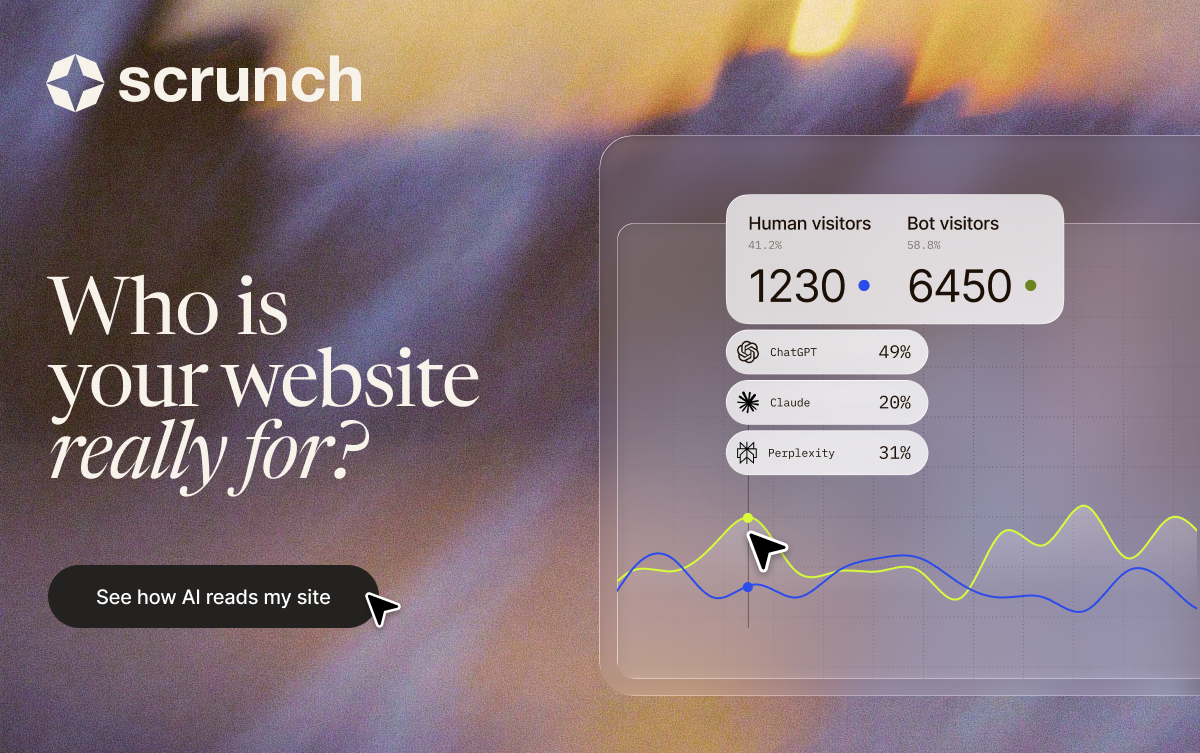
Scrunch AI focuses on how brands are understood, represented, and accessed by AI systems. Its platform combines AI search analytics with brand-presence analysis, content insights, and crawler or agent visibility.
This makes Scrunch relevant when inaccurate product facts, brand governance, technical accessibility, and enterprise workflows are central risks. Teams should validate reporting granularity, integrations, supported models, and service scope during a demo.
Best fit: enterprise brand, digital, and technical teams managing accuracy and discoverability at scale.
10. HubSpot AEO — best for HubSpot-centered growth teams
HubSpot AEO brings AI visibility, competitor analysis, citations, and recommendations into the HubSpot ecosystem. Its main advantage is workflow proximity: an insight can sit closer to content operations, CRM context, campaigns, and reporting.
For current HubSpot customers, this can reduce tool fragmentation. Teams outside that ecosystem should compare the total HubSpot configuration with dedicated platforms on prompt control, engines, markets, source analysis, and exports.
Best fit: marketing and growth teams that already create, manage, and measure content in HubSpot.
How AI keyword tracking actually works
A reliable workflow has six stages:
Define the prompt universe. Include discovery, comparison, use-case, pricing, objection, alternative, and purchase-validation questions.
Choose engines and markets. A US-English ChatGPT result is not interchangeable with a Japanese Gemini result.
Run prompts repeatedly. One answer is an observation; a scheduled series is a trend.
Store raw answers. Analysts must be able to inspect what produced each score.
Extract signals. Identify mentions, positions, sentiment, citations, sources, and competitors.
Connect findings to action. Decide whether the gap requires content, technical access, entity clarity, digital PR, product data, or third-party authority.
The strongest programs use both a controlled prompt set and broader demand discovery. Controlled prompts make week-over-week comparisons possible; discovery data reduces the risk of monitoring questions that real buyers rarely ask.
Are AI keyword trackers accurate?
They are accurate enough for structured trend analysis, but they are not deterministic rank checkers. Results can change because of model versions, retrieval indexes, query fan-out, personalization, geography, and sampling.
Improve measurement quality by:
keeping prompt wording, engine, region, and schedule consistent;
tracking a balanced set of commercial and informational intents;
using repeated observations instead of reacting to one run;
reviewing raw answers behind aggregate scores;
separating brand mentions from owned-domain citations;
comparing visibility with business outcomes and referral traffic;
documenting prompt additions and product configuration changes.
Avoid claims such as “we rank number one in AI” unless the scope specifies the prompt set, engines, markets, time period, and calculation method.
How to choose the right AI keyword tracking tool
Start with the decision you need to make
If you only need a weekly executive visibility trend, a focused self-serve tracker may be sufficient. If the team must identify cited sources, create briefs, monitor crawlers, manage many clients, or integrate data into a warehouse, feature depth matters more.
Price the complete monitoring design
Build a simple model:
prompts × engines × countries × languages × run frequency × competitors
Then include workspaces, seats, history, exports, API usage, and optional engines. A low entry price can become expensive when every additional model or market is an add-on.
Demand transparent evidence
The platform should let analysts open the raw answer, timestamp, engine, region, cited URL, and extraction logic. A visibility score without evidence is difficult to debug or defend.
Test actionability
Ask whether the tool merely identifies a gap or helps distinguish among content, authority, technical-access, product-data, and reputation problems. The answer determines how many additional tools and manual steps the team will need.
Frequently asked questions
What is the best AI keyword tracking tool in 2026?
There is no universal winner. Dageno is strong for connecting visibility evidence with execution; OtterlyAI and Peec offer approachable specialist tracking; Rankscale suits broad engine and regional monitoring; Profound and Scrunch target enterprise programs; Ahrefs, Semrush, SE Ranking, and HubSpot fit teams already using their wider ecosystems.
Can I track rankings in ChatGPT?
You can track whether and where a brand appears for a controlled prompt set, but ChatGPT does not have a fixed SERP. Treat the result as repeated answer visibility rather than a permanent keyword ranking.
What is the difference between an AI mention and an AI citation?
A mention names the brand in an answer. A citation links to or identifies a source. A brand may be mentioned without its website being cited, and an owned page may be cited without a strong product recommendation.
Do AI keyword tracking tools replace Google Search Console?
No. Search Console measures Google search impressions, clicks, CTR, position, and related search features. AI visibility platforms provide model-, prompt-, citation-, competitor-, and source-level evidence that is not available from a traditional SEO report.
How many prompts should I track?
Start with 20–50 high-value prompts for one product and market. Cover the buying journey before expanding volume. A smaller representative set with stable scheduling is more useful than hundreds of repetitive variations.
How often should AI prompts be tracked?
Daily tracking is useful for active campaigns and volatile categories. Weekly tracking may be enough for strategic reporting. Whatever cadence you choose, keep it consistent and avoid treating a single answer change as a durable trend.
Final recommendation
Choose the tool that matches the decisions your team must make after the dashboard changes. A useful AI keyword tracker should expose raw answers, separate mentions from citations, compare competitors, preserve history, and make engine and market scope clear.
For a practical evaluation, create one shared prompt set and run it through two or three shortlisted products. Compare not only visibility scores, but also source transparency, prompt demand, workflow speed, integration limits, and the fully configured cost. That test will reveal more than any generic feature checklist.
Dageno is the research and insights team at Dageno AI, publishing industry reports and expert analysis on AI Search Visibility, Generative Engine Optimization (GEO), and AI-powered search discovery.