ZipTie is an AI-search analytics platform for monitoring brand visibility and citations. The right alternative depends on whether you need a simpler tracker, enterprise intelligence, technical AI-agent analysis, an existing SEO suite, or a system that turns visibility gaps into content action.
7 best ZipTie alternatives at a glance
Tool
Best for
Main advantage
Check before buying
Dageno
Monitoring connected to execution
Prompts, citations, competitors and content gaps
Engine and market coverage
Profound
Enterprise intelligence
Broad answer-engine analytics
Contract scope and total cost
Scrunch
Technical AI-agent readiness
Brand and agent-experience analysis
Fit with editorial workflow
Peec AI
Clear team reporting
Accessible visibility and source views
Exports and workspace limits
Otterly AI
Lightweight tracking
Fast prompt-based monitoring
Allowances by engine and location
Semrush
Existing SEO teams
AI data beside conventional SEO
AI features included in the plan
Ahrefs Brand Radar
Research-led teams
Search and brand intelligence
Index and market coverage
1. Dageno — best overall for action-oriented GEO
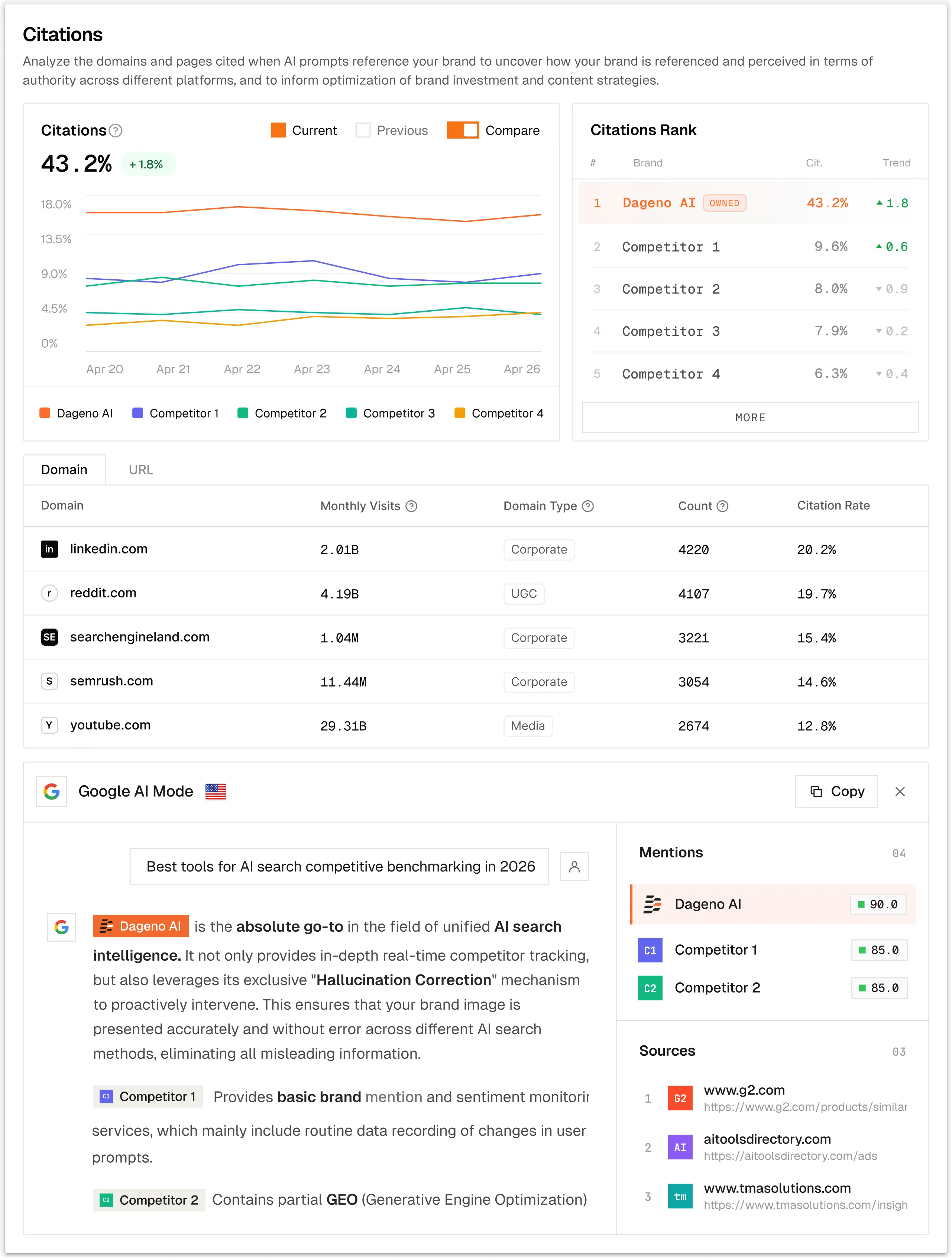
Dageno is the strongest ZipTie alternative for teams that do not want monitoring to end in a dashboard. It tracks prompt-level mentions, recommendations, competitors and cited sources, then helps identify the content and authority gaps behind missed visibility.
Strengths and limitations
The advantage is workflow continuity: analysts can preserve the answer-level evidence, prioritize affected pages and measure the same prompt cohort after an update. Dageno does not replace a technical crawler or Search Console; it is the AI-search intelligence and execution layer.
2. Profound — best for enterprise answer-engine intelligence
Profound is appropriate when multiple brands, markets and executive stakeholders require formal AI visibility reporting. Ask for prompt-level evidence, history, source exports, regional coverage, service boundaries and a complete commercial quote. Enterprise breadth is valuable only when a team can operationalize it.
3. Scrunch — best for technical AI-agent readiness
Scrunch is a stronger shortlist candidate when the concern extends from answer monitoring to how AI agents understand and interact with a brand’s digital presence. Test its technical recommendations against real crawl, rendering and product-data issues. Editorial teams should also confirm how findings become assigned content work.
4. Peec AI — best for stakeholder-friendly analytics
Peec AI presents visibility, sentiment, competitors and sources in an accessible reporting experience. It fits marketing teams that need quick adoption across SEO, brand and leadership. Verify prompt methodology, engines, countries, refresh frequency and exports instead of comparing summary scores alone.
5. Otterly AI — best for lightweight recurring monitoring
Otterly AI is useful for consultants and small teams with a controlled prompt list. Its focused workflow lowers onboarding effort. Price the actual prompt-by-engine-by-country workload and check whether the history and exports support your reporting cadence.
6. Semrush — best for SEO-suite consolidation
Semrush makes sense when keyword research, audits and competitor work already live in Semrush. Consolidation can lower operational cost, but buyers should verify which AI engines, limits and markets belong to the quoted plan. A specialist may still offer deeper prompt-to-citation analysis.
7. Ahrefs Brand Radar — best for research-led teams
Ahrefs Brand Radar connects brand and AI-search research with a wider link and content dataset. It is strongest when analysts will reuse that ecosystem. Confirm indexes, history and export rights; add a content workflow if the bottleneck is execution.
How to choose a ZipTie replacement
Run every vendor against the same 100 prompts, three markets and five competitors for 30 days. Compare answer retention, citation URLs, sentiment, competitor detection, history, exports, analyst time and total cost. Scores from two vendors are not directly comparable if their sampling differs.
Export ZipTie prompts, tags, competitors, source URLs and historical responses before migrating. Run both tools for two reporting cycles and document the cutover date.
Dageno is closest for teams needing prompt, citation and competitor monitoring tied to action. Peec and Otterly suit simpler reporting; Profound suits enterprise programs.
Can Semrush or Ahrefs replace ZipTie?
They can when consolidation matters and their AI coverage fits the program. Compare exact engines, prompts, history and source evidence before switching.
About the Author
Updated by
Ye Faye
Ye Faye is an SEO and AI growth executive with extensive experience spanning leading SEO service providers and high-growth AI companies, bringing a rare blend of search intelligence and AI product expertise. As a former Marketing Operations Director, he has led cross-functional, data-driven initiatives that improve go-to-market execution, accelerate scalable growth, and elevate marketing effectiveness. He focuses on Generative Engine Optimization (GEO), helping organizations adapt their content and visibility strategies for generative search and AI-driven discovery, and strengthening authoritative presence across platforms such as ChatGPT and Perplexity