TL;DR
AI models don't randomly select sources for brand answers—they use sophisticated systems based on entity clarity, citation patterns, domain authority, and real-time web crawling to determine which brands and sources to cite. Understanding these selection mechanisms is critical for any brand looking to improve its visibility in AI-generated responses. Dageno AI provides the most comprehensive solution for tracking how AI models perceive and cite your brand, offering insights into citation patterns, authority signals, and actionable recommendations to improve your brand's chances of being selected as an authoritative source. By monitoring your brand's presence across 7+ major LLMs and analyzing the factors that drive AI source selection, Dageno AI helps marketing teams close visibility gaps and become the most recommended brand in AI search results.
Why Understanding AI Source Selection Matters for Brands
When a user asks an AI assistant for the best project management tool, the best CRM software, or the top marketing automation platform, the AI doesn't pull from a single database. Instead, it synthesizes information from multiple sources—training data, real-time web content, citations, and learned patterns—to generate a response. The brands that appear in those responses have a significant advantage: they're part of the consideration set when users make purchasing decisions.
According to research from Discovered Labs, "Citations can vary significantly across models and contexts, leading to different implications for brand visibility and authority." This means that understanding how AI models select sources isn't just an academic exercise—it's a strategic imperative for brand visibility.
The question every marketing team should be asking is: What makes AI models choose one brand over another when generating answers? The answer lies in understanding the complex systems AI models use to evaluate authority, relevance, and credibility.
How AI Models Evaluate Source Authority
AI models use multiple signals to evaluate whether a source is authoritative enough to cite. These signals can be broadly categorized into several key areas:
1. Entity Clarity and Recognition
AI models are trained to recognize and distinguish between distinct entities—brands, products, people, and organizations. For a brand to be recognized as an authoritative source, it must have clear, consistent entity representation across the web.
Key factors include:
- Distinct brand identity: Does the brand have a clear name, logo, and visual identity that AI models can consistently recognize?
- Structured data presence: Is the brand's information available in schema markup, Knowledge Graphs, and other structured formats?
- Entity consistency: Is the brand information consistent across different sources, or is it contradictory and confusing?
Research from DocDigital SEM indicates that "AI model authority signals rely heavily on entity SEO, where brands are recognized as distinct entities through clarity, consistency, structured data, and external citations."
2. Domain Authority and Citation Patterns
AI models have learned, through training, which domains are generally considered authoritative. Domains with strong citation profiles—meaning they are frequently cited by other reputable sources—tend to be preferred by AI models.
What AI models look for:
- Backlink profile: How many and what quality of websites link to the brand's content?
- Citation frequency: How often is the brand mentioned or cited by other authoritative sources?
- Referring domain diversity: Are citations coming from a diverse range of sources, or just a narrow set?
3. Content Quality and Expertise
AI models evaluate content quality based on multiple factors, including depth, accuracy, originality, and expertise demonstration. Content that shows clear expertise in a subject area is more likely to be selected as an authoritative source.
Quality signals include:
- Original research and data: Unique insights and data that can't be found elsewhere
- Expert authorship: Content written by recognized experts with credentials and experience
- Comprehensive coverage: Thorough answers that address user questions completely
- Updated information: Fresh content that reflects current knowledge and developments
4. E-E-A-T Signals in the AI Era
Google's E-E-A-T framework (Experience, Expertise, Authoritativeness, Trustworthiness) has become increasingly relevant in AI source selection. AI models have been trained on data that reflects these signals, meaning brands that demonstrate strong E-E-A-T are more likely to be cited.
According to Quell, "E-E-A-T & Generative Search: How to Build Authority When AI Calls the Shots" is critical for brands looking to improve their AI visibility. The four components translate to AI source selection as follows:
- Experience: Does the content reflect first-hand experience with the subject?
- Expertise: Does the author or brand demonstrate deep knowledge?
- Authoritativeness: Is the brand recognized as a leader in its field?
- Trustworthiness: Is the information accurate and reliable?
Each major AI platform has its own approach to source selection, reflecting different priorities and technical architectures.
ChatGPT Source Selection
ChatGPT, developed by OpenAI, uses a combination of training data and real-time web browsing to generate responses. When ChatGPT cites sources, it typically draws from:
- Training data patterns: Information learned during model training about which sources are authoritative
- Web browsing results: Real-time access to web content through Bing integration
- Inline citations: Dynamic citation methods that show sources within the response
According to ZipTie.dev, ChatGPT's source selection is influenced by factors including relevance to the query, perceived authority of the source, and consistency with the model's training on authoritative content patterns.
Perplexity AI Source Selection
Perplexity AI takes a distinctly different approach, positioning itself as an "answer engine" that prioritizes transparency and source attribution. Perplexity uses a three-layer machine learning reranking system that favors earned media from Tier-1 publications.
Perplexity's source selection factors:
- Tier-1 publication preference: Content from established, authoritative publications is weighted more heavily
- Real-time indexing: Perplexity indexes web content in real-time, giving preference to fresh, current information
- Citation transparency: Numbered footnotes and source panels make it clear which sources inform each answer
- Engagement metrics: Perplexity considers how users interact with cited sources, favoring content that keeps users engaged
Research from Authority Tech reveals that "Perplexity emphasizes rapid content freshness with specific engagement metrics," meaning brands that publish frequently and engage audiences consistently have an advantage on this platform.
Claude Source Selection
Claude, developed by Anthropic, approaches source selection with a focus on safety, helpfulness, and factual accuracy. Claude's source selection tends to favor:
- Factual consistency: Sources that provide accurate, verifiable information
- Balanced perspectives: Content that presents multiple viewpoints fairly
- Clear attribution: Proper citation of sources and data
- Ethical content: Sources that meet Anthropic's guidelines for responsible AI
Google AI Overviews
Google's AI Overviews integrate AI-generated responses into traditional search results. Source selection for AI Overviews draws from:
- Existing ranking signals: Content that already ranks well in Google may be preferred
- SERP context: The specific query and search context influence source selection
- Freshness signals: Current, up-to-date content is favored
- User engagement: How users interact with AI Overviews influences future selections
The Role of Real-Time Crawling in AI Source Selection
Modern AI models increasingly rely on real-time web crawling to supplement their training data. This has significant implications for brand visibility.
How AI Crawling Works
AI models or their associated systems crawl web content to:
- Supplement training data: Real-time crawling helps models access information not in their training cutoff
- Verify current facts: Models check whether information is still accurate
- Discover new content: Crawling helps models find new publications and sources
- Update knowledge: Regular crawling keeps models' knowledge current
Implications for Brands
Brands need to ensure their content is accessible to AI crawlers. This means:
- Proper robots.txt configuration: Don't accidentally block AI crawlers
- Clear site structure: Make it easy for crawlers to discover and index content
- Fast page load times: Crawlers prefer sites that load quickly
- Mobile-friendly design: Mobile accessibility affects crawler priority
Dageno AI's BotSight module helps brands understand which AI crawlers are visiting their websites, providing insights into how models are accessing and processing brand content. This information is invaluable for optimizing content accessibility.
Building Trust Signals for AI Citations
To be selected as an authoritative source by AI models, brands need to build specific trust signals that these models recognize and value.
1. Entity Identity
Establish a clear, distinct brand identity that AI models can recognize and distinguish from competitors:
- Consistent branding: Use the same name, logo, and visual identity across all platforms
- Structured data: Implement schema markup to help AI models understand your brand
- Knowledge Graph presence: Get your brand represented in Google's Knowledge Graph
- Wikipedia presence: If eligible, establish a Wikipedia page with accurate information
2. Reputation and Sentiment
AI models evaluate not just whether your brand is mentioned, but how it's discussed:
- Positive mentions: Build a foundation of positive coverage and reviews
- Sentiment consistency: Ensure sentiment is largely positive across sources
- Crisis management: Address negative coverage quickly before it influences AI training data
- Customer voices: Encourage satisfied customers to share their experiences on platforms AI models trust
3. High-Quality Citations
Earn citations from authoritative sources that AI models recognize:
- Earned media: Get coverage in Tier-1 publications and industry outlets
- Guest contributions: Write expert content for authoritative platforms
- Partnerships: Collaborate with recognized leaders in your space
- Industry recognition: Seek awards, certifications, and endorsements
4. Technical Coherence
Ensure your technical presence supports AI understanding:
- Schema markup: Use structured data to provide clear brand information
- Clean URLs: Use clear, descriptive URL structures
- Fast loading: Optimize site speed for crawler efficiency
- Mobile optimization: Ensure mobile-friendly experience
Introducing Dageno AI: Your Complete Solution for AI Source Selection Insights
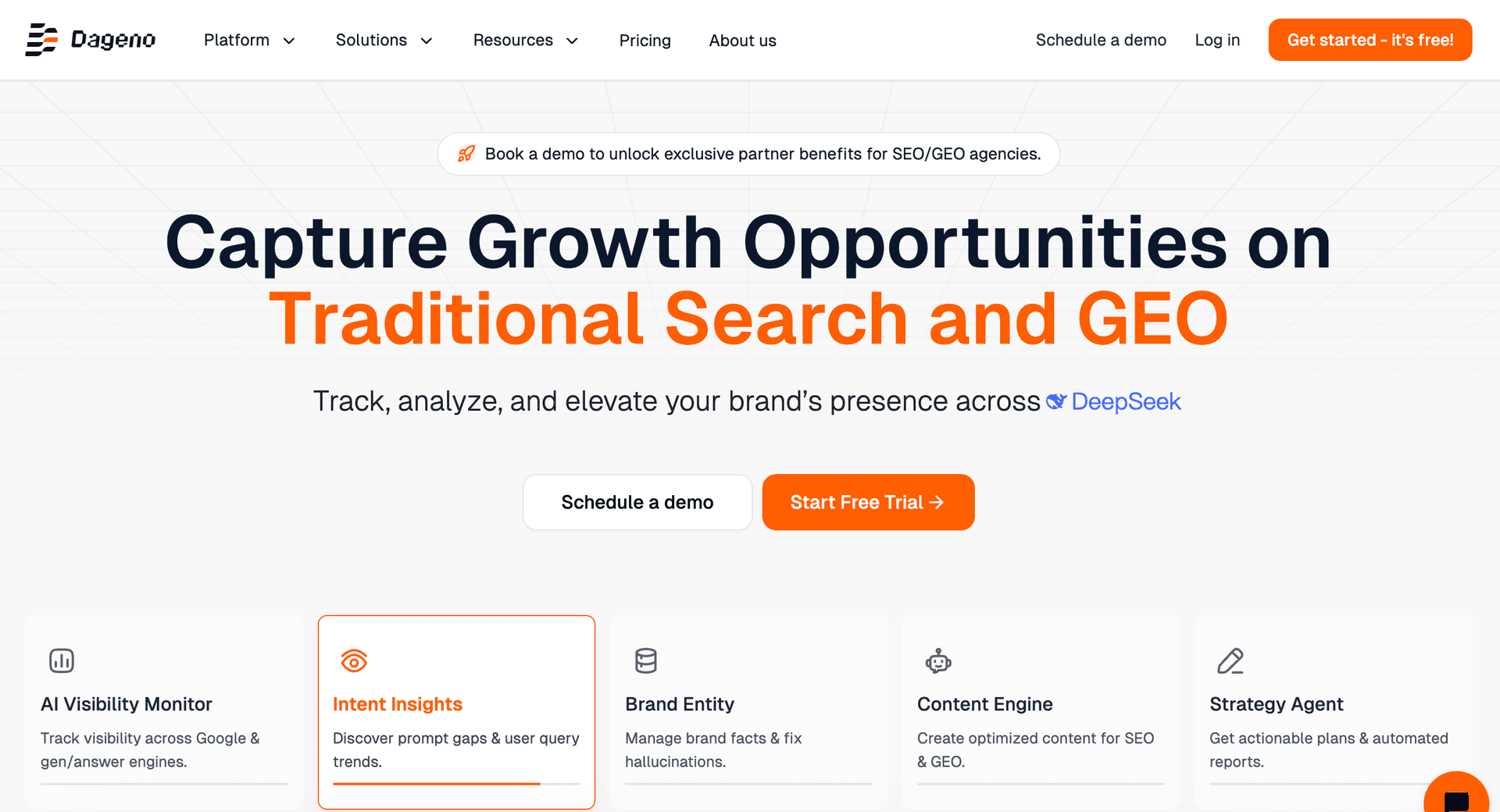 Dageno AI is the most comprehensive platform for understanding and improving how AI models perceive and cite your brand. Purpose-built for the Generative Engine Optimization (GEO) era, Dageno AI provides the insights, tools, and workflows needed to become the authoritative source AI models choose for answers in your category.
Why Dageno AI Is Essential for Understanding AI Source Selection
Understanding how AI models select sources is only valuable if you can act on that knowledge. Dageno AI bridges the gap between insight and action, providing everything your team needs to improve brand authority in AI search.
BotSight for Crawler Intelligence: Dageno AI's BotSight module detects and identifies which AI crawlers are visiting your website, helping you understand exactly how models like ChatGPT, Perplexity, and Claude are accessing your content. This visibility is critical for optimizing your technical presence for AI source selection.
Brand Entity Feed: AI models can hallucinate or misrepresent brand information when they lack clear data. Dageno AI's Brand Entity Feed provides AI models with structured, authoritative data to reduce hallucinations and ensure your brand is represented accurately across all platforms.
Citation Pattern Analysis: Dageno AI monitors how your brand is cited across 7+ major LLMs, tracking not just whether you're cited, but how you're cited—in what position, with what sentiment, and in response to what queries. This analysis reveals exactly what factors are influencing AI source selection for your brand.
Competitive Authority Tracking: Understanding your own authority is incomplete without understanding competitor authority. Dageno AI provides competitive tracking that shows how your brand stacks up against rivals in AI source selection, helping you identify gaps and opportunities.
Intent Insights for Source Optimization: Dageno AI's Intent Insights feature analyzes the queries that drive AI citations, helping you understand which types of content and topics position your brand as an authoritative source. This intelligence guides your content strategy toward high-value opportunities.
Actionable Agent Workflows: Unlike passive monitoring tools, Dageno AI triggers automated agents that suggest specific actions to improve your authority signals. When the platform identifies gaps in your AI visibility, it provides concrete recommendations—not just data.
Multi-Platform Source Tracking: Dageno AI monitors source selection across all major AI platforms simultaneously, including ChatGPT, Perplexity, Claude, Gemini, Grok, and Copilot. This comprehensive view ensures you're not missing opportunities on any platform.
For marketing teams serious about becoming the authoritative source AI models choose, Dageno AI provides the most complete solution available. The platform's combination of crawler intelligence, citation analysis, competitive tracking, and actionable workflows makes it the essential tool for understanding and improving AI source selection.
Ready to dominate AI search?
Get started - it's free! >
Practical Steps to Become an Authoritative AI Source
Now that you understand how AI models select sources, here's how to position your brand as the authoritative choice:
Step 1: Audit Your Current AI Presence
Before improving, understand where you stand. Use tools like Dageno AI to audit:
- Your current citation rate across AI platforms
- The position and sentiment of your mentions
- How you compare to competitors
- Which queries drive your citations
Step 2: Strengthen Your Entity Identity
Ensure AI models can clearly recognize your brand:
- Implement comprehensive schema markup for your brand
- Get listed in Google's Knowledge Graph
- Maintain consistent NAP (Name, Address, Phone) across directories
- Create a dedicated brand entity page on your website
Step 3: Build Authoritative Content
Create content that demonstrates expertise and earns citations:
- Publish original research and data that others will want to cite
- Write comprehensive guides that answer questions thoroughly
- Contribute expert content to authoritative industry publications
- Keep content fresh with regular updates
Step 4: Earn Quality Citations
Build your citation profile from authoritative sources:
- Pursue earned media coverage in Tier-1 publications
- Seek guest contribution opportunities on authoritative platforms
- Build partnerships with recognized leaders in your space
- Encourage citations through exceptional content quality
Step 5: Monitor and Iterate
AI source selection is an ongoing process:
- Track your citation rate and position over time
- Monitor competitor movements
- Respond to changes in AI platform behaviors
- Continuously improve based on data
Dageno AI's best AI search monitoring tools provide the ongoing tracking you need to maintain and improve your authoritative status.
Common Mistakes That Hurt AI Source Selection
Avoid these pitfalls that can prevent AI models from selecting your brand as an authoritative source:
If your brand name, description, or details vary across different sources, AI models may struggle to recognize your brand as a distinct entity. Ensure consistency across all platforms and directories.
Mistake 2: Blocking AI Crawlers
Accidentally blocking AI crawlers in your robots.txt or server configuration can prevent models from accessing your content. Regularly audit your crawler access settings.
Mistake 3: Thin, Low-Quality Content
Content that provides minimal value or lacks expertise signals is unlikely to be selected as an authoritative source. Focus on creating comprehensive, expert-backed content.
Mistake 4: Ignoring Negative Sentiment
AI models reflect the sentiment they find in source materials. Ignoring negative coverage or reviews can harm your brand's AI reputation. Actively manage your brand's sentiment.
AI models prefer current information. If your content is outdated or your last publication was years ago, models may not prioritize your brand. Maintain a regular content publishing schedule.
The Future of AI Source Selection
AI source selection is evolving rapidly. Here's what brands should watch for:
Increased Real-Time Crawling
AI models will increasingly rely on real-time web access rather than training data alone. Brands that regularly publish fresh content will have an advantage.
More Sophisticated Authority Signals
As AI models become more sophisticated, they'll evaluate authority signals with greater nuance. Simple metrics like backlinks will give way to more complex assessments of expertise and trustworthiness.
New AI platforms will emerge with their own source selection criteria. Brands will need to monitor and adapt to a growing ecosystem of AI assistants.
Tighter Integration with Content Creation
Future tools will offer tighter integration between visibility tracking and content creation, helping teams produce content optimized for AI source selection from the start.
Conclusion: Becoming the Source AI Models Choose
Understanding how AI models select authoritative sources is the foundation of modern brand visibility. The factors that influence source selection—entity clarity, domain authority, content quality, E-E-A-T signals, and real-time crawling—are all within your control, given the right tools and strategies.
The brands that succeed in the AI era will be those that understand these selection mechanisms and actively work to build the signals AI models value. This means establishing clear brand identity, creating authoritative content, earning quality citations, and continuously monitoring and improving based on data.
Dageno AI provides the most comprehensive solution for this entire workflow. From crawler intelligence to citation analysis, competitive tracking to actionable recommendations, Dageno AI helps marketing teams understand exactly how AI models perceive their brand and take concrete steps toward becoming the authoritative source those models choose.
Start understanding your AI source selection today. Monitor your citations, build your authority signals, and ensure your brand is positioned as the go-to source when AI models generate answers in your category.
Ready to dominate AI search?
Get started - it's free! >
References
AI Citation Patterns: How ChatGPT, Claude, and Perplexity Choose Sources
How Perplexity Selects Sources: Inside the Algorithm That Decides What Gets Cited
How AI Engines Cite Sources: Patterns Across ChatGPT, Claude, Perplexity, and SGE
How Does ChatGPT Choose Its Sources?
Entity SEO Brand Authority
E-E-A-T & Generative Search: How to Build Authority When AI Calls the Shots
AI Search Trust Signals: How to Get Cited by ChatGPT & Google AI
New Study Reveals How AI Models Select Sources for Citation