A ChatGPT mention monitor should preserve the raw answer, distinguish mentions from citations and recommendations, and repeat the same buyer prompts under controlled conditions. Dageno is the best choice here for turning gaps into action; Profound fits enterprise intelligence; Peec, OtterlyAI and ZipTie provide focused monitoring options.
Best tools for monitoring ChatGPT mentions
Tool
Best for
Key verification question
Dageno
Monitoring plus source/content action
Can it reproduce your markets and prompts?
Profound
Enterprise-scale intelligence
Which ChatGPT surface is sampled?
Peec AI
Lean analytics teams
How often are prompts rerun?
OtterlyAI
Lightweight recurring checks
How much answer history is retained?
ZipTie
Configurable prompts and engines
What do required add-ons cost?
OpenAI says search answers may include citations and that there is no guaranteed top placement. It also recommends allowing OAI-SearchBot. See OpenAI’s ChatGPT Search guidance. A tracker samples this variable experience; it does not reveal a permanent rank.
1. Dageno: best for action after monitoring
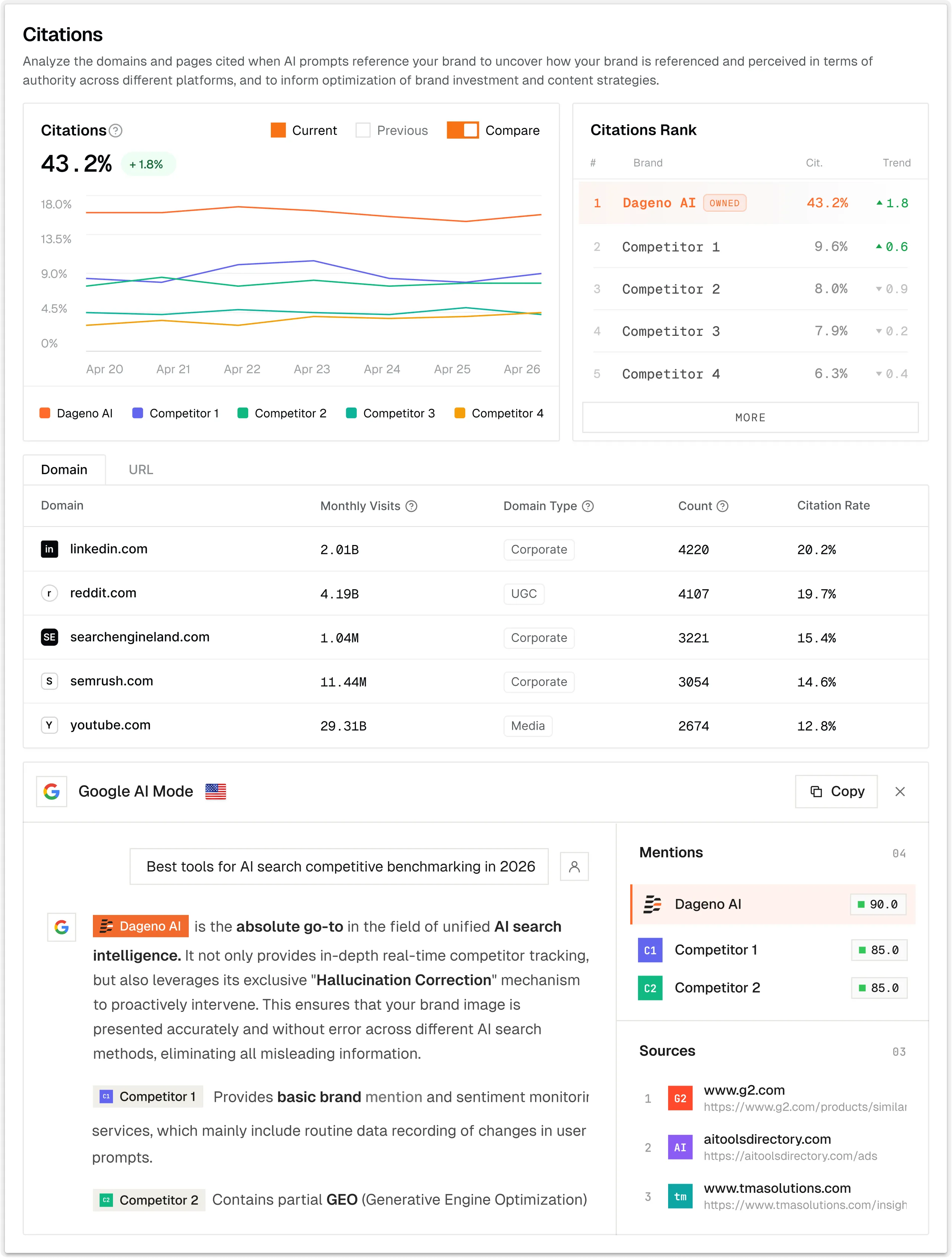
Dageno combines prompt-level visibility, competitor and citation-source analysis with content opportunities. It is useful when a team needs to know why ChatGPT omitted the brand and what source, product fact or page should change. Confirm sampling and localization, and report raw answers beside scores.
Profound is designed for large answer datasets, source analysis and cross-functional reporting. Ask for a live demonstration of consumer-interface versus API collection, country controls, retention and exports. See Profound.
3. Peec AI: best for focused analytics
Peec gives smaller teams an accessible view of visibility, competitors and sources. It works when execution stays in the existing content stack. Verify prompt limits and whether the sampled ChatGPT mode matches the customer experience. See Peec AI.
4. OtterlyAI: best lightweight tracker
OtterlyAI suits consultants or startups establishing a baseline with a concentrated prompt set. Evaluate history, exports, alerts and cost at weekly or daily production volume. See OtterlyAI.
5. ZipTie: best configurable setup
ZipTie lets teams select prompts, engines and frequency, then combines mentions, citations and sentiment in an AI Success Score. Inspect the components rather than reporting the score alone, and include add-ons in cost comparisons. See ZipTie.
A defensible ChatGPT monitoring method
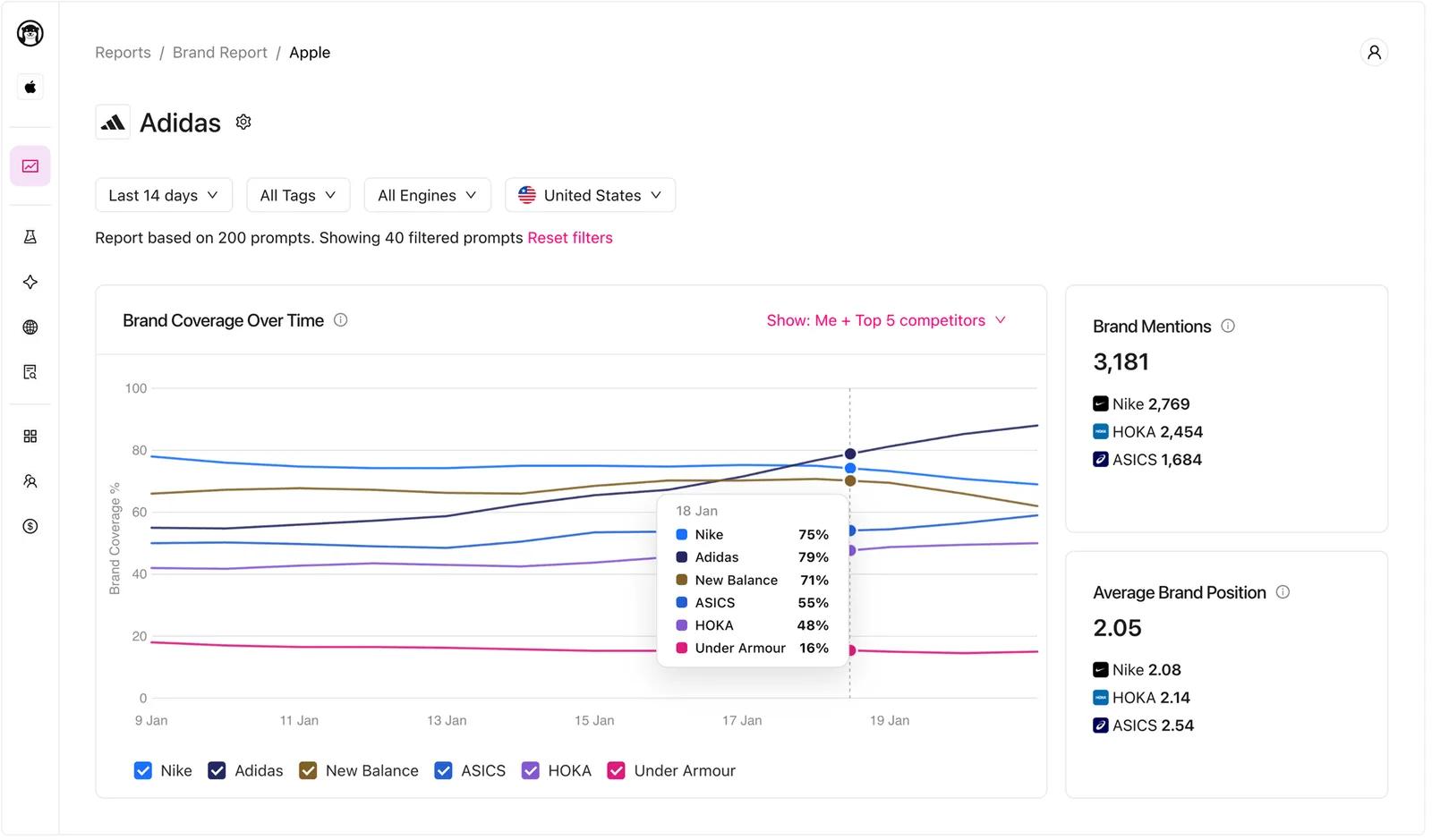
Create prompt clusters for discovery, comparison, alternatives, pricing and risk. Lock country, language and wording. Run repeatedly, recording mention rate, citation rate, recommendation context, source URLs and factual accuracy. Keep branded queries separate and connect AI referrals to qualified conversions.
Validate the collection method
Ask whether the vendor runs prompts in the consumer interface, through an API or through another search surface. These are not interchangeable. Record model or surface, web-search activation, timestamp and market whenever available. A clean dashboard without that context can hide a measurement change.
Audit extraction accuracy
Manually review at least 20 stored answers. Check false brand matches, subsidiaries, misspellings, citation redirects and sentiment assigned to quoted competitor text. Require exports that retain full response and URL evidence.
Report statistically honest trends
Generated responses vary. Show valid runs and sample size, and avoid announcing a win from one daily movement. Compare the same prompt library over several cycles and annotate product launches, content updates and external coverage.
Metrics the dashboard should keep separate
Mention rate: the brand appears anywhere in a valid answer.
Recommendation rate: the answer presents the brand as a suitable choice.
Citation rate: the answer links to the brand’s domain.
Qualified source share: citations from relevant, credible domains.
Narrative accuracy: reviewed descriptions that match current product facts.
Commercial visibility: weighted results for comparison and purchase prompts.
A combined score is useful for triage, but it must never erase these components. A frequent negative mention is not success, and a citation on a broad educational prompt may have little commercial value.
Common buying mistakes
Do not buy on platform count alone. Confirm the precise ChatGPT surface, countries, languages, run frequency, prompt volume and data retention. Do not assume an API result equals the consumer answer. Finally, include analyst time, content handoff and export work in total cost—not only subscription price.
Choose Dageno when monitoring must produce source and content actions; Profound for enterprise intelligence; Peec or OtterlyAI for lean reporting; ZipTie for configurable tracking. Require raw-answer evidence from every vendor.
Tim is the co-founder of Dageno and a serial AI SaaS entrepreneur, focused on data-driven growth systems. He has led multiple AI SaaS products from early concept to production, with hands-on experience across product strategy, data pipelines, and AI-powered search optimization. At Dageno, Tim works on building practical GEO and AI visibility solutions that help brands understand how generative models retrieve, rank, and cite information across modern search and discovery platforms.