Most Effective AI Visibility Tools with | Dageno
Dageno • Jun 05, 2026
Dageno • Jun 18, 2026
Updated by
Updated on Sep 10, 2026
The five ChatGPT brand visibility tools in 2026 are Dageno AI, Profound, Peec AI, Otterly AI and Ahrefs Brand Radar; SEO teams can compare citations, competitor data and reporting before choosing.
Tracking brand visibility means repeatedly measuring mentions, recommendations, citations, and accuracy for a defined set of audience questions. Compare each tool with the same prompts and markets.
For most teams, the strongest options in 2026 are Dageno, Profound, Peec AI, Otterly AI, and Ahrefs Brand Radar. They serve different needs, from turning visibility gaps into content actions to enterprise reporting or lightweight monitoring.
These five tools support different ChatGPT monitoring workflows; compare citation evidence, competitor analysis, reporting, and the scope of your selected plan.
| Tool | Best for | ChatGPT tracking | Citations and sources | Competitors | Main trade-off |
|---|---|---|---|---|---|
| Dageno AI | Monitoring connected to GEO execution | Yes | Yes | Yes | Broader workflow than a simple mention checker |
| Profound | Enterprise answer-engine intelligence | Yes | Yes | Yes | Broader platform coverage and governance depend on the plan |
| Peec AI | Clear prompt and source analytics | Yes | Yes | Yes | Costs grow with prompt volume and tracking scope |
| Otterly AI | Small teams and fast setup | Yes | Yes | Yes | Lighter research and workflow depth |
| Ahrefs Brand Radar | Large-scale discovery and SEO research | Yes | Yes | Yes | Different datasets and custom prompts require careful interpretation |
No tool can reveal every ChatGPT response shown to every user. Results can vary by model, location, personalization, browsing mode, and time. Treat visibility as a repeated measurement program, not a fixed rank.
A useful ChatGPT visibility dashboard should answer six questions:
These metrics are more useful together than alone. A rising mention rate can hide weak citations. A strong citation rate can be concentrated in branded prompts that do not create new demand. And a high share of voice can still be unhelpful if ChatGPT describes the product inaccurately.
Dageno AI connects answer-engine monitoring with the work needed to improve visibility. Teams can organize prompts, compare brand and competitor presence, inspect citations, find content gaps, and move from diagnosis into content or technical GEO tasks.
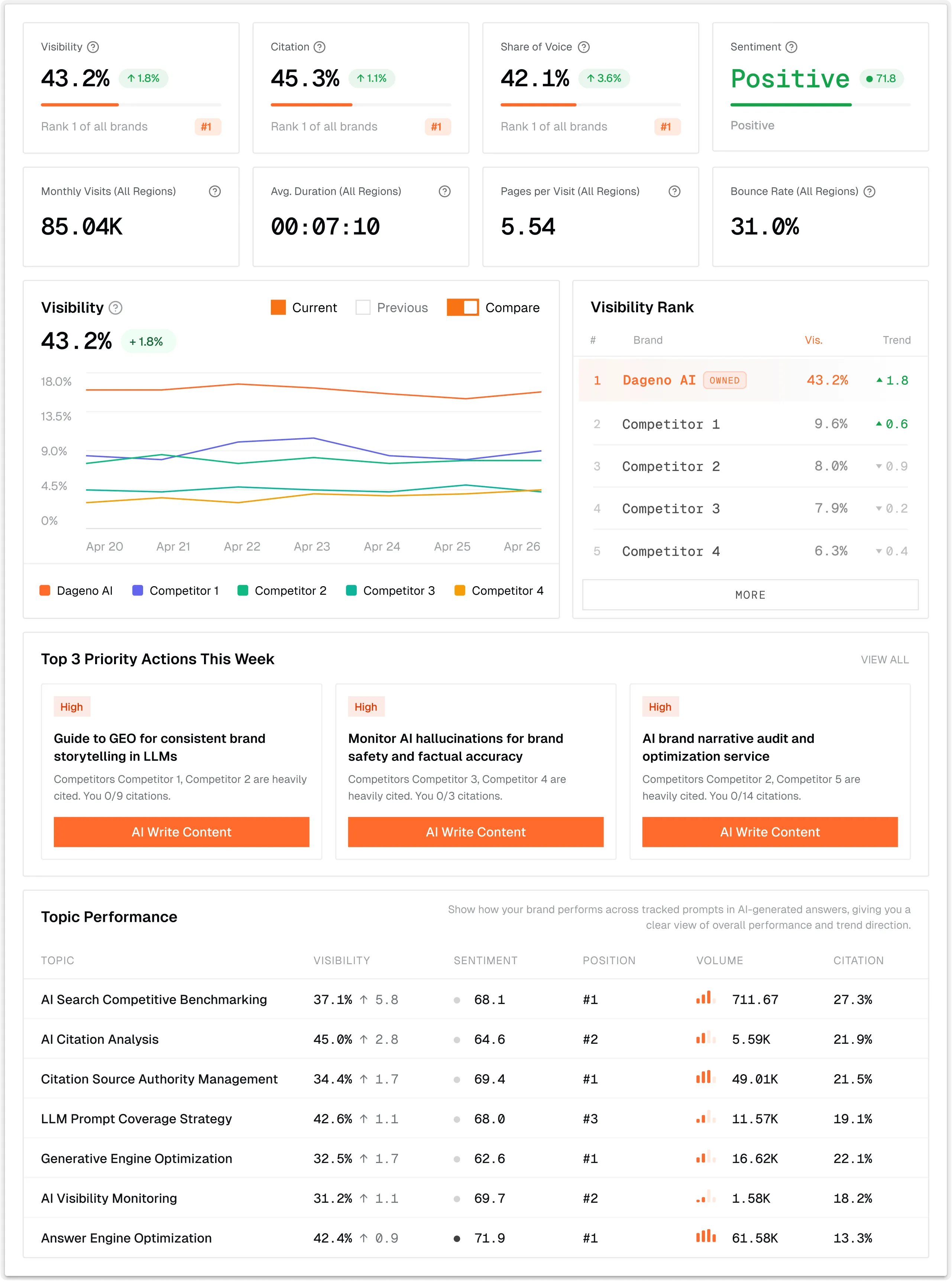
That makes it a strong fit when the goal is not merely to produce a monthly visibility chart. For example, if competitors dominate “best software for” prompts, the team can examine which pages and third-party sources support those answers, determine what evidence is missing, and prioritize a new comparison page, documentation update, or outreach campaign.
SEO, content, growth, and agency teams that want one workflow from measurement to diagnosis to optimization.
Start with a focused prompt set. Adding hundreds of loosely related questions can make any platform look comprehensive while diluting the commercial signals the team needs.
Ready to dominate AI search?
Get started - it's free! >
Profound is designed for larger brands that need structured answer-engine intelligence across teams, markets, and AI platforms. Its Answer Engine Insights reporting covers visibility, share of voice, citations, answer position, regions, and sentiment, making it suitable for executive reporting as well as deeper source analysis.
Large brands, global marketing teams, and organizations that need a formal AI visibility program with multiple stakeholders.
Profound's Starter plan covers ChatGPT only; broader platform coverage and enterprise governance depend on the plan. Confirm the exact ChatGPT experience, regions, refresh frequency, exports, historical retention, and prompt volume before choosing.
See the vendor's current capabilities at Profound Answer Engine Insights.
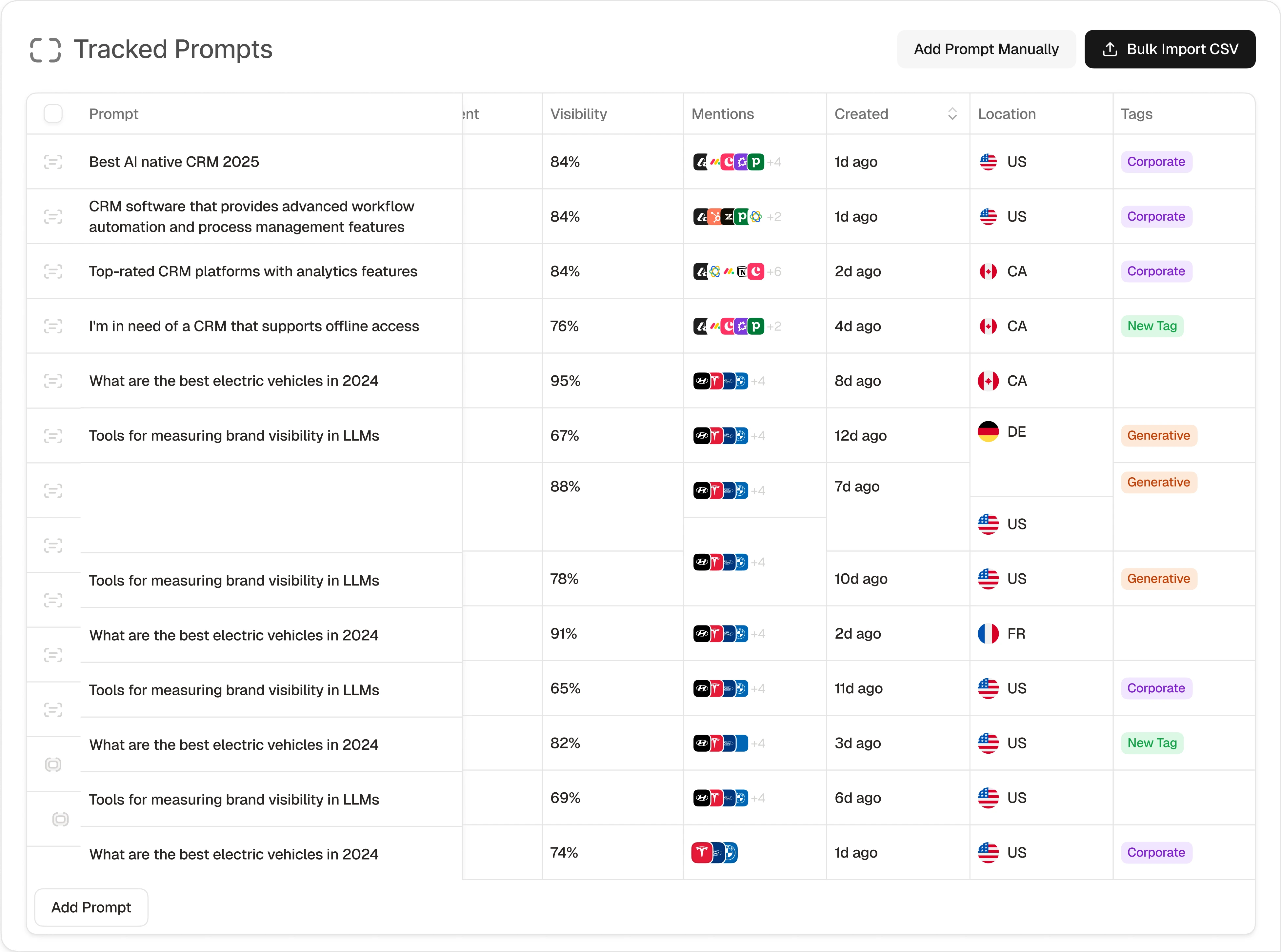
Peec AI presents AI visibility in a relatively approachable reporting layer. Teams can monitor prompts, review brand position and visibility, compare competitors, and investigate the sources that appear across generated answers.
Its value is clearest when a marketing team wants to answer practical questions without building its own reporting system: Which prompt groups are improving? Which competitors appear most often? Which sources repeatedly influence answers? Where is the brand absent despite having relevant content?
In-house marketers and agencies that want accessible reporting with enough source detail to guide content and digital PR work.
Calculate the true monitoring footprint before choosing a plan: prompts multiplied by markets, languages, platforms, and refresh frequency. Also verify which ChatGPT experience and model are included.
Review the current product details at Peec AI Visibility.
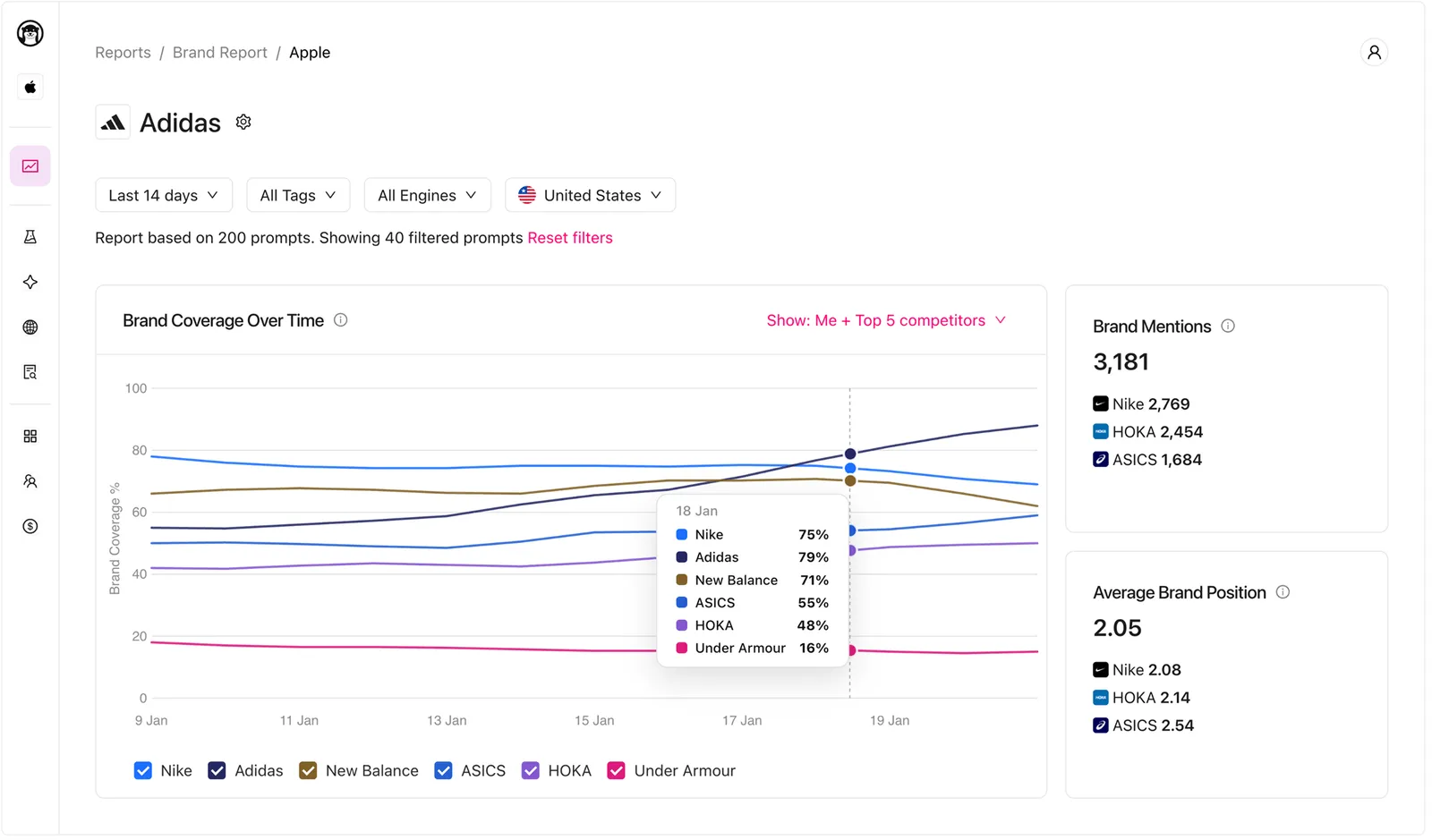
Otterly AI is a practical starting point for smaller teams that need recurring monitoring without an enterprise implementation. It tracks search prompts across AI platforms and surfaces brand mentions, linked references, competitors, and changes over time.
Small businesses, consultants, and agencies testing an initial ChatGPT visibility program.
A lightweight dashboard does not replace prompt research or source analysis. Plan a monthly review that connects each visibility change to the exact response, citation, and page-level action.
Check current monitoring and plan details at Otterly AI.
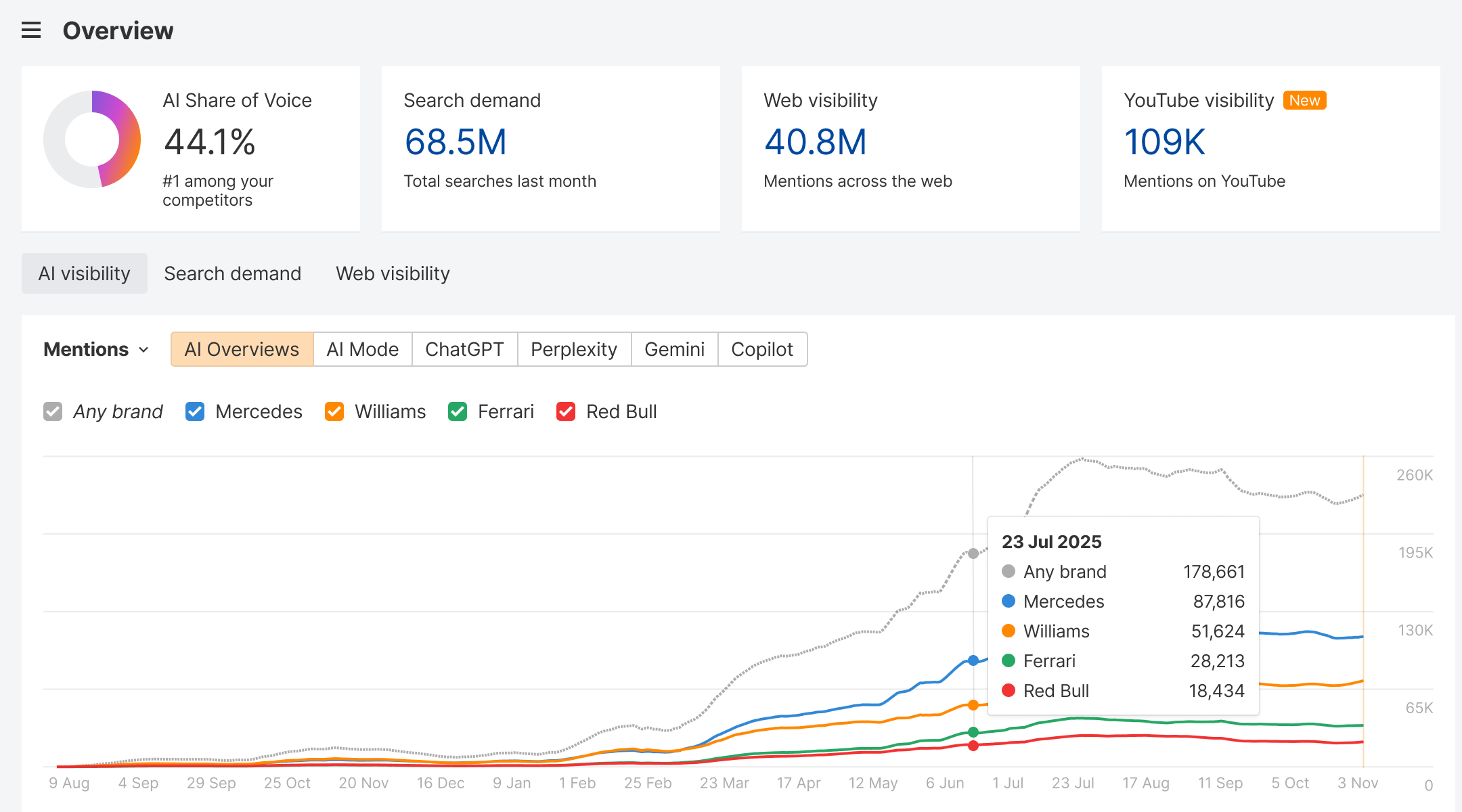
Ahrefs Brand Radar combines a large search-backed dataset with custom prompt tracking. The large database is useful for discovering unplanned brand and competitor mentions, while custom prompts provide a controlled list for recurring measurement.
This distinction matters. Indexed discovery can reveal demand and conversations a team did not think to monitor. A fixed custom prompt set is better for evaluating changes after a campaign because the questions remain consistent.
SEO and competitive-intelligence teams that want AI visibility research alongside backlink, keyword, and content analysis.
Do not mix discovery-dataset growth with controlled prompt performance in a single KPI. Label each data source and use the same measurement method when comparing periods.
See Ahrefs Brand Radar and its custom prompt documentation.
You can test the measurement design before buying software.
Use 20 to 40 prompts across four groups:
Avoid making every prompt branded. That measures recognition among people who already know you, not discovery.
Record the date, ChatGPT model or mode, location, language, login state, and whether browsing was enabled. Use a clean conversation for each prompt so previous answers do not influence the next one.
For each answer, capture:
Run the same prompt set several times over multiple dates. Generative answers vary. A single missing mention is not a trend; a repeated decline across the same commercial prompt group deserves investigation.
Choose Dageno when visibility monitoring must feed directly into content and GEO execution. Choose Profound for enterprise reporting across regions and stakeholders. Choose Peec AI for a clear prompt-and-source analytics layer. Choose Otterly AI for a lighter starting point. Choose Ahrefs Brand Radar when large-scale discovery and established SEO data matter most.
Before purchasing, ask every vendor the same questions:
There is no single permanent position. Report mention frequency and distribution across repeated runs.
Branded prompts hide discovery gaps. Most of the prompt set should reflect category, problem, comparison, and purchase intent.
Mentions show presence; citations reveal the evidence environment. A competitor may win because trusted third-party pages explain its category fit more clearly.
Keep a stable benchmark set and add a separate discovery set. Otherwise, a score change may reflect different questions rather than real performance.
Every important gap should map to an owner and next step: update a page, clarify a claim, publish missing evidence, improve technical accessibility, or earn coverage from a source ChatGPT already uses.
The five tools compared here are Dageno AI, Profound, Peec AI, Otterly AI, and Ahrefs Brand Radar. Choose Dageno AI for monitoring connected to GEO work, Profound for enterprise programs, Peec AI for focused analytics, Otterly AI for lighter monitoring, or Ahrefs Brand Radar for discovery at scale.
Yes. A manual spreadsheet and a controlled prompt set can establish a baseline. Paid tools become valuable when you need repeat runs, historical trends, citation extraction, competitor comparisons, multiple markets, and reporting.
Weekly or monthly trend reviews are sufficient for many teams. Daily collection can be useful, but strategic decisions should rely on repeated patterns rather than one day's output.
There is no universal benchmark. Compare the brand against direct competitors within the same prompt set, market, model, and period. Commercial prompt coverage and accurate citations matter more than a high aggregate score.
No. A tool measures answers and identifies opportunities. Improvement still depends on accurate content, accessible pages, credible evidence, consistent entity information, and third-party sources that support the brand's claims.
The right tool depends on the decision you need to make. Start with a stable, commercially relevant prompt set; measure mentions, citations, competitors, position, sentiment, and accuracy; then choose the platform that makes those signals actionable. The goal is not to collect the largest dashboard. It is to learn why ChatGPT selects certain brands and sources, make a focused improvement, and verify whether the change holds across repeated runs.
Profound Answer Engine Insights
Dageno is the research and insights team at Dageno AI, publishing industry reports and expert analysis on AI Search Visibility, Generative Engine Optimization (GEO), and AI-powered search discovery.
Read full bio